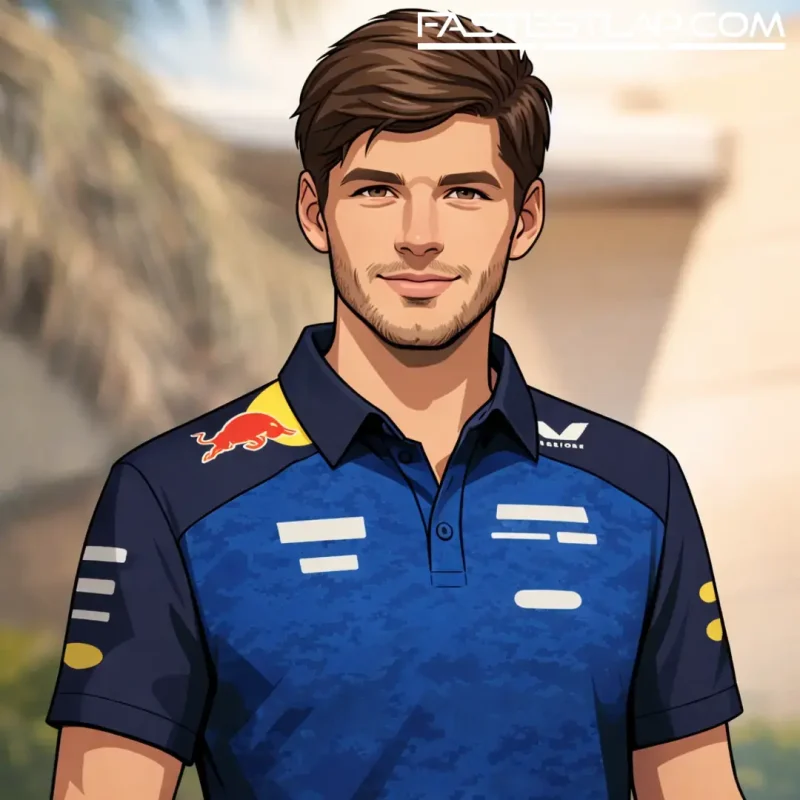
Max Verstappen doesn’t need long to land his point about 2026: this new generation of Formula 1 machinery might be quicker in some places and cleverer on paper, but it isn’t doing much for him behind the wheel.
Speaking after the completion of pre-season running in Barcelona and Bahrain, the Red Bull driver offered a blunt verdict on the feel of the new cars, calling this era his “least favourite” of those he’s experienced in F1. That’s a striking line from a driver who’s adapted to pretty much everything the sport has thrown at him since arriving in 2015 — wider cars, the ground-effect reset, and now a rulebook that has pushed the cars towards smaller, lighter packaging with a significantly bigger electrification component.
The driving sensations, Verstappen explained, are clearly a step away from the recent ground-effect cars. Less grip is the headline, but it’s the knock-on effects that seem to irritate him: more sliding, a different relationship with the tyres, and an altered rhythm in how you apply the throttle.
“The car has less grip,” he said. “It accelerates a lot faster out of the corner.”
That’s part of the complication. With reduced grip — and, as Verstappen put it, less of the load being generated through the floor — the car demands a more deliberate approach to corner exits. He pointed to lower-speed corners in particular, where you’re effectively waiting longer before committing to full throttle, balancing slip and traction while the car tries to translate its power into forward motion.
It’s also, in his words, not the kind of pre-season where you can jump in and rely on muscle memory. Recent winters have tended to be about fine-tuning, running through test items, and finding detail gains. This time, Verstappen says, it’s been more fundamental: rethinking driving style, reprogramming instincts, and learning how to work with a machine that behaves differently in the phases of the corner.
The phrase he kept coming back to was “management” — and that’s telling. He wasn’t talking about tyre life or brake temperatures in the familiar sense, but the broader operational feel of these new cars, where battery deployment and energy use play a far more prominent role in how you put a lap together and how you race.
Verstappen has already been publicly sceptical about how much that will shape the spectacle — he previously described the new era as “Formula E on steroids” — and his comments in Bahrain didn’t suggest he’s softened on that view. Asked whether this generation was his favourite, the answer came back dry.
“Probably I would say least favourite,” he said. “But that is because I think the word that you can use for the whole year will be management. I think that’s the right word.”
For Red Bull, though, the more important part of Verstappen’s message wasn’t the criticism — it was what followed. Because 2026 isn’t merely a new chassis cycle for the team; it’s the start of a new identity. Red Bull’s first power unit, developed through the Red Bull Powertrains project in partnership with Ford, is now on the grid.
And Verstappen, careful not to let his personal taste be read as a lack of commitment, went out of his way to underline how much respect he has for the scale of the task the operation has taken on — and, crucially, what early testing has and hasn’t shown.
“When you go into competition, you will always do the best you can with what you have, because it’s the same for everyone,” he said. “But, sometimes things can be more enjoyable than others, and for me personally, it’s not so enjoyable.”
Then came the nod to the people around him — the ones who’ve built the programme, staffed it, and made it run.
“It’s been honestly incredible to witness how these guys have started from zero and have given us a power unit that is running well. We don’t have any issues,” Verstappen said, referring to the relative lack of reliability problems during the Barcelona and Bahrain tests for either Red Bull team.
There’s an obvious caveat: “Is it fast enough? I have no idea. We have to wait and see.”
That’s the honest truth of testing, especially in the first year of a brand-new engine formula and a brand-new power unit project. But even if the lap time questions remain unanswered until the lights go out, Verstappen’s emphasis on clean running matters. Reliability is the currency you trade in early on; performance can be unlocked, but you can’t develop what you can’t run.
What makes Verstappen’s stance interesting is the tension between his competitive wiring and his purist streak. He’s not dressing it up: he doesn’t find this version of F1 particularly “pure”, and he doesn’t enjoy driving it as much. Yet he also recognises the human effort behind the machinery — and he’s clearly conscious of how it lands when the lead driver of a major programme shrugs at the product.
“For me to then say that it’s the least enjoyable, is not very nice,” he admitted, before reaffirming that nothing changes when he climbs into the cockpit: “When I sit in the car, of course, I will always give it my very best.”
The 2026 season begins with the Australian Grand Prix, with track action at Albert Park starting on 6 March. Whatever Verstappen thinks about the direction of the regulations, there won’t be any easing into it now. The management era he’s talking about is here — and the sport’s most relentless winner will have to decide how to win inside rules he doesn’t particularly like.