Formula 1’s Africa story keeps getting dressed up as an inevitability, but in the cold light of the 24-race cap it’s starting to look more like a waiting room with no receptionist.
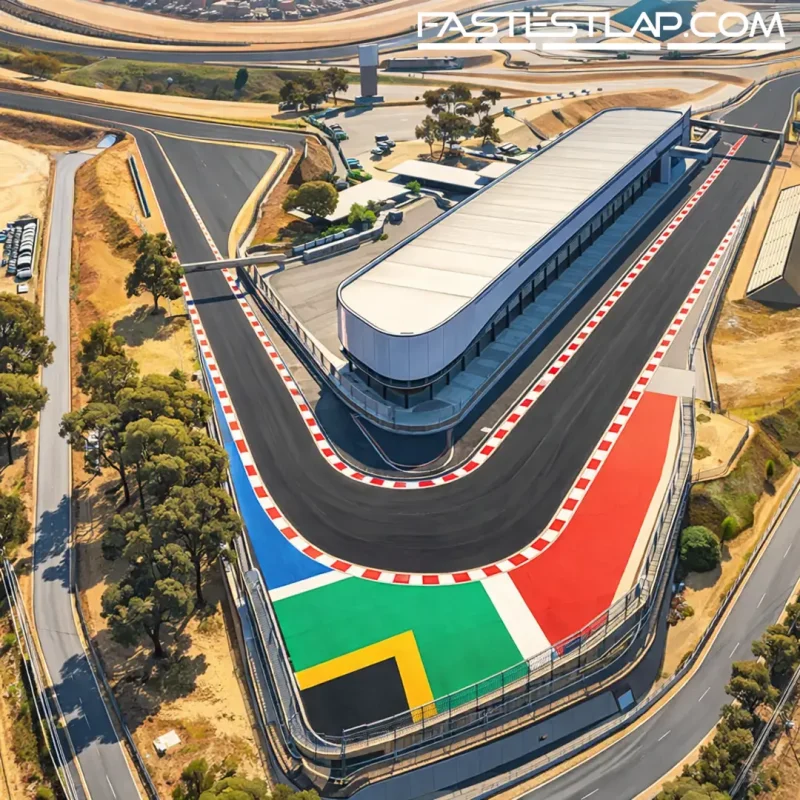
South Africa’s push to bring the championship back to Kyalami has run into another familiar problem: there simply isn’t any space. And when Stefano Domenicali starts dropping hints about yet another “heritage” circuit returning to the calendar — in this case Istanbul Park in 2027 — you can almost hear the air leaking out of the Kyalami balloon.
The uncomfortable truth is that F1 hasn’t raced on the African continent since 1993, the last time it visited Kyalami as South Africa wrestled with apartheid’s legacy and the structural inequality that went with it. That absence has become increasingly awkward for a series that sells itself as global, particularly as the calendar has swollen to the limit and the sport’s commercial reach has never been broader. But the same commercial logic that makes Africa appealing also makes it brutally hard to get in.
Gayton McKenzie, South Africa’s Minister of Sports, Arts and Culture, has tried to force the issue with a very public political commitment. He’s been candid to the point of self-inflicted pressure, saying his term would “be a failure” if he doesn’t deliver F1 back to South African soil. He set up a Formula 1 Bid Steering Committee in 2023, talked up Kyalami as the preferred option, and had the circuit cleared by the FIA for a route to Grade 1 status — a route that comes with a price tag in the millions.
Yet when McKenzie went to meet Formula One Management and the FIA last year, he came home without the prize. His explanation was revealing: South Africa, by his own admission, had underestimated what it takes to host an F1 weekend, even if he insisted the sport had “held our hand” and promised a new bid “they can’t refuse”.
That may be the core problem. F1 doesn’t need to be persuaded with a clever document right now. It needs a slot — and Domenicali’s latest comments make it clear those are effectively booked.
The calendar has already been squeezed and reshaped. Spain’s new Madrid venue — the semi-permanent “Madring” — is coming in, while Imola has fallen off. Barcelona and Spa have been pushed into a rotation arrangement through to 2032, and Portugal has stepped in with a two-year deal. This is the new reality: not expansion, but swapping, rotating, and horse-trading.
In that context, Turkey reappearing on the horizon matters, because it’s exactly the type of track F1 can sell to fans as a return to “proper circuits” without having to pretend it’s adding events. Domenicali, speaking during pre-season in Bahrain, didn’t confirm Istanbul Park outright — but he didn’t exactly pour cold water on it either.
“Turkey is not, let’s say, 100 percent confirmed,” he said. “Stay tuned on Turkey, let me put it this way.”
He also pushed back on the criticism that the championship is overrun with street races, pointing out that the incoming additions are “tracks, not the street races”, and framing Turkey — and the recently secured Portugal deal — as part of that reset towards venues with “heritage” and “great racing background”.
The politics here are obvious. With the calendar locked at 24 races, every new conversation is really a conversation about who gets nudged aside, who agrees to rotate, and who has the leverage to protect their date. If Turkey is being lined up, it’s because there’s a path to make it work commercially and contractually.
And that’s where South Africa’s optimism meets F1’s legal paperwork.
Domenicali was explicit that further alternation deals — the only realistic mechanism for adding destinations without breaking the 24-race ceiling — aren’t likely before 2029 because of existing contracts.
“I would say these things can happen after ’29 because we have other contracts,” he said, adding: “I don’t see this happening before 2029.”
It’s a small set of sentences with a big consequence: if you’re selling an Africa return in the next couple of seasons, you’re selling fantasy. Even if Kyalami was ready tomorrow — and even if the funding was suddenly watertight — the sport’s current structure doesn’t have a natural place to put it.
There’s also a more subtle shift in tone from F1 itself. For years, the message around expansion was aspirational: new markets, new audiences, new host cities. Now the language is about “quality problems” — too many credible bidders, not enough weekends — and “prudency” in how people talk about the mix of circuits. That’s the voice of a business that knows it can pick and choose, not one that needs to be convinced to take a punt.
None of this means South Africa is out for good. But it does mean the path is longer than the soundbites suggest. If 2029 is the earliest window where calendar flexibility genuinely returns, then the job between now and then isn’t just upgrading asphalt and grandstands. It’s building a bid that survives four more years of shifting priorities, new rivals, and the inevitable churn of venues looking to secure their own futures.
For African fans, it’s another season of waiting. For South Africa’s bid team, it’s a reminder that in modern F1, the hardest part isn’t getting noticed — it’s getting a date.