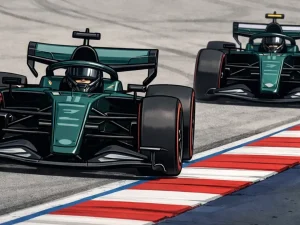
Carlos Sainz doesn’t sound like a driver bracing for a bad weekend so much as someone trying to stop everyone else from drawing conclusions too early.
Formula 1 finally rolls into Melbourne to begin the 2026 season after nine days of pre-season running, and the paddock’s collective confidence is… selective. Everyone’s logged laps, everyone’s crunched the data, and yet there’s still a strong sense that Albert Park could throw up behaviour we simply haven’t seen in testing — partly because the new power unit demands don’t just reshape lap time, they reshape decision-making.
At the heart of it is the 50/50 combustion-electric split and the knock-on effect of energy management becoming an on-track, corner-by-corner negotiation. Drivers are still feeling out what’s possible, what’s repeatable, and what’s going to be painful over a stint — not in theory, but under the pressure of a race that actually matters.
“Very different,” Sainz said when asked what to expect this weekend, having compared what he experienced in Bahrain to the picture that’s forming for Melbourne. Bahrain, in his view, was a big change but one that still sat “within reasonable limits”. Albert Park, by contrast, is shaping up to be more extreme.
In typical Sainz fashion, he didn’t try to turn that into either a complaint or a sales pitch. He framed it as a proper first exam for regulations that, in Bahrain, were still in revision mode.
“In the simulator work I did prior to Melbourne [it] looked quite extreme,” he explained, adding that everything he’s seen in preparation has reinforced the idea that this weekend will look nothing like the test. “A huge learning for everyone, incredibly tough first test for this new set of regulations, given the circuit layout.”
That’s not an idle point. Melbourne isn’t short on corners, but it doesn’t naturally hand you the kind of heavy-braking energy-recovery opportunities that make life easy when you’re trying to keep the battery in a sweet spot. Which immediately sharpens the big fear whispering around the pitlane: that drivers will have to lift on straights — maybe even concede track position — simply to get the system back where it needs to be for the next lap.
Layer in the new tactical tools and it gets even messier. There’s an overtake mode that can only be used in designated zones and only when you’re within one second of the car ahead. There’s also a boost mode that can be deployed more freely. The net effect is that “attack” and “defend” aren’t just about tyre life, DRS timing, or positioning anymore; they’re about who’s got the electrical budget to spend and when.
For fans, there’s an obvious risk in all of this: that the racing becomes harder to read. If a driver appears to back out of a fight, are they struggling, saving, harvesting — or setting something up for three corners’ time? If someone suddenly surges, is it pace, a mode, or simply a better-managed battery state?
Sainz’s answer to that wasn’t to insist everyone will love it. It was more pragmatic — and, frankly, more honest than the sport tends to be at moments like this. Give it a handful of races, he argued, because circuit characteristics will skew the picture early on. Australia will be its own thing; China will look different; Japan will look different again. But if, after those examples, it’s clearly not landing, the sport can’t be stubborn.
“It could go both ways,” he said. “That’s why evaluating and trying to predict how it will be on TV before it even happens, I think it’s not worth it.”
And then the key line — the one that sounds like it’s been said in more than one meeting already. Sainz revealed he’d told F1 CEO Stefano Domenicali and the FIA that they need to stay “open-minded” if it becomes obvious something is off.
“If the first race, the first two or three races… and then clearly there’s something off, something wrong, I hope we are able to change.”
It’s an unusually direct message from a driver, and it cuts to the heart of what this new era could become. F1 has spent years promising rules stability while also selling constant “improvement”. With 2026, it may be forced to prove it can do both: stick with a concept long enough to understand it, but be willing to adjust mechanisms that actively undermine racing.
Before any of that plays out over a stint, though, there’s a simpler moment that could decide Sunday’s first chapter: the start.
Testing exposed headaches for multiple teams in getting the cars into the right start configuration reliably, enough that the FIA has introduced a blue-lights pre-start procedure designed to buy drivers a bit more time to get everything set. In other words, even the mundane has become technical again.
Sainz expects everyone to launch — just not equally well.
“I think it’s been a big talking point, but I think the only thing we will see is more performance difference in starts,” he said. “But I think we will all get off the line. It will just be a matter of who gets better or worse.”
His point is a sharp one. By the end of last year, start performance had converged so tightly that margins were measured in a few metres. If 2026 blows that back open, it could create more genuine variation — and potentially more chaos — in the first 300 metres than we’ve been used to.
Whether that’s “good” depends on your taste for disorder. But it’s undeniably different, and right now that’s the only safe prediction anyone’s willing to make.
The rest — how often drivers lift, how the overtaking tools actually shape fights, whether energy management becomes invisible chess or frustrating stop-start — will be decided in public. Sainz’s plea, essentially, is for everyone to watch first and argue later. In 2026, that might be the most sensible thing said in the paddock all weekend.