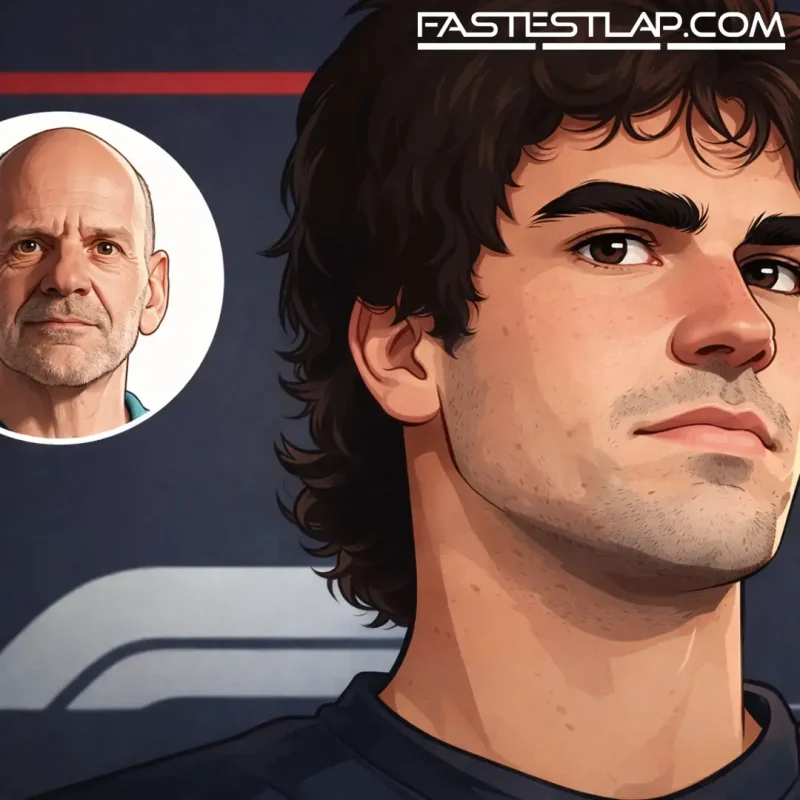
Lance Stroll isn’t usually one for colourful metaphors, which is partly why the one he chose in Melbourne landed with such a thud.
“It’s not good,” he said of Aston Martin’s new AMR26. Then, searching for a way to describe what the car is doing to him physically, he went with: imagine electrocuting yourself in a chair. “It’s not far off.”
That’s where Aston Martin find themselves as the 2026 season opens: not arguing about ride-height tricks, tyre prep or whether they’ve misunderstood a new regulation, but trying to stop their drivers’ hands and feet going numb from brutal Honda power unit vibrations.
Adrian Newey has already put the severity in stark terms. Speaking in Melbourne, the Aston Martin team principal said both Stroll and Fernando Alonso risk “permanent nerve damage” if they run too many laps consecutively in the current configuration. Alonso, Newey suggested, believes he can manage around 25 laps in a row before the symptoms become too much; Stroll’s limit is closer to 15. Sunday’s Australian Grand Prix is 58 laps.
This isn’t the usual early-season discomfort — the “it’s a bit harsh over the kerbs” kind. This is the kind that forces you to think about whether you can physically finish a race distance, and whether the solution is engineering or simply triage.
Aston Martin’s Bahrain test was already a red flag. The new Honda package was slow and unreliable, and the vibration problem wasn’t a one-off. Alonso stopped out on track on the penultimate day, and the team’s final day was reduced to short, stop-start running that left it well short of the mileage it needed with an all-new car in an all-new era.
That context matters because it explains the slightly frazzled, defensive mood around the team in Melbourne — and why the wilder rumours took off earlier in the week. There was talk in the paddock of Aston Martin doing the bare minimum in Australia and potentially not even going beyond the formation lap on Sunday. The reality is understood to be less apocalyptic than that, but it’s not hard to see why people reached for extremes when Newey is talking about nerve damage before the first race of the year.
What’s clear is that Friday’s running is pivotal. Aston Martin and Honda have been working through fixes since Bahrain, but Melbourne is the first time those changes will be trialled properly on track. If the vibration can be brought under control, the weekend starts to look vaguely normal — not in competitiveness terms, necessarily, but in the basic ability to do the job: complete meaningful long runs, understand the tyre, and gather the mileage the team missed when it most needed it.
If it can’t, then Stroll’s comments paint the picture. “If we still have the same vibration issues we had with the car in Bahrain, it’s going to be hard to do much more than 10–15 laps,” he said. In other words, you’re not even into the first stint before the driver becomes the limiting factor, not the fuel, tyres or strategy.
Stroll was also blunt about the double-hit this creates. “It’s bad for the engine, but it’s also bad for the human inside the car,” he said — a line that carries an uncomfortable implication. A vibration severe enough to threaten component life is one thing; one that threatens the driver’s health is another. Teams can plan around power unit wear. They can’t — and shouldn’t — plan around numb limbs.
There’s an edge to how Aston Martin are talking, too. Stroll’s insistence that he has “no doubts on the chassis side” reads like a subtle attempt to separate the car’s potential from the current power unit situation. It’s also a reminder that this project has two moving parts: the Newey-led chassis group and Honda’s new unit. When the relationship is healthy, that’s a strength. When you’re being shaken to bits, it becomes an awkward exercise in message discipline.
Stroll’s to-do list was tellingly simple: on the car, “we can bring upgrades and get more competitive every week”; on the engine, “we just need to find more power.” But those are medium-term objectives. The short-term one is far more basic: stop the AMR26 feeling like it’s trying to eject its driver’s nerve endings through the steering column.
There was also a dose of dry honesty when Stroll was asked if there’s anything he’s looking forward to as the season gets going. “Nothing in particular, no,” he said. Coming from a driver who has had plenty of seasons begin with optimism and marketing gloss, it sounded less like petulance and more like someone who knows exactly how ugly the first few races could be if this isn’t solved quickly.
The irony, of course, is that Aston Martin have put themselves under this microscope by raising expectations. Newey’s arrival and the Honda works deal were meant to be the cornerstone of a new era — a statement that Aston Martin weren’t just building a nice factory, but building an actual title-capable operation. Instead, the first headline of 2026 is that their drivers might not be able to do more than a handful of consecutive laps without going numb.
If the fix works in FP1, the narrative changes fast. It becomes a rough test, an early scare, a problem solved before it defined the season. If it doesn’t, then every session becomes a negotiation between competitiveness and basic duty of care — and Aston Martin’s first race weekend of the new era risks turning into an exercise in damage limitation before a single meaningful lap has even been banked.