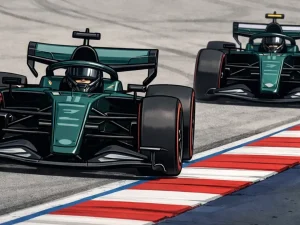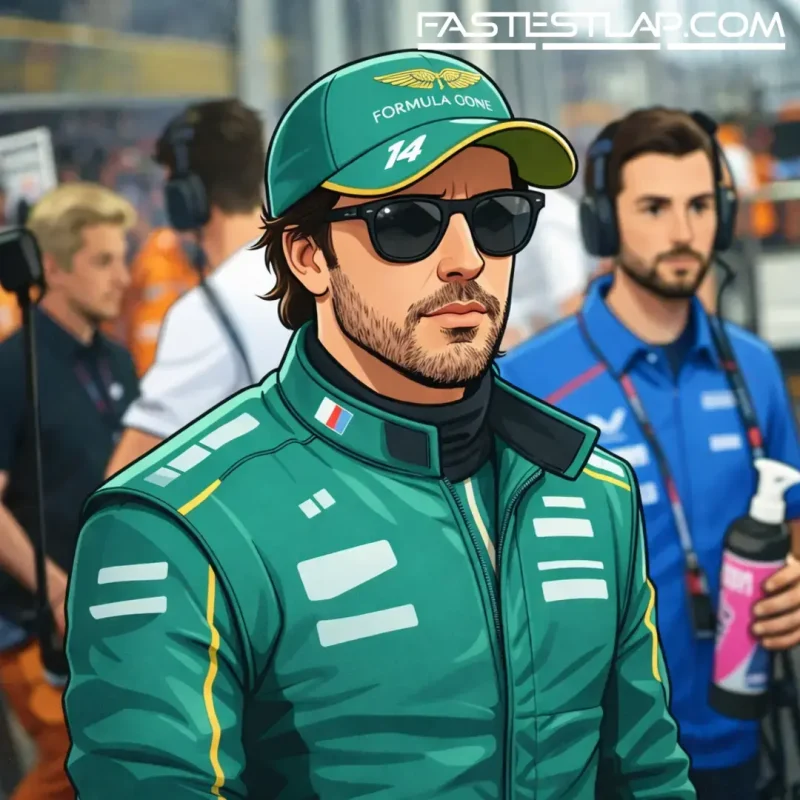
Fernando Alonso’s Australian Grand Prix didn’t so much unravel as it simply disappeared into the noise of Aston Martin’s garage — a long, confusing pause in the pitlane that left him 11 laps down and everyone else trying to work out whether the AMR26 had been parked for good.
It hadn’t. Not at first, anyway.
Alonso trundled in on lap 13 and then sat there, stationary, for 11 laps before rejoining the race in Melbourne. In the context of a modern F1 race, it looked like a retirement that hadn’t yet been officially admitted. Given the pre-race chatter around heavy vibration — and the obvious knock-on effect that can have on a driver physically over a stint — it didn’t take long for rumours to do what rumours always do.
Aston Martin, though, insists the trigger wasn’t an immediate mechanical death sentence, nor a driver-protection call made on the fly. It was simpler, and in some ways more damning: the team got itself tied in knots.
Mike Krack, Aston Martin’s Chief Trackside Officer, didn’t dress it up when he faced the post-race debrief. The pit call, he admitted, was “a mess” — not because the mechanics didn’t know what they were doing, but because the messaging that got the car into the box in the first place had gone sideways.
“The pitstop was a mess,” Krack said. “It was not a mess from the garage side, it was a mess from our side. The communications were basically cross-communicated. You have so many channels and sometimes things go wrong.
“One of the things that we have to acknowledge is that we have not done much and this was the first time live and it didn’t go well. So that is something that we need to go around in the future.”
That framing matters. Krack is effectively saying Aston’s process broke down under real conditions — and that this wasn’t a one-off button slip, but a symptom of a team still bedding in procedures in the heat of battle. You don’t need to spell out what that implies over a long season of 2026’s new-era races: points won’t just be decided by aero maps and energy deployment, but by how cleanly teams execute when the radio is busy and the pressure’s immediate.
Ultimately, the day ended as a double DNF for Aston Martin. And while Krack suggested the cars could likely have been brought home, the team chose not to roll the dice — not because the situation was hopeless on track, but because the cupboard is bare.
As Krack put it, Aston is “not rich in any parts”, and with little to gain from where the cars were running, the team took a conservative call to stop rather than risk turning a bad afternoon into a costly one.
“It is common knowledge that we are not rich in any parts,” he said. “And there wasn’t much to gain from where we were, and we took the decision together.”
There’s a certain grim realism to that. In an era where the calendar is unforgiving and attrition can snowball into compromised weekends, sometimes the most important strategic decision isn’t whether to undercut — it’s whether to keep running at all. The fact Aston felt it couldn’t afford to keep learning in-race tells its own story about where it currently sits.
Krack’s view, though, was that the underlying picture wasn’t quite as bleak as the result sheet will make it look.
“I don’t have a crystal ball, but I’m quite confident that we could have finished,” he said.
For Alonso, the extra mileage after that bizarre pitlane limbo wasn’t an act of optimism as much as an act of service. He said the car’s vibration remained a problem, and that once he was back out there, the priority became gathering data — even if it meant circulating well out of contention.
“This is not the best feeling driving with this level of vibration,” Alonso said.
He pointed to work Honda believes it has already done to reduce vibration on the battery since Bahrain, but suggested the chassis side of the equation still needs a better solution — specifically, improved isolation of the battery.
“I think Honda thinks the vibrations on the battery are really reduced since Bahrain with some of the modifications, but that didn’t happen to the chassis yet because they need to isolate the battery in a different way,” he said. “I think it will take a little bit more time but we try to do our best and to do as many laps as possible to help the team.”
That’s the part that will worry Aston most. A communications breakdown is embarrassing, but it’s fixable — you tighten protocols, streamline channels, rehearse edge cases until they’re boring. Persistent vibration that’s still intrusive enough for a driver to flag it like this is a different kind of problem, particularly when it’s linked to the integration of a key element of the package.
Alonso’s day, then, wasn’t just defined by an 11-lap pitlane hold that made no sense in the moment. It was also a reminder that in 2026, reliability and operational sharpness are going to decide more than a few Sundays — and right now, Aston Martin looks like a team still trying to get both under control at once.