Toto Wolff didn’t exactly bite when Formula 1’s newest rulebook became the post-Melbourne punching bag. With drivers lining up to call the 2026 cars a step backwards — and even the freshly crowned world champion Lando Norris now among them — Mercedes’ boss chose a familiar defence: the sport has a habit of romanticising whatever it’s just lost.
Norris’ swing has been the headline. Through pre-season he’d sounded more bullish, even telling the perennial sceptics that if they didn’t like it, nobody was forcing them to stay. Then came Australian Grand Prix qualifying, and the tone flipped hard. The same driver who’d been selling the future was suddenly describing a leap from the “best” cars to the “worst”.
Max Verstappen, meanwhile, has been nothing if not consistent. His criticism of the regulations has followed him for years, and in Melbourne it found an easy visual: cars shedding speed as they tried to recover energy, the sort of staccato, interrupted acceleration that makes drivers feel like passengers and makes purists wince. Footage of Verstappen warning about this back in 2023 resurfaced for a reason — it looked less like moaning and more like a prediction landing on schedule.
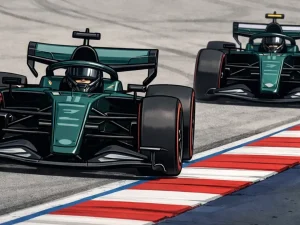
Yet if you wanted a counter-argument, it was parked in Mercedes’ garage. The race began with a bit of bite — Ferrari in the mix with George Russell early on — but once the rhythm settled, Mercedes’ advantage became the story. A 61st one-two for the Silver Arrows is the sort of statistic that makes any philosophical debate about the “product” feel slightly academic. Winning tends to quieten your own concerns and amplify everyone else’s.
Wolff, speaking after the race, didn’t deny the drivers’ frustration so much as question the frame they’re using to judge it.
“I didn’t hear any one of the drivers speaking particularly good of the last cars and saying it was the best car,” Wolff said. “So we tend to be very nostalgic and looking at past events.”
It’s a pointed line, because it cuts to how this conversation always plays out in F1. Drivers complain in real time — about weight, tyres, steering feel, dirty air, visibility, whatever the current car is doing to them. Then the formula changes, and suddenly last year’s machine becomes a reference point for purity. Wolff’s argument is basically that the paddock’s memory is selective, and sometimes convenient.
But he also widened it beyond drivers and teams, echoing the position F1 CEO Stefano Domenicali has taken when swatting away the louder complaints. The premise is simple: drivers are stakeholders, yes, but they’re not the ultimate customer.
“Stefano would say that the single matrix that matters to him is whether the fans like it,” Wolff said. “That is what we need to look at and if it needs to be tweaked, if we need to adjust, I think we have the flexibility in Formula 1 to always take those decisions.”
That’s the pressure point now. Because Melbourne offered ammunition for both sides.
On the one hand, the sporting spectacle did have an opening act worth watching: Ferrari and Russell trading blows, the field still close enough that strategy and positioning mattered before the race settled into its long-run truth. On the other, the complaints weren’t abstract. When the cars visibly back off to satisfy energy demands, it’s not hard to understand why a driver would feel the rules are dictating the racing rather than enabling it — especially when the result is a kind of forced lift-and-coast that arrives not from tyre management or fuel saving but from the way the car is being asked to deploy and recover.
And then there’s the awkward optics: when the team that’s nailed the new era is the one preaching patience. Mercedes dominating the opening round doesn’t invalidate concerns about the regulations, but it does colour the politics of any “trust us, it’ll be fine” message. The rest of the grid will hear it as self-interest dressed up as stewardship — which, in Formula 1, is usually how these things work.
Wolff at least acknowledged the broader responsibility. He framed it as a balancing act: best cars, best drivers, and an entertaining show. That’s also a subtle reminder that the technical side of the sport can’t be reduced to whether the cockpit feels nice. A car can be difficult and still produce great racing; a car can be beloved by drivers and still generate processions.
The question F1 has to answer quickly is whether what we saw in Australia is an early-season rough edge — a new set of behaviours teams and drivers will learn to exploit and mask — or whether it’s a fundamental trait of this ruleset that will keep popping up on the biggest stage. If it’s the latter, you can expect the calls for “tweaks” to get louder fast, because nobody in the business enjoys being told the fans are the only metric that matters while they’re the ones wrestling the thing at 300kph.
For now, Wolff’s position is clear: the sport shouldn’t confuse discomfort with failure, and it shouldn’t pretend last year was a golden age. The rest of the paddock, staring at a Mercedes one-two to open the season, may not be in the mood to hear it — but F1’s next few races will decide whether this debate cools down or becomes the defining argument of the new era.