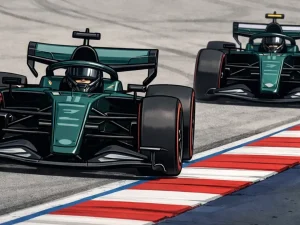
Max Verstappen climbed from 20th to sixth in Melbourne and still sounded like he’d been through a season’s worth of aggravation. That, more than the result itself, was the lasting impression of Formula 1’s first race of 2026: the new cars might be the future, but right now they’re also a minefield of procedures, switches and energy-management quirks that can leave even the sharpest operators feeling like they’re fighting the machinery as much as the opposition.
Untelevised Red Bull radio from the Australian Grand Prix captured Verstappen’s mood in real time, and it wasn’t simply the grumpiness of a driver coming to terms with a tough Sunday. It was a top team and a four-time world champion discovering, live on air, how brittle the margins can be when the systems aren’t behaving and the new rulebook asks for a different rhythm.
The weekend had already been turned on its head by Verstappen’s Turn 1 qualifying crash, which left him starting from the back end of the grid. The recovery drive was respectable — P6, three seconds behind Lando Norris’ McLaren at the flag — but the bigger number was his deficit to George Russell’s winning Mercedes: 54.617 seconds. This was supposed to be the opening statement of a new era; instead, Verstappen spent much of it trying to get the car to do basic things at the right moments.
The tone was set before the lights even went out. Verstappen reported a battery that was “almost empty” and, crucially, “just doesn’t charge”. There’s a particular kind of panic in that message: not the theatrical type, but the practical one. If you don’t trust your energy state on the grid, you’re not thinking about launch maps or the run to Turn 1 — you’re thinking about whether the car will respond when you ask it to.
His engineer Gianpiero Lambiase acknowledged it and tried to calm the situation with a blunt assessment: “Keep your head down. Today it’s not gonna matter.” That’s a revealing line in itself. It suggests Red Bull already knew they weren’t racing the front on pure pace, and that meant the priority became damage limitation and learning rather than heroics.
Even routine racecraft moments had a layer of new-process uncertainty. Under the virtual safety car, triggered after Isack Hadjar’s retirement, Verstappen asked if he needed to use the boost button when the VSC ended — a question that would’ve sounded unthinkable in the old cycle of cars, but makes sense in a season where deployment and “recharge” modes have become an ever more explicit part of the driving.
Lambiase ended up giving him a step-by-step walkthrough: recharge off when the VSC ends, then “press and hold the boost for two or three seconds” on the clear track to avoid lag. That’s not a driver being coached on race craft; that’s a driver being coached on operating a tool that’s still new enough to bite.
As the stint settled, tyres joined the list. Verstappen complained early that they were “just dying”, with graining hurting the RB’s consistency. When Lambiase later framed Norris’ pace and projected strategy, Verstappen’s verdict was blunt: “For me, all the tyres are terrible.” It was less a dig at anyone in particular than the sound of a driver who couldn’t find a stable platform to lean on — no tyre he trusted, no mode that did what it was meant to do, and no clear way to unlock a lap time that would stick.
There were also moments that underlined how disconnected a driver can feel when the feedback loop isn’t flowing. Approaching Turn 5, Verstappen asked whether full lift or no lift was better and added: “I’ve no info the whole race.” In an era where teams can build a race from live models and micro-deltas, that’s a striking complaint. Lambiase’s response — “either full lift or full load” — didn’t exactly deliver clarity, and you could hear Verstappen’s patience thinning as the afternoon wore on.
Then came the switches. More than once, Verstappen was directed to specific toggles and buttons — “push and left-hand toggle” at Turn 13, later a “single click the green button” out of Turn 14 — only for him to report back that it “doesn’t work”. At one point he declared the “boost pattern is f**ked”, and later complained that “deployment s*at itself again”.
This is where the 2026 shift becomes most obvious. When things went wrong in the 2022-25 ground-effect era, drivers usually talked about balance, temperatures, wind, dirty air. Now the vocabulary includes patterns, lag, recharge states, and a sense that the car’s performance can be locked behind a procedure. That’s not inherently bad — it’s modern F1 — but it does change what a “good drive” looks and feels like.
On the cooldown lap, Verstappen was polite but exhausted by it. He thanked the team, pointed out the graining and that the hard tyre was worse, and then landed the line that’s already doing the rounds: it was “super frustrating to drive”.
Team boss Laurent Mekies tried to frame the bigger picture: P20 to P6, frustrations and all, and the “learning of this race” taken “as a group”. Lambiase, never one to miss a moment, followed Verstappen’s complaint with a quip: “There’s drivers up front, Max, elated with this whole thing.” He didn’t name names, but the paddock context was clear enough. Russell, after converting Mercedes’ pre-season promise into a one-two with rookie team-mate Kimi Antonelli, said the new cars are “definitely a step forward”. Lewis Hamilton, fourth for Ferrari, suggested they “otherwise feel good” if you ignore the shortage of power.
And that’s the tension at the heart of 2026’s opening weekend. Some are looking at the same rule set and seeing opportunity — a car that rewards a different style, a set of systems that clicks with their package. Red Bull, at least in Melbourne, sounded like a team still wrestling the basics into something Verstappen can trust instinctively.
The result will read as a solid salvage job. The radio tells a sharper story: a champion operating at full bandwidth just to keep the car doing what it’s supposed to, and a team realising that in this new era, speed is only part of the battle. The rest is making the complicated stuff feel simple — fast.