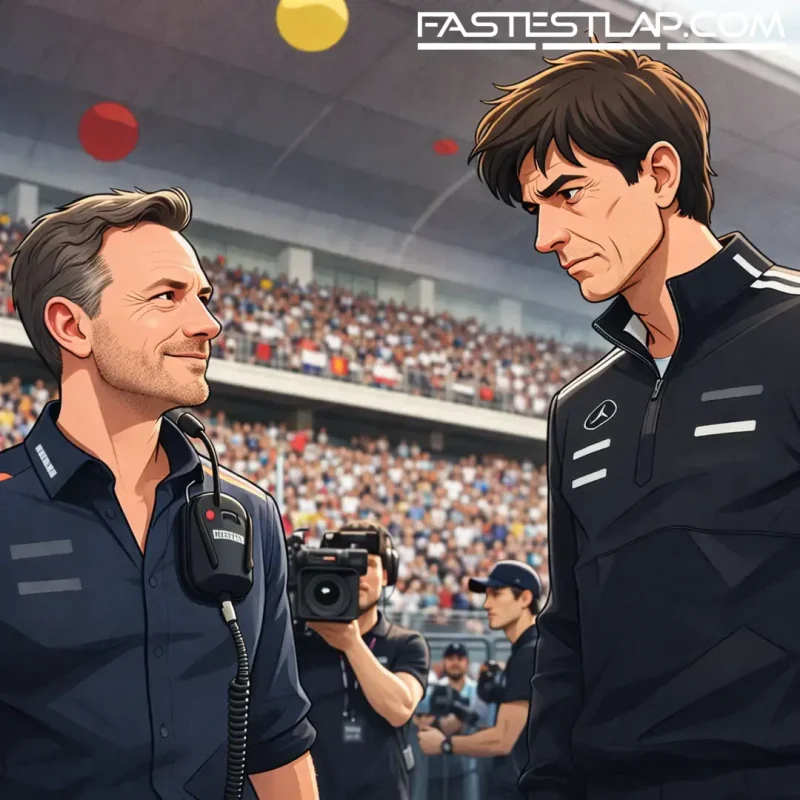
Christian Horner and Toto Wolff have both moved into the same, slightly unexpected corner of the F1 marketplace: they’re understood to have lodged separate bids for the 24 per cent stake in Alpine currently held by US investment consortium Otro Capital.
There are said to be several offers on the table, but Wolff’s entry — described as a bid made in recent weeks — is the one that turns a fairly standard equity reshuffle into something that will have rival teams and commercial rights holders reading the small print. Horner’s interest, by contrast, has been in the open since January, when Alpine executive advisor Flavio Briatore confirmed the former Red Bull boss and CEO was fronting a consortium looking to buy in.
The numbers being talked about underline why this has become such a feeding frenzy. While exact valuations haven’t been disclosed, sources suggest bids would value Alpine at around £2.5bn. If that’s the working figure, Otro’s 24 per cent would land at roughly £600m — a major uplift on the €200m it paid for the stake three years ago. Among Otro’s investors are Ryan Reynolds and Rory McIlroy, names that brought plenty of gloss when the deal was struck, but it’s the potential buyers now giving this story its edge.
On paper, both Horner and Wolff are “smart money” from Renault Group’s perspective: they understand F1’s politics, they know the paddock’s pressure points, and they arrive with ready-made networks. But this isn’t a beauty parade; it’s a governance question wrapped in a commercial opportunity.
Wolff, in particular, introduces a set of sensitivities that go well beyond price. Mercedes is already a key strategic partner of Alpine — and not in a loose, handshake sense. As of this season, Alpine has become a Mercedes customer for power units and gearboxes following the cessation of its own power unit operation at Viry-Chatillon last year. A minority shareholding by the Mercedes team boss would inevitably spark talk of alignment, influence and information flow, even if the legal and operational guardrails are watertight.
That’s the bit that will make rival principals twitch. F1 has never been shy about blurred lines when it suits, but it’s also a sport that turns paranoid the second it thinks performance might be getting “help” from next door. Red Bull’s multi-team set-up has been a running point of contention for years; putting Wolff in Alpine’s cap table would invite the same sort of scrutiny, just through a different lens. The questions would arrive quickly: what does a “sister team” dynamic look like when the “sister” is a works-level title contender and the other is your customer? How do you police incentives? Where does cooperation end and competitive advantage begin?
There’s also the timing mechanism baked into this stake that could prove decisive. Documents relating to Otro Capital’s shares are understood to include limitations on any sale requiring Renault approval up until September 2026. After that point, Otro would have greater freedom to complete a deal without the same oversight, which changes the leverage in the room. In other words: Renault can shape the buyer profile for now, but the closer you get to September, the more this becomes a straight question of who pays most and on what terms.
That structure matters because it frames what Renault is really choosing between: maximising value today, or retaining a degree of strategic control over who gets a seat at the table. A Wolff bid might be attractive not simply because of the cheque, but because it could deepen an existing Mercedes-Alpine technical relationship at a time when Alpine is chasing “sustained recovery of performance on track”, to borrow the team’s own phrase. But it also risks turning Alpine into a proxy battleground in an era when the sport is already wrestling with how close is too close between competitors.
Alpine, for its part, is keeping the conversation at arm’s length. A spokesperson said the team is “regularly approached and contacted by multiple parties and potential investors” and stressed it wouldn’t comment on specific individuals, framing discussions as being between stakeholders rather than the team itself. Mercedes’ line is similarly careful: it acknowledged it is a “key strategic partner” and said it’s being kept apprised of developments.
Horner’s involvement carries its own intrigue, because it speaks to how he wants his next chapter to look. He’s been clear he’s only interested in returning to F1 in a role that comes with equity — the sort of commitment that isn’t just another job title, but a stake in the upside. There’s an obvious logic to Alpine: a major team, big infrastructure, and a story that’s always one or two good decisions away from becoming compelling again.
There’s also an obvious complication: Horner’s situation is still fluid. It’s understood he’ll be a free agent by the summer, and while he’s positioned to return to the grid “should the right opportunity emerge”, the market for senior leadership is rarely a single-track process. Horner has also been linked with Aston Martin’s team principal role — currently occupied by Adrian Newey — though the suggestion is Newey is effectively bridging a gap between former team boss Andy Cowell, whom Newey replaced, and a potential future appointment.
That subplot matters mainly because it underlines what Horner is really shopping for: influence, ownership, and a platform that feels like his. Alpine’s 24 per cent stake doesn’t deliver control, but it does deliver entry — and in modern F1, entry is often the hardest part.
So this is where it gets spicy. If Renault leans towards “best-in-class” expertise and strategic comfort, it may see Wolff as the safer pair of hands — especially given Mercedes already supplies key components. If it prefers to avoid the optics and the inevitable paddock noise that would come with a rival team boss owning a slice of a customer team, Horner’s bid may look less politically combustible.
Either way, this isn’t just about Otro Capital cashing out at the right moment. It’s a test of how F1’s power structures are evolving in 2026: the grid is tighter, partnerships are deeper, and the old assumption that teams are neatly separate entities feels increasingly outdated. Put Wolff and Horner into the same auction for an Alpine stake and you don’t just get a sale story — you get a glimpse of where the sport’s next arguments are coming from.