George Russell won the season opener, Mercedes looked every bit the pre-season benchmark, and yet the soundtrack coming out of Melbourne wasn’t all champagne fizz.
Untelevised radio from the Australian Grand Prix has surfaced Russell’s frustration at what he felt were overly aggressive — and, in his words, “mega dangerous” — defensive moves from both Ferraris during the race’s key wheel-to-wheel phases. The flashpoint everyone will picture is the later scrap with Lewis Hamilton, but Russell’s irritation actually ran through the afternoon, starting with his early tussle for the lead with Charles Leclerc.
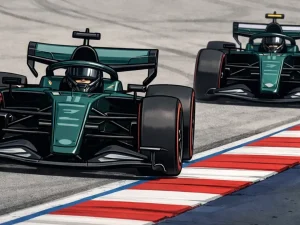
Mercedes converted its billing as favourite into the first big statement of 2026 at Albert Park, with Russell leading home rookie team-mate Kimi Antonelli for a one-two. Ferrari’s day ended with Leclerc third and Hamilton fourth, a result that flatters the early-lap punch but also underlines how quickly the initiative can swing once strategy, traffic and timing fall out of your hands.
Ferrari’s launch off the line was the kind of thing that gets rivals’ strategy groups sitting up straight. Leclerc swept from fourth on the grid into the lead at Turn 1, while Hamilton turned his own opening lap into a reminder that he doesn’t need many invitations, climbing from seventh to third by the end of lap one. But the early rhythm of the race shifted when Ferrari didn’t stop during the early Virtual Safety Cars for Isack Hadjar and Valtteri Bottas. Mercedes, decisive in its response, effectively bought track position and control, and Ferrari spent the rest of the race trying to reassemble the picture.
By the time Russell had stopped on lap 12, the race had moved into that familiar mid-stint squeeze: the leader on older tyres trying to nurse track position, the chaser on a different phase of the race trying to force the issue before the pit cycle closes the window. On lap 28, Russell reeled in Hamilton, who still hadn’t stopped, and the defence was immediate and uncompromising.
On the blast towards Turn 9, Hamilton moved across as Russell went for the inside. Russell still completed the pass into the corner — the Mercedes had the phase advantage — but the radio that didn’t make the live broadcast caught the tone of his displeasure.
“So much movement in the straight when these guys are defending,” Russell said. “It’s mega dangerous.”
It wasn’t the first time Russell had reached for the “dangerous” label. Earlier, while trying to prise the lead from Leclerc in the opening stint, he’d complained over team radio about the Ferrari’s positioning through Turn 11, arguing Leclerc crowded him to the inside as he shaped a move. That message did go out on the world feed: “That was very dangerous by Leclerc, especially [after] what we spoke about in the briefing.”
It’s worth pausing on the subtext here. Russell isn’t some backmarker yelling into the void; he’s a GPDA director, and he’s also coming off a weekend where Mercedes had the pace to win without needing to trade paint. When a driver in that position repeatedly flags behaviour as unsafe, it tends to land differently in the paddock — less as heat-of-the-moment venting and more as a marker being laid down for the next drivers’ briefing.
And Russell’s post-race comments widened the conversation beyond Ferrari’s elbows. In the press conference, he raised concerns about how the new 2026 “straight mode” feels in traffic and, crucially, what it does to the car when you’re trying to move out of a slipstream and commit to a pass.
Russell described a pronounced understeer effect when he deployed the function, to the point where it felt like “my front wing wasn’t working” as he tried to duck out from behind Leclerc. His suggestion to the FIA was specific: alter the behaviour so the front wing doesn’t drop as aggressively when straight mode is engaged.
“I think having experienced the race today and battling, the only thing I would request from the FIA is that with the straight mode, the front wing doesn’t drop as aggressively,” Russell said. “When we open straight mode we will have lots of understeer. When I was behind Charles and I was trying to duck out of his slipstream it was like my front wing wasn’t working.
“So I think from a safety aspect that would make the racing safer, better. I don’t see a downside of doing it.”
That’s the interesting collision point coming out of Melbourne: on one hand, you’ve got Russell pointing the finger at defensive movement — the oldest argument in the book — and on the other, he’s effectively suggesting that the new overtaking tools may be introducing their own awkward moments, where a driver is asked to change line and commit under braking while the car’s balance shifts underneath him.
If the cars are encouraging drivers to be later, braver and more opportunistic — while also making them feel less planted at the exact moment they need maximum confidence — then it doesn’t take much imagination to see why the tone of “what we spoke about in the briefing” has returned so quickly in 2026.
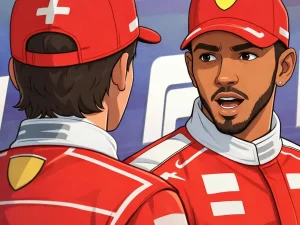
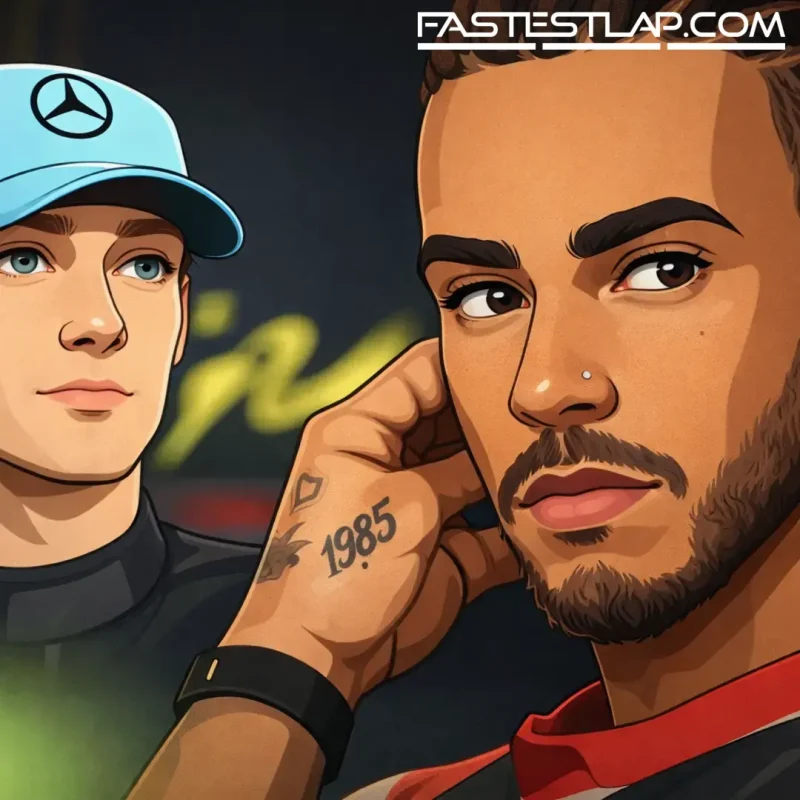
For Ferrari, the optics aren’t ideal: two separate incidents, two separate complaints, and the driver doing the complaining happens to be the race winner. For Hamilton in particular, it’s an early reminder that old relationships don’t buy you any space when the visor goes down. Russell was his team-mate for three seasons at Mercedes between 2022 and 2024; in Melbourne, he sounded like a rival who’s already run out of patience.
None of this changes the result — Mercedes leaves Australia with maximum momentum, and Ferrari leaves knowing it had the start of the race, not the shape of it. But if Russell is already talking in terms of safety directives and FIA tweaks after round one, don’t be surprised if the next few drivers’ briefings get a little spikier, and if “straight mode” becomes a talking point that lingers long after the Melbourne glitter has been swept away.