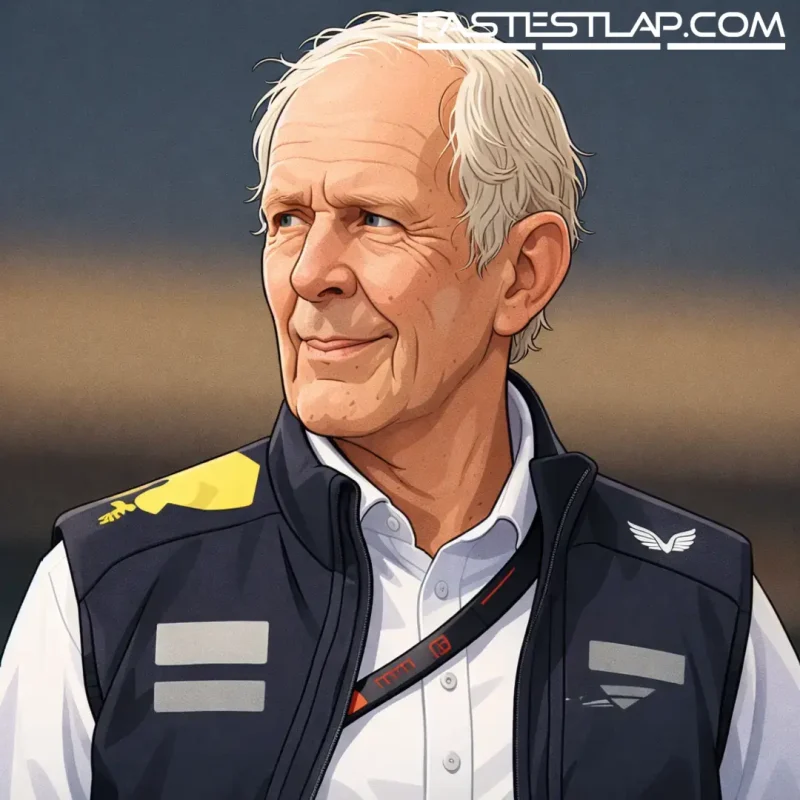
Helmut Marko hasn’t been in the Red Bull inner circle for long, but he’s already watching Formula 1’s 2026 reset with the sort of detached sharpness you only get once the team kit’s back in the wardrobe.
And after Melbourne’s season-opening Australian Grand Prix — the first proper look at the new technical era in race conditions — his verdict was as blunt as it was familiar: for all the talk of improving the racing, F1 has simply swapped old limitations for new ones.
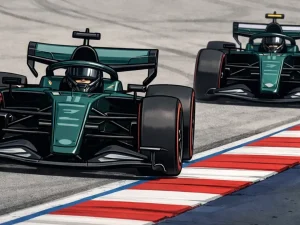
What grabbed Marko wasn’t the headline result — George Russell converting pole into victory to lead a Mercedes 1-2 — but how the action actually played out. Yes, the opening sequence between Russell and Charles Leclerc had bite. Leclerc’s launch flipped the script immediately, and for a handful of laps it was properly messy in the best way, the lead changing hands repeatedly as both drivers leaned on the new cars’ strengths and tried to hide their weaknesses.
Marko admitted he enjoyed that early chaos from home, even if he couldn’t resist a little callback to his former life.
“The pulse was up because you knew that the starting phase would bring some surprises,” he told sport.de. “When two Red Bull cars were at the front in the first lap, the pulse went up a bit.”
But in his telling, the race’s story quickly narrowed: once Mercedes “drove away”, the spectacle stopped being about drivers taking space and started being about management — particularly of energy.
That’s where Marko’s bigger complaint lands. He doesn’t think overtaking has improved at all; he thinks it’s been rebranded.
“I wouldn’t call it that,” he said, when asked about overtaking. More like “passing”.
The distinction matters, and not just as a semantic jab from a man who’s never been shy about arguing the sport’s direction. Marko’s view is that too many of the positional changes in Melbourne were dictated by who had usable battery at that moment rather than who was braver on the brakes or better placed through the corner before the straight.
“Overtaking in the classic sense has not improved in any way,” he argued. “There were no real overtaking manoeuvres in the sense that someone is on the brakes later or has come out of the corner.”
His most pointed example was the sight — and the sound — of drivers lifting on the straights. In Marko’s mind, that’s not a clever new layer of racecraft; it’s an identity problem.
“What is most disturbing is when you hear someone take their foot off the gas on the straight,” he said. “That’s hard to connect with the DNA of Formula 1.”
It’s a complaint that dovetails neatly with the wider grumbling in the paddock since the regulations landed: that the cars demand too much deliberate “use” rather than allowing drivers to simply race what they’ve got underneath them. Even Max Verstappen, now no longer Marko’s driver to manage, was openly critical over the weekend, calling the experience “super frustrating”.
Marko, for his part, wasn’t arguing the rules should be binned after one race. He did allow that the new era needs time to bed in — a rare moment of patience from someone who made a career out of being impatient.
“It will certainly get better,” he insisted.
But he also labelled the regulations “far too complicated”, adding that the detail was “too stupid” for him — which, in Marko-speak, is less about technical ignorance and more about a refusal to accept complexity for its own sake.
If his problem with the racing is philosophical, his read on the competitive order is coldly practical. Marko reckons Mercedes has come out of the blocks with a “relatively large lead”, and Melbourne offered plenty of ammunition for that claim.
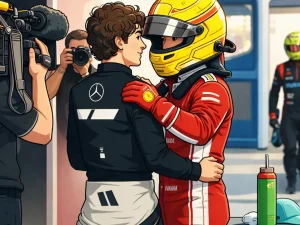
Russell won, Kimi Antonelli backed him up in second, and it could easily have been a more comfortable afternoon but for the noise in the opening stint. Antonelli’s race in particular caught Marko’s eye: after dropping to seventh at the start, the Mercedes rookie carved back through the field and reattached himself to the sharp end quickly enough to turn his day into something more than damage limitation.
“Antonelli dropped back to seventh place at the start and then drove back to second place relatively quickly,” Marko said. “He drove roughly one second faster than the rest in this phase.”
Marko described the Mercedes as being “on rails”, and it’s hard to argue with the picture he paints: a car that can recover from compromised track position without needing a perfect strategic storm. In a season where energy usage looks set to decide not just attacks but the *timing* of attacks, that baseline performance matters.
Ferrari, meanwhile, were credited for the very thing Marko said he misses: the start. Leclerc’s getaway — and the brief, breathless fight that followed — was, in Marko’s view, a product of what Ferrari has found at launch.
“Without the super start that the Ferraris made, this situation would never have happened,” he said, pointing to Ferrari’s “small turbo” as the source of optimism that it might be repeatable.
Whether it is or not will shape the early part of this season. If Mercedes can qualify on top and control races once the opening volatility passes, everyone else will need more than the odd brilliant start to make it uncomfortable.
Marko doesn’t expect the pecking order to move around much in the short term.
“I don’t think the order will change much,” he said.
It’s only one race — and it was a season opener with all the usual weirdness that brings — but Marko’s two conclusions are already clear. First, Mercedes looks like the benchmark. Second, F1’s new era may have succeeded in creating *movement*, but in his eyes it hasn’t solved the harder problem: making the cars fight each other in a way that feels instinctive, human and, crucially, like Formula 1.