Max Verstappen isn’t just moonlighting in endurance racing this year — he’s building himself an exit ramp from the parts of Formula 1 he’s increasingly tired of, without actually leaving the grid.
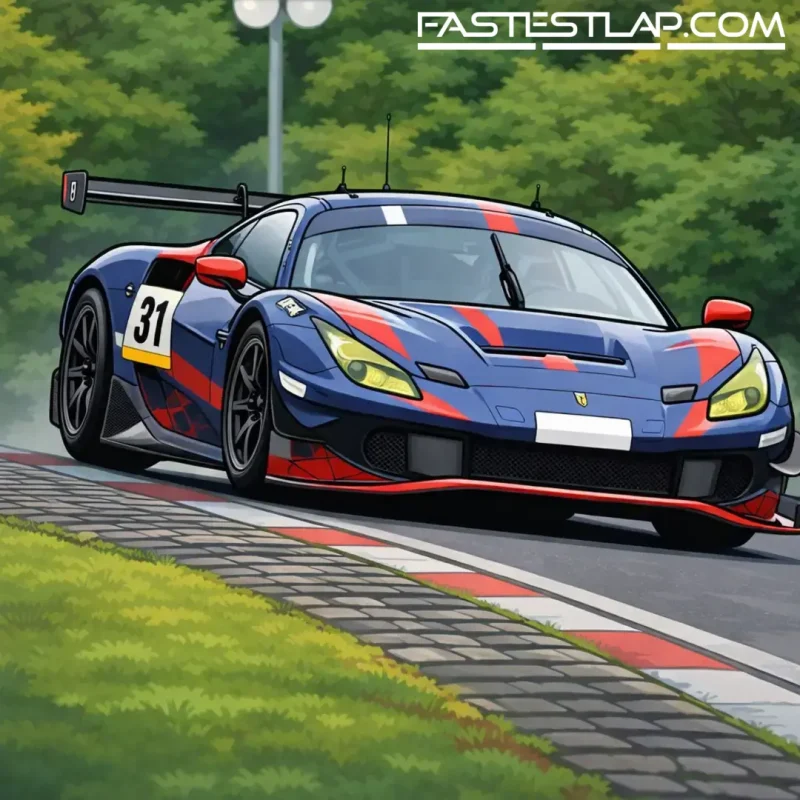
The four-time world champion will line up for the Nürburgring 24 Hours in May, slotting it into an F1 schedule that barely leaves room to breathe. The race runs May 14–17, wedged neatly between the Miami and Canadian Grands Prix, and Verstappen will do it in a Mercedes-AMG GT3 entered as Mercedes-AMG Team Verstappen Racing. The line-up around him is as serious as the event: Lucas Auer, Jules Gounon and Daniel Juncadella.
The optics are deliciously modern F1. A Red Bull-branded livery on a Mercedes-AMG, Verstappen’s name on the entry, and a driver who’s been blunt about not loving the feel of the 2026 cars choosing to spend his “spare” weekend wrestling a GT3 around the Nordschleife. If anyone still thinks this is a vanity run or a publicity exercise, they haven’t been paying attention to how deliberately Verstappen moves when he wants something.
He’s also done the paperwork properly. Verstappen has been working towards the DMSB Permit — the Nürburgring “Ring Licence” in paddock shorthand — to make sure he’s cleared for top-level GT3 competition at the circuit. That’s not a casual box-tick. It’s a signal that he intends to be taken seriously in this world and that he’s preparing for more than one headline appearance.
For now, the Nürburgring 24 is the only non-F1 race he’s confirmed. But Verstappen has left the door open to doing one of the April qualifying events if the calendar shifts — specifically if the Saudi Arabian Grand Prix were to be cancelled. He didn’t dress it up as a plan, more a pragmatic “we’ll see what’s possible” if an unexpected gap appears.
What’s interesting isn’t the scheduling gymnastics; it’s the honesty behind the decision. Verstappen has already made it clear he isn’t enjoying the current driving dynamics in Formula 1. The new regulations have leaned heavily into energy management, demanding a different rhythm and, at times, a conscious suppression of instincts that have made the very best look superhuman for a decade. When asked if racing elsewhere is part of chasing enjoyment away from F1, Verstappen didn’t pretend the Nürburgring idea was born out of this season’s frustrations.
“This was already planned, regardless of what I’m driving this year,” he said, before adding the line that lands like a shrug with teeth: “I wish I had a bit more fun at the moment here [in F1], of course.”
In that one sentence sits the whole tension of 2026 Verstappen. He’s still doing the job, still operating at the sharp end, but he’s clearly searching for a version of racing life that doesn’t feel like a constant negotiation with systems — technical and human.
Because when Verstappen talks about endurance racing, he doesn’t talk like someone chasing speed. He talks like someone chasing a cleaner atmosphere.
He pushed back on the idea that this is about going somewhere “faster” or more visceral than F1 — the obvious counter being that nothing is faster than a Grand Prix car. “Not really,” he said. “Because it’s the highest speed.” Instead, he described an environment that’s “more old school, less political”, where he can be “a bit more myself”.
That’s the part that should make the F1 paddock uncomfortable, because it isn’t a critique of lap time or engineering ambition. It’s a critique of culture — the endless messaging, the factional noise, the pressure to perform in public even when you’d rather just… race.
And the Nürburgring 24 fits the Verstappen mythology in a way that’s hard to ignore. These are the races he grew up around; he referenced his father Jos doing endurance events when he was a kid. There’s nostalgia in it, but also intention. Verstappen has been in Formula 1 long enough to have “done it” in the only way the greats can: titles, milestones, the lot. He’s not shopping for validation.
“I think I don’t need to be only a Formula 1 driver,” he said. “I can also do other things… I’ve achieved everything that I wanted to achieve.”
That’s not retirement talk, not yet. It’s something subtler: a statement of autonomy. Verstappen is reminding everyone — team principals, sponsors, the governing body, even the audience — that he’s not trapped by the sport’s gravity. He wants to explore the big endurance races, and he wants to do it now, not as a “when I’m 40” bucket-list tour after the spotlight has moved on.
“So now I think it’s the perfect age to do it,” he added.
Whether the Nürburgring becomes a one-off or the first brick in a bigger structure, it’s already telling us something about how Verstappen sees the next chapter. The romantic version is the pure racer escaping to the Nordschleife for fun. The more realistic version is that he’s building a parallel career while he’s still at the top of the main one — not because he’s falling out of love with racing, but because he’s picky about the kind of racing life he wants.
And if Formula 1 wants to keep stars like Verstappen fully engaged in the long run, it might be worth listening to what he’s actually saying — not about kilowatts and braking points, but about the people and the politics that come with them.