Lewis Hamilton didn’t dress it up in Shanghai: Ferrari’s bringing back its rotating rear wing, and the Scuderia still has a proper chunk of lap time to find if it wants to stop Mercedes dictating the early shape of 2026.
The rear-wing call is the more interesting of the two admissions, because it’s a bet Ferrari is prepared to live with the compromises. The concept drew plenty of scrutiny through winter running in Bahrain, with rival engineers circling it for both its upside and the potential drawbacks that come with any mechanism designed to work across such a wide aerodynamic operating window under the new ruleset. Hamilton’s confirmation that it returns for the Chinese Grand Prix says Ferrari hasn’t seen enough in its data to park it — or, more pointedly, it believes the gain is worth any knock-on effect elsewhere.
That’s the push and pull of this regulation cycle in a nutshell. Active aero has created a very modern kind of performance chase: teams aren’t just hunting peak downforce or low drag, they’re trying to control how the car *moves between states* — and how cleanly it does it. Hamilton’s read is that Mercedes has nailed that transition better than anyone so far.
He’s put a number on it too: around half a second a lap in race trim, with Mercedes “mostly” strong on the straights. That’s a blunt assessment from a driver who knows exactly what a front-running baseline looks like — and who spent the best years of his career with Toto Wolff’s squad. Hamilton pointed to Mercedes taking “a huge step” when active aero is deployed, which is another way of saying Ferrari isn’t simply lacking one corner type or one phase of the lap; it’s being hurt in the parts of the lap where the new toys are supposed to be decisive.
Charles Leclerc backed up the overall picture, conceding Ferrari is “definitely not” at Mercedes’ level right now. The subtext is hard to miss: Ferrari’s weakness isn’t a mystery to be solved in a wind tunnel riddle, it’s visible on the GPS traces. If Hamilton is questioning whether the W17 can be caught in the short term, that’s not doom-mongering — it’s the reality that big straight-line and deployment advantages tend to be expensive to claw back quickly because they touch everything from aero efficiency to energy management.
Elsewhere in the paddock, the mood around the 2026 cars continues to swing between gallows humour and open frustration. Max Verstappen, never one to leave a thought un-sharpened, joked that he’d swapped his simulator for a Nintendo Switch because Mario Kart might be a closer match to the new-generation machinery. It’s another barb aimed at regulations he’s already compared to “Formula E on steroids” during pre-season testing — and another reminder that not every top driver is thrilled with the direction of travel, even if they’ll inevitably adapt.
Verstappen’s comments landed in the same week he confirmed plans to race the Nürburgring 24 Hours in May, a neat little counterpoint to any suggestion he’s mentally checking out of grand prix racing. If anything, it sounds like a driver looking for old-school feel wherever he can find it, while accepting the championship fight is now being conducted with different tools.
If Ferrari’s challenge is aerodynamic and strategic, Aston Martin’s looks more fundamental — and more painful. Fernando Alonso has revisited his infamous “GP2 engine” outburst from the McLaren-Honda era, suggesting the current Honda struggles have helped people understand why his criticism was so fierce back then. The context has changed, but the tone hasn’t: Alonso doesn’t do diplomacy when he thinks performance is being left on the table.
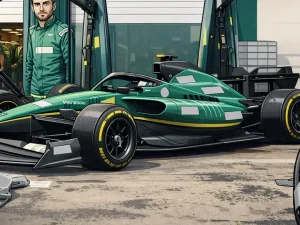
Aston Martin’s new Honda partnership has started under a cloud, with a vibration issue causing damage to multiple batteries and limiting running early in the season. Heading into China, Aston Martin and Honda refused to disclose how many batteries they have available this weekend — an entirely unsurprising refusal, but a telling one given the circumstances. In 2026, when the power unit rules put even more emphasis on electrical performance and reliability, battery attrition isn’t background noise; it shapes what you can safely run, what you can learn, and how aggressively you can tune the car across a weekend.
Honda said it made progress on the vibration problem in Australia, but Shanghai will be another stress test. The tight timelines in a new rules cycle don’t flatter anyone: if you’re burning through components, you’re also burning through development momentum.
So China arrives with a few storylines already sharpened. Ferrari is persisting with a technical solution that could either be a clever differentiator or a headache it can’t quite tune out. Mercedes, by Hamilton’s own reckoning, has started 2026 with a straight-line and active-aero edge big enough to force everyone else into catch-up mode. Verstappen is still sniping at the rulebook, but keeping busy. And Aston Martin is trying to stop a vibration from turning into a season-defining constraint.
In other words: it’s March, and it already feels like the grid is splitting into those refining an advantage — and those fighting to get their weekends back under control.