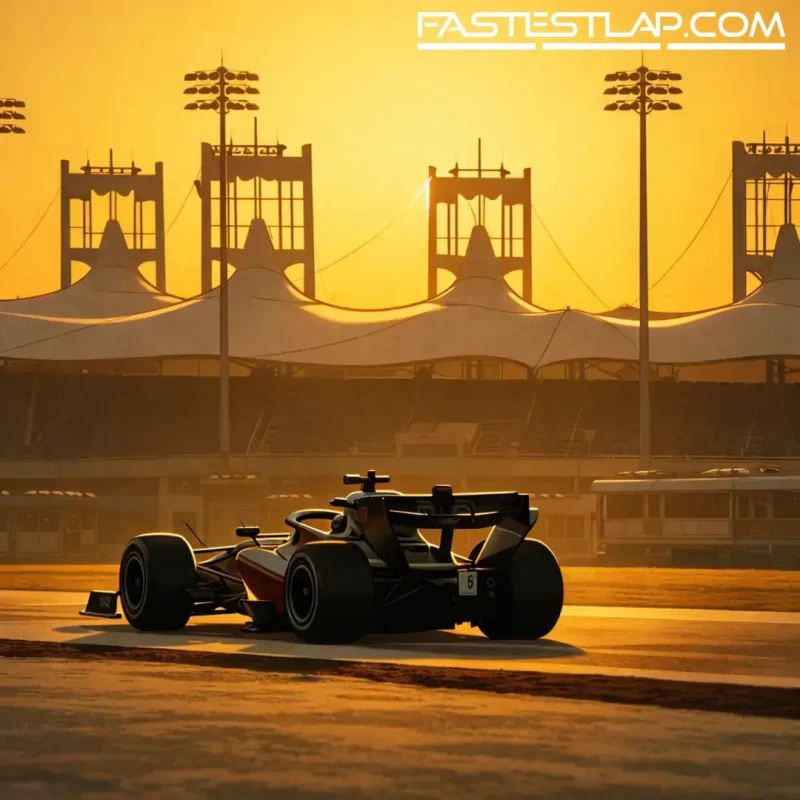
Formula 1 is bracing for the first major calendar shock of 2026, with Bahrain and Saudi Arabia now expected to be called off as the Middle East conflict continues to escalate.
Both races had been due to run back-to-back in April — Bahrain on April 10–12, followed by Saudi Arabia a week later — but the situation in the region has deteriorated rapidly since the US and Israel’s joint missile strike on Iran last month. With missile strikes now affecting multiple areas, the viability of staging two flyaway grands prix in that window has been under a cloud for weeks. That cloud is about to become an official decision.
Reports on Friday indicate F1 will confirm the cancellations this weekend, following ongoing monitoring by both the FIA and Formula One Management. The expectation in the paddock has increasingly been that this would end in a straight cancellation rather than a relocation, simply because the sport can’t magic up an equivalent venue, permits, staffing, freight plans and promoter arrangements at short notice — not without breaking something else in the calendar.
There was some early chatter about a creative fix — the kind of idea that spreads fast in the first 24 hours of a crisis — including the notion of shifting events and creating a double-header elsewhere, with Suzuka mentioned in passing. That concept didn’t survive even a basic reality check. F1 can be nimble, but it isn’t elastic: teams, suppliers and broadcasters all operate on tight travel and build schedules, and the sport’s freight operation is built around pre-planned regional “blocks”, not ad-hoc re-routing on a whim.
If the cancellations are confirmed, the immediate sporting knock-on is a notably awkward gap in the flow of the season. After Suzuka on March 29, F1 wouldn’t race again until Miami on May 3 — a full month without competitive running at a point in the year where momentum tends to matter, both on-track and politically.
For the teams, that kind of pause cuts both ways. On one hand, it’s a rare chance to reset, particularly for outfits that have started the season on the back foot and need more than a rushed Friday upgrade package to change their trajectory. On the other, it disrupts the rhythm of development and operations just when the championship normally starts to take shape. There’s also the less glamorous reality: a cancelled race isn’t just a blank weekend, it’s commercial obligations, staffing plans, sponsor activations and logistics work already sunk into an event that suddenly vanishes.
And for F1 itself, this is the sort of situation where the sport’s global expansion meets the hard edge of geopolitics. The championship can plan years ahead, but it can’t negotiate with missiles. Once security and stability become uncertain, even a sport used to operating in complex environments reaches a point where the responsible option is to step away.
Nothing about this is being framed as a simple “move it somewhere else” problem, because it isn’t. The calendar is already a tight sequence of continent-hops. A replacement would need to be ready to host at F1’s scale, at the right time, with the right infrastructure — and it would need to do so with weeks, not months, of notice.
For now, the expectation is that the decision will be formalised this weekend. Should that happen, the focus shifts to what F1 does with the breathing space between Japan and Miami — and whether teams use it to sharpen their 2026 trajectories, or simply to manage the disruption as best they can while the sport waits for the calendar to restart.