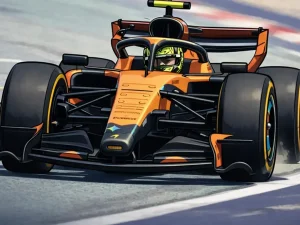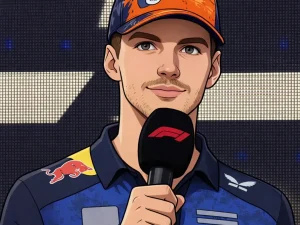
Red Bull isn’t doing much theatre about Max Verstappen’s public grumbling over Formula 1’s 2026 cars. If anything, Laurent Mekies’ message has been to strip the situation down to its most basic truth: keep giving Verstappen something he can win with, and the rest of the noise largely takes care of itself.
Speaking on the *Beyond the Grid* podcast after the Japanese Grand Prix weekend – where Verstappen once again made it clear he’s not enjoying the new-generation machinery – Mekies framed Red Bull’s priorities in a way that will sound familiar to anyone who’s spent time around that factory. Forget hypothetical driver-market chess in 2027. The only currency that matters is lap time.
“You need to come to Milton Keynes to see… ‘the fire behind every door’,” Mekies said, before getting to the point. Red Bull isn’t, in his words, “thinking about our driver market in ’27”. It’s thinking about “getting a fast car”. And if it does that, “there is no discussion about what Max is doing next year.”
That’s a neat line, but it isn’t just PR. It’s a recognition that Verstappen’s recent doubts aren’t coming from a sudden loss of appetite for competition, but from a very specific frustration: the feeling that the 2026 package is forcing drivers away from what they value most in an F1 car – commitment and attack.
At Suzuka, Verstappen spoke openly about weighing up the reality of a full calendar when the driving itself isn’t rewarding, especially against the pull of family life. The subtext wasn’t hard to read: if the sport has engineered cars that require constant management, lifting and coasting, and the odd moment of ‘super-clipping’ where performance fades even with the throttle pinned as electrical deployment drops away, then the emotional return on the job diminishes. For someone who’s already achieved everything, that matters.
It also matters contractually. Verstappen is tied to Red Bull through the end of 2028, but there’s an understood performance-related clause that could open doors if Red Bull isn’t positioned highly enough in the standings later this year. Mekies didn’t need to spell that out; the paddock knows how these deals tend to be written. The point is that Red Bull can’t treat Verstappen’s frustration as background chatter when the sport is in the early stages of a major rules cycle and momentum can shift quickly.
Where Mekies diverged from the more alarmist takes is in how he described the internal conversations. Red Bull isn’t sitting Verstappen down for a heart-to-heart about retirement plans; it’s treating his criticism as technical feedback with urgency attached.
“We are not having the retirement talk with Max right now,” Mekies said. “We are having the hardcore analysis of how to go faster with our car… he’s vocal about the tweak he thinks we need to do.”
That last part is important. Verstappen isn’t complaining from the sidelines. He wants the sport to “land in the right place”, as Mekies put it, and he’s pushing for changes that bring qualifying and racing back closer to the “flat-out” ideal without throwing away what’s been positive in the opening races of this rules era.
Talks are scheduled through April to address the early misgivings around the 2026 regulations, and Mekies was notably confident that F1 and the rule-makers can adjust what needs adjusting. He spoke about “tools to tweak the regulations” so the sport can retain the upsides it’s seen in racing while moving away from the most awkward power-delivery compromises.
“If we do that,” Mekies added, “I have every confidence that Max will keep seeing what we all see… he’s ultimately a competitor.”
That’s the Red Bull worldview in one sentence: Verstappen doesn’t need to be convinced that F1 is special. He needs the sport and his team to stop getting in the way of him driving it the way he thinks it should be driven.
The wider picture is that Mekies is threading a needle. Red Bull has to be seen backing its star without sounding like it’s issuing ultimatums to the sport. At the same time, it can’t pretend the situation is purely philosophical when the hard reality is that Verstappen’s presence beyond this year could, at least theoretically, be influenced by where Red Bull sits when the performance clause comes into play.
So Mekies has chosen the cleanest possible framing: Red Bull’s response to Verstappen’s doubts is to build a quicker car and lean into the regulatory conversations that might make the driving experience less compromised. No melodrama, no public pleading, no speculative “of course he’ll stay forever” vows. Just a reminder that in Formula 1, loyalty has always been highly correlated with competitiveness.
And if you’re Red Bull, that’s the only sensible stance. Because if the car is genuinely good, Verstappen doesn’t need selling on next season. If it isn’t, no amount of talking will make the question go away.