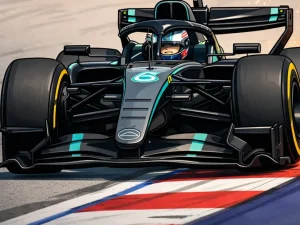
Oscar Piastri’s takeaway from Suzuka was blunt, almost to the point of being unhelpful if you’re a rival looking for a silver bullet: Mercedes isn’t doing anything “magical” in 2026. It’s simply got more grip, more downforce, and — right now — a better handle on how to deploy its power unit.
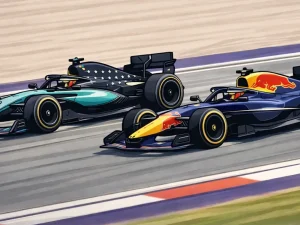
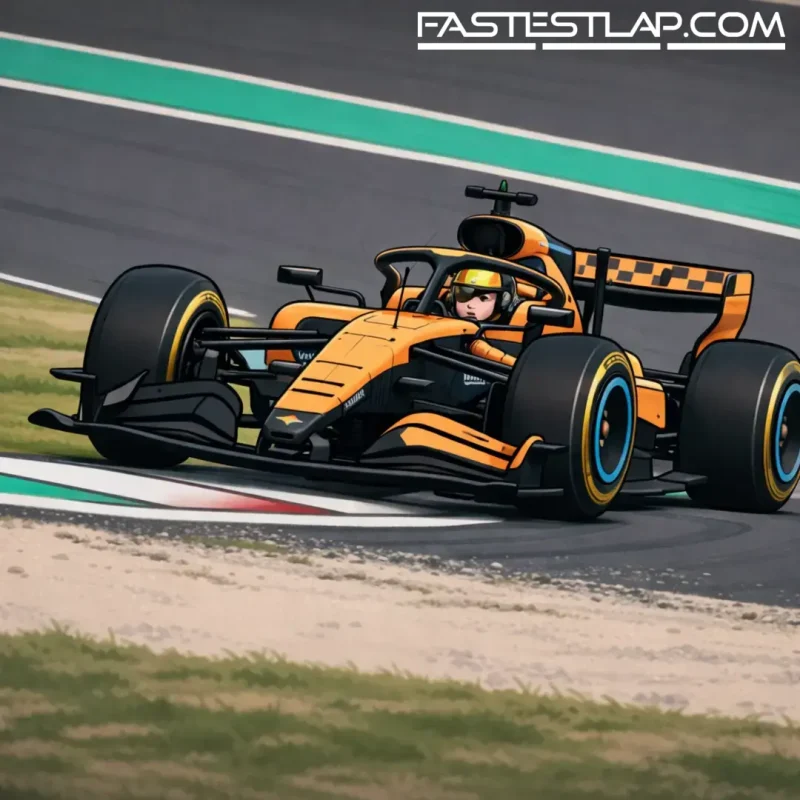
That assessment came after a Japanese Grand Prix that briefly looked like it might become Piastri’s statement win. On his first racing laps of the season, the McLaren driver produced the kind of launch that makes engineers wince and strategists grin: he swept past both Mercedes cars into Turn 1, put himself in clean air, and controlled the opening half of the race.
Then the Safety Car arrived at exactly the wrong time for him and exactly the right time for Kimi Antonelli. The Mercedes driver flipped the order through the neutralisation, and once he was in front again he didn’t so much manage the race as disappear into it, stretching his advantage to around 15 seconds by the chequered flag.
Piastri didn’t hide from the “what if?” of it. McLaren, he felt, had enough in that first stint to make it count if track position had stayed in his favour. But the broader picture after three rounds is harder to ignore: Mercedes has led the field every time so far, and everyone else is staring down an April stretch that will be spent hunting for upgrades and, just as importantly, understanding.
Asked where McLaren is bleeding time to the W17, Piastri’s answer wasn’t about one corner type, one clever mechanical trick, or a killer straight-line mode. It was a data-led shrug.
“I think just grip,” he said. “There’s nothing magical about it. They just have probably more downforce.
“I think they’re using the power unit probably a bit better than us at the moment, and it’s as simple as that, really, there’s no magic.
“The more helpful tool is definitely looking at the data, and we’re losing a bit everywhere.
“There’s not really one area where we’re weak or one area that we’re strong in, it’s just a bit across the board, so I think just finding more downforce is our main opportunity.”
That last line is the key, and it’s why this early-season pecking order feels so stubborn. When a car is clearly deficient in one phase — slow-speed rotation, traction, tyre life, DRS effectiveness — teams can take a scalpel to it. But “a bit everywhere” is the kind of problem that tends to demand more fundamental steps: aerodynamic load without tipping into drag, platform control without compromising kerb usage, efficiency without bluntly trimming wing.
And Piastri’s nod to Mercedes “using the power unit… a bit better” matters because it hints at something rivals can’t simply copy with a new floor or a revised front wing. In a new rules era, it’s rarely just what you have, but how confidently you can run it: how hard you can lean on deployment, where you can push operating windows, and how much you can commit to a setup direction without fearing it’ll bite you on Sunday.
What’s intriguing is that Piastri doesn’t see Mercedes as the only benchmark worth studying. Ferrari, in his view, has offered a different kind of clue in the opening rounds — one that suggests there are multiple ways to inconvenience the early favourite.
“Ferrari is interesting as well, because I would say it almost looks like they’re better in the corners, but maybe a bit worse power unit, or drag,” he said.
“China was quite interesting, and I think the way they’ve been able to battle with Mercedes is also quite interesting, because it’s not just pure qualifying pace [where] I think Mercedes have got a clear advantage over everybody, that the way that Ferrari are able to battle with them and contend with them at the start of races especially, is quite interesting to see.
“So, I think there’s inspiration in more than just one place.”
It’s a telling comment from a driver who’s had an odd start to 2026 — two rounds sidelined for separate reasons, then straight into a podium fight at Suzuka and, for a while, the lead of a grand prix. That context makes his perspective on “inspiration” feel less like polite paddock diplomacy and more like a clear-eyed read of the landscape: if McLaren can’t yet match Mercedes across a lap, it may still find ways to be awkward on Sunday by borrowing pages from different playbooks.
But the message from Suzuka remains: if you hand Mercedes track position this season, you might not get it back. Piastri knows it; McLaren’s data will confirm it; and the rest of the grid has a month to turn “a bit everywhere” into something more specific — and solvable — before the next phase of the championship begins.