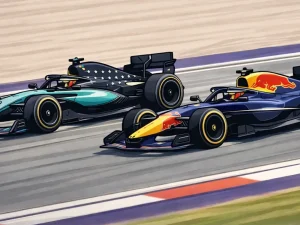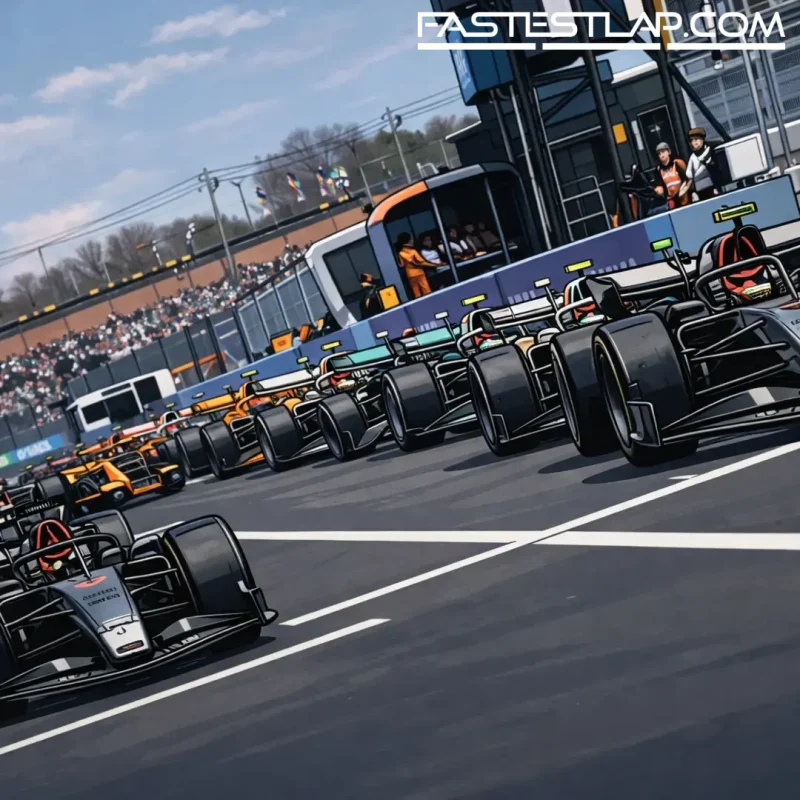
Formula 1 will tell you it’s got what it wanted from 2026: more overtaking, closer racing, and fewer of those familiar DRS-train afternoons where everyone’s saving tyres and waiting for a pit window that never really opens. On the evidence of the first part of this season, that claim isn’t hard to support — cars are swapping places far more often, and fights are lasting longer than a single lap.
But the sport’s already staring at a familiar problem: when you engineer “more action”, you risk turning racing into a systems exercise. And in 2026, that tension is being exposed by the way the new power units are shaping wheel-to-wheel combat.
The most noticeable change isn’t simply that there are more passes. It’s *how* they’re happening. With the all-new power units, drivers are deploying and replenishing battery energy at different points around the lap, and that variation is creating genuine ebb-and-flow in duels. One lap you’re the hunter; the next you’re suddenly the one hanging on. The end result is a lot of position swapping — sometimes multiple times through the same sequence of corners — because the performance swing isn’t just aerodynamic or tyre-related, it’s baked into how and where the power arrives.
That’s exactly why the paddock can’t agree on whether this is the future or a gimmick.
Lando Norris, as reigning world champion, hasn’t hidden his frustration with what he sees as a loss of agency in those fights. After the Japanese Grand Prix, he described the racing as “yo-yo”, saying drivers are “at the mercy of whatever the power unit delivers” and adding that the driver should be in control — “and we’re not.” It’s a pointed complaint, because it goes beyond taste. It’s a warning that, if the decisive moments are increasingly dictated by energy state rather than judgement, craft, or car placement, the sport risks undermining the very thing it’s trying to sell.
Lewis Hamilton has landed on the other side of the argument — and with typically vivid language. After the Chinese Grand Prix, and after yet another weekend of close-quarters battling with his team-mate Charles Leclerc (a theme that’s followed them to every race so far), Hamilton called it “the best racing that I’ve ever experienced in Formula 1.”
What’s striking about Hamilton’s defence is that it isn’t just “more overtakes = good”. He’s framing it as *better* fighting: easier to follow, less punishing turbulence, the ability to sit right on the gearbox without that old feeling of the front end dissolving into understeer. In his words, there’s no “bad wake” that bleeds away too much downforce. And he compared the rhythm to go-karting — back and forth, razor thin margins, no contact — crediting driver respect as much as the rulebook.
Both takes can be true at the same time. The cars can be closer and the wake less toxic while the *mechanism* of the battle still feels contrived. Fans are picking their side accordingly: some love the constant jeopardy and momentum shifts; others watch a couple of swaps in consecutive corners and wonder whether they’re seeing racing or resource management wearing racing’s clothes.
That split matters because the timing couldn’t be more awkward. Talks are due later this week on the “next steps” for this regulation set — the early-season check-in that always sounds harmless until you remember how quickly “small tweaks” can become an arms race of unintended consequences. F1 has been here before: identify a real issue, fix it with a lever that’s too blunt, then spend the next two years chasing the side effects.
The 2026 on-track product is undeniably more animated. The question is whether the sport wants to protect that at all costs, or refine it so the energy management remains part of the challenge without becoming the *main character* in every duel.
And that’s where Norris’ “mercy of the power unit” line lands. If drivers feel they’re being played by the hardware — if overtakes start to look pre-scripted by deployment windows rather than created by pressure, positioning and mistakes — then F1 risks swapping one kind of frustration (stuck-in-dirty-air stalemates) for another (passes that don’t feel “earned”). Hamilton’s argument, meanwhile, is a reminder not to romanticise the old problems: for years, F1 asked for cars that could race closer, and 2026 appears to have delivered that part of the brief.
So what have you made of it? Is the early 2026 wheel-to-wheel a breakthrough — the kind of fighting F1 has been chasing for a decade — or is it edging towards artificiality as drivers surf energy states like a tide chart?
Cast your vote, and have your say. The paddock’s divided. The grandstands are too. And with the sport already discussing what to adjust next, your answer might end up aligning with whichever world champion you agree with most.