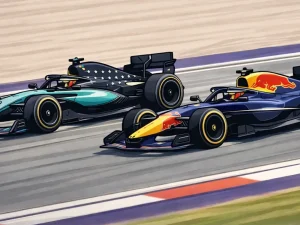
Red Bull doesn’t need reminding that fourth-fastest isn’t where it plans to live in a brand-new regulation era. But after three rounds of the 2026 season, that’s the blunt reality — and Laurent Mekies isn’t dressing it up.
With Formula 1 heading into Miami after an unplanned April pause, the Red Bull team principal has floated a phrase that’ll resonate up and down the pitlane: a “second season launch”. Not because anyone’s forgetting what happened in the opening flyaways, but because the combination of fresh regulations and a rare, uninterrupted factory window has created the kind of reset opportunity teams normally only dream about once the freight has started moving.
Mekies’ message is twofold. First, the gap to the front is real. He’s openly acknowledged Red Bull is roughly a second a lap off the benchmark Mercedes at this stage — a chunk of lap time that doesn’t disappear with a neat setup tweak and a fresh set of tyres. Second, Miami won’t simply be “the next race”; it could be the first genuine read on where the development arms race is taking everyone, now that early-season data has been digested and upgrades have had time to be properly manufactured, correlated, and shipped.
In other words, the grid we saw in the opening trio of grands prix may already be obsolete by the time the cars roll out in Florida.
The context matters here. This is the start of a new regulation cycle, and in those seasons the competitive order can swing sharply as concepts either confirm their promise or hit a wall once rival teams find their weaknesses. It’s also been a short winter, as Mekies points out, made more complicated for Red Bull by the demands of a new power unit. That’s a polite way of saying the to-do list was long and the clock was unforgiving.
Then came the calendar disruption: Bahrain and Saudi Arabia were cancelled, leaving teams with an unusually intense working window in April while factories stayed fully active. No race build. No travel. No pausing development to pack and unpack garages on the other side of the world. Just hours in the wind tunnel, miles on the simulator, late-night correlation meetings, and as many parts pushed through design and production as the system can handle.
Mekies, speaking on the Beyond the Grid podcast, framed it as a rare chance to “go deeper into the data” and, crucially, “alter the development route” if the early races have exposed fundamental shortcomings.
That line — altering the route — is the tell. Early in a regulation cycle, teams can burn weeks chasing performance in the wrong direction if they misread the car. When you’re already behind, that risk becomes existential. Red Bull can’t afford to simply bring more of what it already has if the core issue sits elsewhere, and Mekies is effectively saying Miami is where that pivot will start to show.
Of course, there’s an important caveat, and it’s one Carlos Sainz has summed up neatly: upgrades only matter if they beat everyone else’s upgrades. The sport isn’t waiting for Red Bull to catch up. Mercedes won’t stand still. Neither will the rest of the front. In a season like 2026, development is less a ladder and more an escalator — you’re either climbing faster than the movement beneath you, or you’re going backwards.
That’s why Mekies’ “second season launch” line feels less like marketing and more like a warning shot to anyone drawing firm conclusions from the first three races. Miami may not just bring a visible flurry of new floors, wings and cooling tweaks; it may also reveal which teams have learned quickest what these cars actually want.
For Red Bull, the stakes are obvious. A one-second deficit to the leading car isn’t simply a performance problem — it’s a strategic one. It changes how aggressively you chase development versus how quickly you pivot. It changes how you spend precious manufacturing capacity. It changes how you manage drivers across a season where momentum can snowball early if you let it.
And for the rest of the grid, Mekies is essentially saying: don’t expect the status quo. “Every team is engaged into this massive development race,” he said, predicting cars will look “significantly” different when F1 returns. Miami becomes a “new starting point” — the moment where the season stops being about baseline form and starts being about who can evolve fastest.
That’s also what makes the timing so intriguing. Suzuka gave us a snapshot. Miami might give us a trendline. And if Red Bull’s upgrade package delivers what Mekies is hinting at, the conversation could shift quickly from “how big is the gap?” to “how fast are they closing it?” — or, just as tellingly, whether they’ve identified the right gap in the first place.
Either way, when teams talk about a “second launch”, it’s usually because they know the first one didn’t land how they wanted. Miami will tell us how hard Red Bull’s response really is — and whether Mercedes’ early advantage is about to be challenged, or simply confirmed under the harshest possible conditions: everyone improving at once.