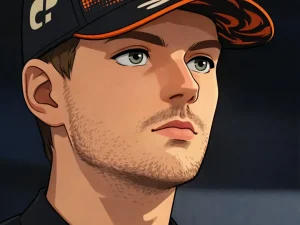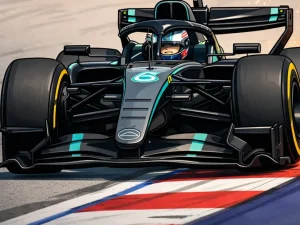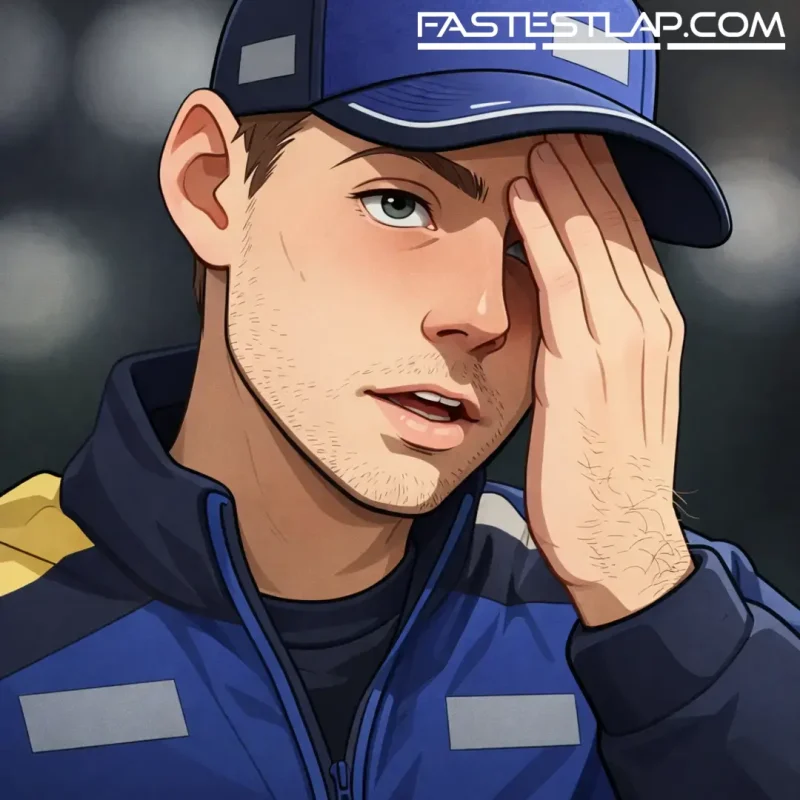
Max Verstappen isn’t hiding it anymore: 2026 has taken something out of him.
After three rounds of the new regulations era, the four-time world champion says he’s having to talk himself into the job each morning, describing a routine that sounds less like a title defence and more like a grind. “Every day I wake up, I convince myself again,” Verstappen admitted. “Many times.”
It’s a striking window into where his head is at, because Verstappen has never been the type to romanticise the struggle. When he’s happy, he’s brisk and clinical. When he isn’t, he tends to say so with the same blunt precision he applies to an apex.
He’s also been consistent in his view of the 2026 rule set. Back in pre-season testing he likened the new-look Formula 1 to “Formula E on steroids”, a line that landed because it didn’t feel like theatre — it sounded like a driver who simply doesn’t enjoy what the cars demand of him. That discomfort now has numbers attached to it: just 12 points from Australia, China and Japan, and a yawning 60-point gap already to Mercedes’ Kimi Antonelli at the top of the standings.
In ordinary circumstances, three races don’t define a season. But this isn’t ordinary. A regulation change can reset hierarchies, and early momentum matters when the learning curve is steep. Verstappen’s frustration has been as much about the texture of the racing and the experience in the cockpit as it has been about where he’s finishing. It’s the difference between being beaten and feeling like you’re competing in a category you don’t quite recognise.
What makes it more combustible is everything going on around him at Red Bull.
Earlier this week came news that Verstappen’s long-time race engineer GianPiero Lambiase will join McLaren no later than 2028. It’s not an immediate split, but it is a deadline — and in F1, deadlines have a habit of becoming countdown clocks. Lambiase has been glued to Verstappen’s side since his Red Bull debut in 2016, one of the few voices the Dutchman has consistently trusted when Sundays get messy.
Verstappen had previously suggested he’d retire if he ever had to part company with Lambiase. That comment now hangs in the air in a slightly different way: not as an ultimatum, but as evidence of how strongly he values continuity — and how rattling this new era already feels.
Jos Verstappen has tried to cool the temperature, saying Max will “just carry on” after Lambiase’s exit and revealing that their camp encouraged the engineer to take what was described as a “huge opportunity” at McLaren. On one level, that’s believable: the Verstappens aren’t sentimental in the way some paddock narratives suggest, and they understand careers are short. On another level, it underlines the reality that Red Bull is losing people from the inner circle at exactly the moment Verstappen is questioning how much he’s enjoying the sport.
And it isn’t just Lambiase.
One of Verstappen’s most senior pit crew figures, Ole Schack, is also set to leave Red Bull in the coming months, ending a remarkable run that stretches back through the team’s entire existence — and even to its Jaguar days before 2005. Jon Caller, Verstappen’s number one mechanic, is understood to have tendered his resignation as well, with the backdrop that Caller’s brother Matt moved to Audi over the winter.
Individually, these are the kinds of staffing changes every big team absorbs. Collectively, they create the kind of churn drivers feel in the small moments: the familiar faces missing in the garage, the tiny pieces of shorthand that have to be rebuilt. For a driver who thrives on efficiency and control, that matters.
Verstappen, for his part, is careful not to pin it on the workforce around him. He’s adamant his slump in motivation isn’t about Red Bull’s effort level. “I enjoy working with everyone,” he said. “Everyone is also trying their best, but it’s a lot of stuff together that at the moment is just not as nice for me. But that has nothing to do with the people in the team because I know they work very hard and they give everything…”
It reads like a driver separating two truths. One: he respects the people and the work. Two: he doesn’t like the sum of what F1 has become in 2026 — and he’s not prepared to pretend otherwise.
There’s also an intriguing counterpoint in his schedule. Verstappen will take on the Nürburgring 24 Hours next month, another step in an endurance path he’s been building alongside his F1 career. In the context of his comments, it’s hard not to see that as more than a hobby. Endurance racing offers a different kind of challenge: less politics, different pressure, and a purer sense of craft. If you’re looking for places motivation still comes easily, that might be one of them.
None of this means Verstappen is about to walk away. But it does shift the tone from casual paddock gossip to something more substantive: the greatest driver of Red Bull’s era is openly admitting that this season is testing his desire to be here, at the same time as his core group begins to loosen.
F1 has always demanded obsession. Verstappen’s admission is that, right now, obsession doesn’t come automatically — it has to be manufactured, day by day. And when a driver as relentlessly competitive as Verstappen is talking like that in April, everyone in the paddock pays attention.