Oliver Bearman says he’s “all okay now”, but the bit that stuck with him after Suzuka wasn’t the noise, the damage or even the 50G number that inevitably did the rounds. It was the journey home — the sort of post-crash reality check you only really hear about when a driver drops the bravado and admits they could barely move.
Nearly three weeks on from that huge Japanese Grand Prix shunt, the Haas rookie has described the immediate aftermath as manageable in medical terms, but grim in human ones. He left Suzuka without broken bones, yet with enough swelling and soreness in his right leg to turn a long-haul flight into an endurance test.
“It was a tough travel just because obviously after that, I wasn’t moving very much,” Bearman said. “I had a bit of swelling on the knee, but everything’s okay now, luckily, it was the right knee so I was okay.”
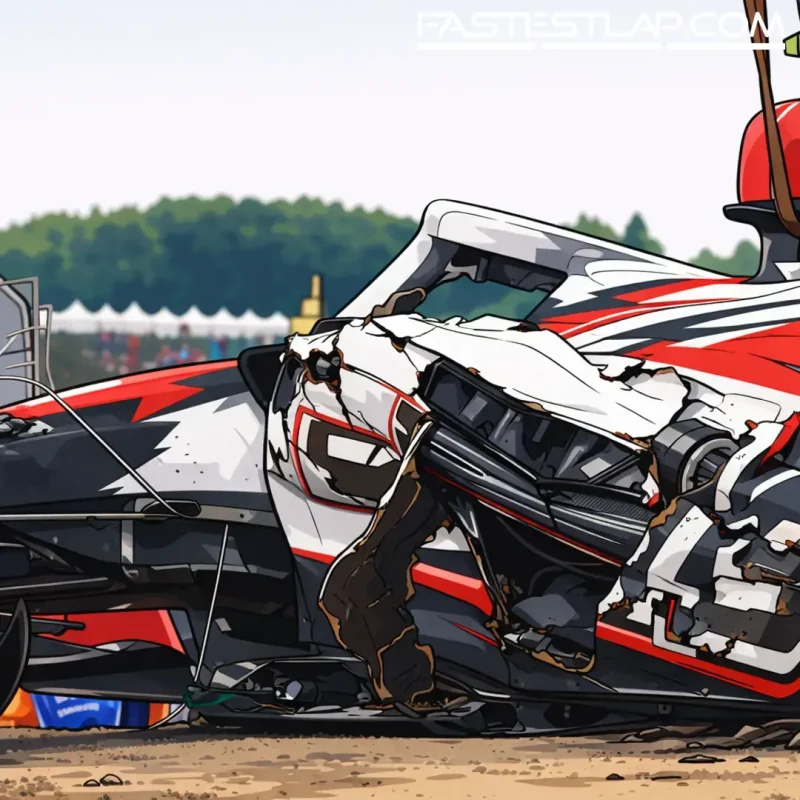
The crash itself was as ugly as it looked. Fighting Franco Colapinto for position, Bearman arrived at Spoon with a closing speed that caught him out — around 50km/h faster than the Alpine ahead — and suddenly he was making a choice with no good options. He jinked left, dropped onto the grass, and the VF-26 snapped away from him.
What followed was the kind of cross-track slide that makes even seasoned engineers wince: Bearman shot across the circuit in front of Colapinto and hit the barrier sideways. The impact was recorded at 50G. He managed to limp away before marshals helped him clear the scene, and he was taken to the medical centre where X-rays showed no fractures, only a contusion to the right leg.
That “only” is doing a lot of work. F1’s medical and safety standards are strong enough now that a 50G accident can end with a bruised knee rather than a broken driver — and that’s a success story — but it doesn’t mean the body just shrugs it off. Bearman’s comments about being largely immobile in the days afterwards, and particularly during travel, are a reminder that the violence still lands somewhere.
What will interest Haas, and the wider paddock, is how quickly Bearman pushed himself back toward normality once the swelling settled. He was on the simulator again within days.
“Actually, I was back driving on the simulator by Wednesday or Thursday,” he said, “because my brother and I were practicing for an endurance race on the weekend.”
That’s modern driver mentality in a nutshell: accept the pain, bank the lesson, and get back into a cockpit — even if it’s virtual — before the bruising’s fully faded. There’s a fine line between resilience and impatience in this sport, and rookies in particular feel the pressure to show they’re not carrying any scars.
Bearman, at least publicly, is leaning into gratitude rather than frustration. “It could have been a lot worse,” he said. “So very, very thankful and looking forward to getting back out in Miami.”
Miami is the obvious next marker, but Suzuka has already left its mark beyond Haas’s repair bill. Bearman’s accident has reignited discussion around the 2026 regulations, with further meetings held through April ahead of the championship’s return in Florida. The crash has become one more data point in the sport’s ongoing effort to police unintended consequences — and when a driver is taking a 50G hit after an incident triggered by closing speed, it tends to focus minds quickly.
For Haas, there’s also a quieter sub-plot here. The team’s start to 2026 has been strong enough that Bearman hasn’t been framed as a passenger learning the ropes; he’s been part of the story. That changes how incidents like Suzuka are read internally. A big crash from a rookie in a struggling team is a “learning experience”. A big crash from a rookie who’s been delivering is a moment you want to understand, tidy up, and move past without dulling the aggression that made him effective in the first place.
Bearman’s version of events points to the kind of misjudgement that can happen in a heartbeat when two cars are operating with different momentum through a fast, commit-or-die section of track. It’s not a loss of nerve so much as a loss of reference — and those are the ones that can bite again if you don’t interrogate them properly.
The good news for Bearman is that he gets to do the debriefs and the mileage with a healthy body. He’s bruised, not broken; shaken, perhaps, but not gun-shy. And if his first instinct after being cleared was to fire up the simulator and start preparing for another race, it tells you what you need to know about where his head is at.
Miami, then, isn’t just a return. It’s the chance to turn a nasty weekend in Japan into a footnote — and to prove that a 50G impact might slow him down for a flight home, but it won’t change how he races.