Max Verstappen’s Nürburgring programme has moved from “interesting side quest” to properly serious business this weekend, even if the stopwatch didn’t flatter him in qualifying for the first of the 24 Hours support qualifier races.
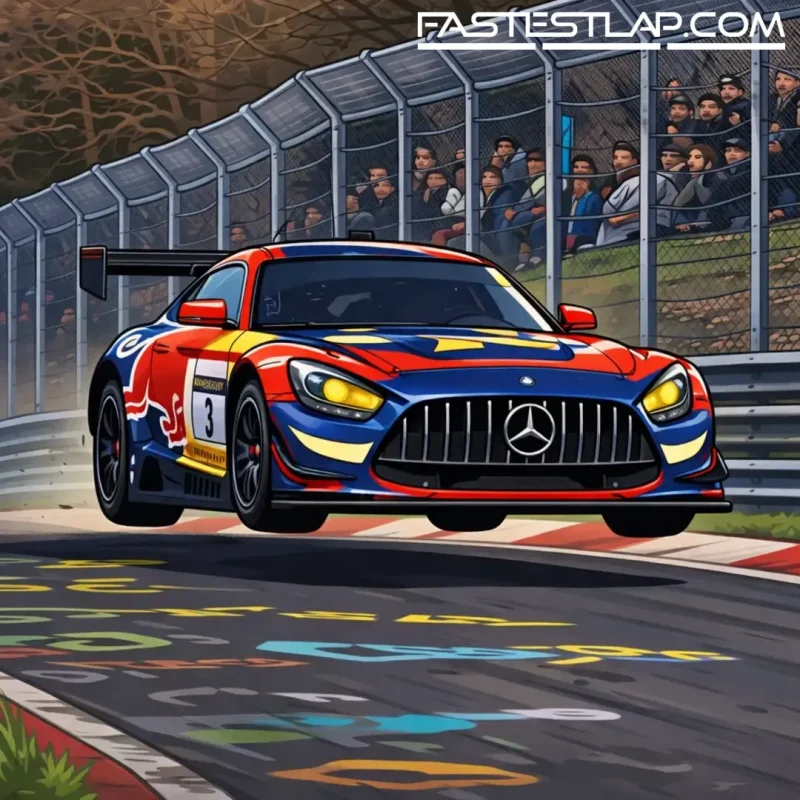
Sharing a Red Bull-liveried Mercedes-AMG GT3 with Lucas Auer, Verstappen will start Saturday evening’s four-hour Qualifier 1 from sixth on the grid after the entry ended up 3.524s shy of pole. The BMW wearing number 23 did the damage up front, leaving Verstappen and co with work to do once the race settles into the rhythm the Nordschleife demands.
The session itself was messy. A long red flag interruption broke up any flow, and when running resumed Auer was involved in contact with another car before the car was handed over to Verstappen. The four-time Formula 1 world champion did what you’d expect: he tidied up the lap time and improved on Auer’s benchmark, but not enough to haul the car into the front fight.
More intriguing than the P6, though, is what comes next. The start time — 17:30 local on Saturday — sets Verstappen up for his first proper night-time stint around the Nordschleife in competition. Anyone who’s spent time in the paddock around endurance regulars will tell you the same thing: pace is useful, but at the Nürburgring, comfort and composure when the light drops are worth more than a couple of tenths in a clean, daytime qualifying lap.
Verstappen confirmed last month that he’ll make his Nürburgring 24 Hours debut in 2026, and the calendar slot makes it even more of a talking point. The race runs on the weekend of May 14–17, sitting awkwardly between Formula 1’s Miami and Canadian grands prix — the kind of placement that usually forces even the most enthusiastic multi-discipline drivers to scale back. In Verstappen’s case, the preparation has been anything but timid.
He’s already been on track in an NLS race at the Nürburgring as part of the build-up. That outing delivered the classic Nürburgring emotional swing: Verstappen, Daniel Juncadella and Jules Gounon took what looked like a dominant win, only to lose it after disqualification for a tyre infringement. The detail will sting a team like this, because it wasn’t a grey-area protest about track limits or a marginal fuel sample — it was procedural. The crew used seven sets of tyres across qualifying and the race combined, one more than the permitted maximum of seven.
That episode matters because it highlights the learning curve Verstappen is stepping into. In F1, the driver’s world is engineered around him: strategy groups, sporting directors, and a regulatory framework the team lives inside every week. Nürburgring endurance racing is a different ecosystem — multiple sessions, strict allocation rules, and a level of operational discipline that can bite even when you’ve got the pace to disappear up the road. If Verstappen wants his 24 Hours debut to be more than a headline, the team around him has to be as sharp on the paperwork as it is on the pit wall.
This weekend’s qualifier appearance also owes something to circumstance. The Nürburgring dates were originally a clash with Formula 1’s Saudi Arabian Grand Prix. But the cancellation of the Jeddah race has opened the door for Verstappen to be back at the Nordschleife, rather than watching from afar and squeezing preparation into simulator time and hurried test days.
There’s an unavoidable sub-plot here, too, given Verstappen’s very public frustration with Formula 1’s 2026 rules package. When a driver of his stature starts pointing out what he sees as fundamental problems — and does it repeatedly — the paddock reads more into it than just the words. Every extra non-F1 outing becomes part of the wider conversation about how invested he is, and how he wants to shape the next stage of his career.
But on Saturday evening, none of that matters once the lights fade and the Nordschleife starts doing what it always does: punishing overconfidence, rewarding patience, and turning small errors into large consequences. Sixth is fine. It’s also a reminder that this isn’t a Verstappen victory parade simply because Verstappen has turned up.
The useful part of the weekend will be what we don’t see in a headline: how quickly he and Auer build a repeatable rhythm, how they manage traffic when the circuit becomes a moving jigsaw puzzle, and whether the operation can execute cleanly after the tyre-rule lesson from last month. If those pieces click, grid position becomes a footnote. If they don’t, the Nürburgring has a habit of exposing it — loudly.