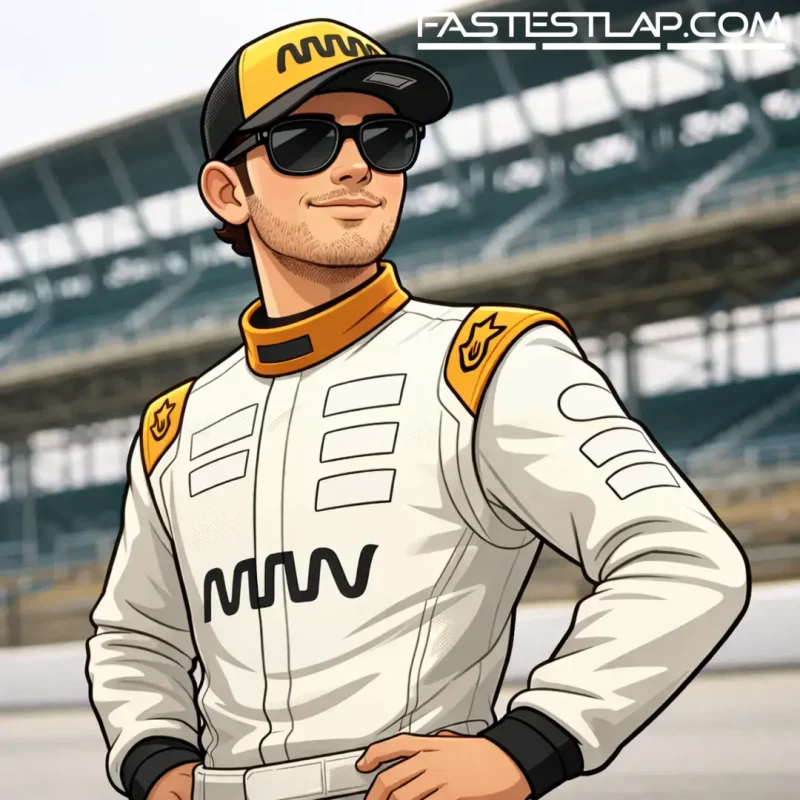
Pato O’Ward has stopped pretending he’s keeping a seat warm for Formula 1.
The Arrow McLaren driver is still listed as a reserve for McLaren’s grand prix operation, still ticks the odd box on the F1 side of the business, but when he was asked whether F1 remained “the dream”, his answer landed with the kind of blunt finality you don’t usually hear from someone tied—however loosely—to a top team.
“Every year it has changed more,” O’Ward told FOX Deportes. And then he went straight for the heart of what’s been grating on a growing number of drivers as the sport leans into its 2026 reset: “Honestly, the new Formula 1 cars — what the series has done has been a mistake. The truth is, when you look at them, they are artificial.”
O’Ward’s frustration isn’t about timing or opportunity, which is normally where this conversation goes. He’s not presenting it as a door that closed because he’s too old, or because he’s “stuck” in IndyCar, or because the seats never appeared. He’s saying the product he wanted to drive no longer exists in a form that excites him.
“The hunger I had to get to Formula 1 wasn’t for fame or money… it was because the cars were something impressive,” he said. “Driving those cars was something impressive.”
Then came the line that will travel: “You don’t want to be flipping a switch to say, ‘Oh, I’m going to press it to pass him artificially.’ It’s not Mario Kart; we’re racing here.”
For an F1 audience, that “Mario Kart” jab needs no translation. The 2026 rules put a 50/50 split between electrical and combustion power, and with that comes a much bigger tactical load around deployment, harvesting, and timing any overtaking assistance. In the build-up, the paddock vocabulary has been littered with phrases like “super clipping” and talk of “mushroom boost” style energy shots—often delivered with a smirk, sometimes with a grimace.
O’Ward isn’t smirking.
“Honestly, I have zero desire to be part of that,” he said. And he doubled down when pressed on where he sees the purest racing fix right now: “I feel that right now, today, this is the best series for a driver who wants to race, here, in IndyCar… Formula 1 right now is an artificial show, and honestly, I have zero desire for it; it doesn’t grab my attention.”
It’s the kind of statement that will irritate some people in F1 circles and quietly resonate with others. Drivers rarely say the quiet part out loud while they’ve still got any kind of contractual link to an F1 team, even a reserve role. Most will keep the language diplomatic—“different challenges”, “evolving sport”, “I’d love an opportunity”. O’Ward didn’t bother.
There’s also a refreshing honesty in the way he frames it: this isn’t a claim that IndyCar is “better” in some absolutist sense, or that F1 is beneath him. It’s simply that the direction of travel in grand prix racing—the heavier reliance on energy management and driver-operated tools—doesn’t match what he daydreamed about when F1 was the prize.
And in a year when the sport is trying to sell its next technical era as both sustainable and spectacular, a driver essentially saying “I’m out because it looks like a videogame” is awkward messaging.
What makes it more interesting is the contrast playing out right alongside him: Colton Herta, once one of O’Ward’s most obvious benchmarks in the IndyCar ecosystem, is still pushing the other way.
Herta is racing in Formula 2 this season, with a long-term view towards getting himself onto the F1 grid. He’s also signed on as a reserve driver with Cadillac and will take part in FP1 at the Spanish Grand Prix—part of a four-session plan aimed at nudging him closer to the super licence points he needs.
So while O’Ward is effectively closing his own F1 chapter on ideological grounds, Herta is doing the unglamorous grind: seat time, sessions, points accumulation, and showing the right people he can be useful. Same sport, same rules, radically different reactions.
O’Ward’s stance doesn’t have to become a manifesto to matter. It’s simply a reminder that the 2026 regulations aren’t just a technical brief for engineers and team principals—they’re a litmus test for what drivers believe “racing” should feel like from inside the cockpit. Some will treat the new tools as another weapon to master. Others, like O’Ward, see them as a step too far towards something curated rather than contested.
For McLaren, it’s not a crisis—reserves come and go, and O’Ward’s primary job is still winning races in IndyCar. But for F1, it’s a warning shot from a driver who’s had a clear-eyed view of both worlds and, crucially, nothing to gain by playing along. When someone with a credible pathway says the dream has stopped being the dream, it’s worth listening to the subtext.
Because the uncomfortable question sitting underneath O’Ward’s “Mario Kart” line is simple: if the cars are no longer the thing that makes drivers obsess, what’s supposed to replace that obsession?