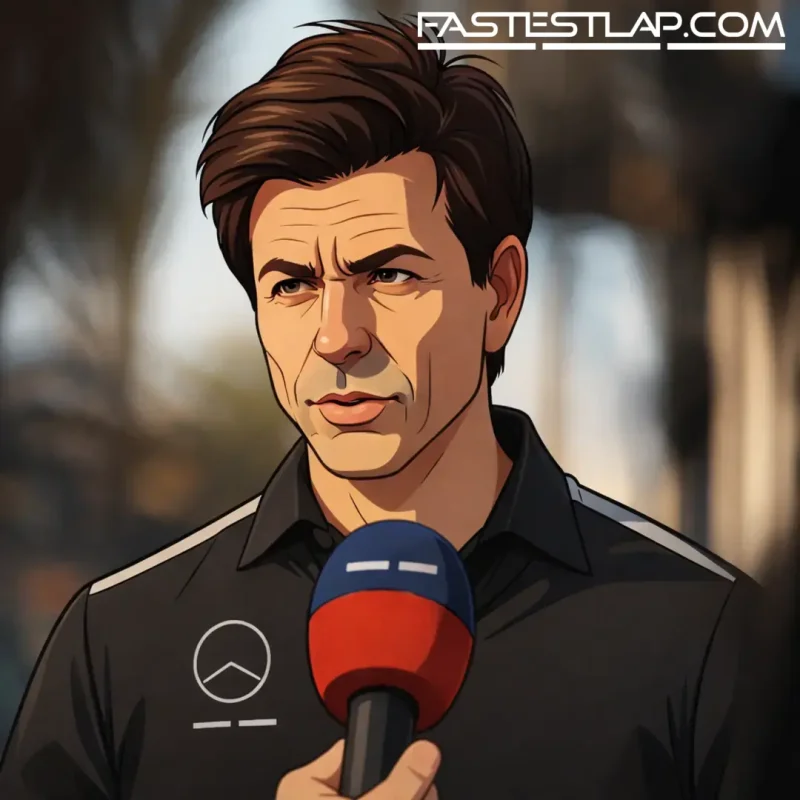
Toto Wolff has never been shy about a hard-nosed political fight in Formula 1, but ahead of Monday’s F1 Commission meeting he’s pitching something closer to an armistice.
With the sport staring down a vote that could fast-track changes to the 2026 regulations as soon as Miami, the Mercedes boss is urging the paddock to stop litigating the rules through the media and start acting like a group that actually wants to protect its own product. That matters because this isn’t the usual mid-season squabble over a wing tweak. It’s a debate that has dragged safety, the look of qualifying, and the basic rhythm of racing into the same argument — and it’s been inflamed by a 50G crash for Haas rookie Oliver Bearman at Suzuka.
Wolff’s central point is simple: F1 can’t afford to be seen eating itself alive. In his view, the criticism — and the inevitable gamesmanship that comes with it — belongs inside the stakeholder room, not in soundbites designed to set fans and rivals alight.
“We all have our opinions and that’s absolutely legit but these opinions and discussions should happen among stakeholders more than in the public eye,” Wolff said, framing it as a matter of responsibility as much as governance.
There’s a self-serving angle to that argument, and Wolff knows it. Mercedes leads both championships right now, and any regulation adjustment that alters energy usage or deployment has the potential to reshuffle performance. When the paddock starts arguing in public, it tends to harden positions: the teams who think they’ll lose dig in, the teams who think they’ll gain go louder, and suddenly a technical conversation becomes a referendum on “fairness”. That’s when the vote becomes less about fixing the issue and more about winning the narrative.
The problem F1 is trying to solve is also easy to describe, harder to resolve cleanly. The new hybrid framework has forced drivers into behaviours that look alien next to what fans expect from the top category: more lift-and-coast, and “superclipping” — the system siphoning power from the combustion engine to charge the battery even while the driver’s flat. At times, the boost function has made overtaking look a little too easy, and in qualifying it’s created an awkward tension between pushing and managing charge.
Then Suzuka happened, and “awkward” turned into “urgent”.
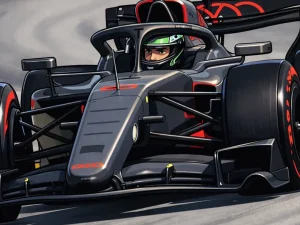
Bearman’s crash was the moment the technical debate stopped being theoretical. In the build-up to Spoon Curve he arrived at a flat-out kink roughly 50km/h quicker than Franco Colapinto ahead — not because Colapinto made an error, but because his speed matched what he’d done on his previous lap. Bearman took evasive action and paid for it with a huge impact. Whether you ultimately file that under driver judgement, system incentive, or a messy interaction between both, it handed the FIA the strongest lever it has: safety.
Wolff’s response is telling. He doesn’t deny the priority; he’s just wary of the sport panicking.
“We need to see the Bearman accident for what it was, and it was a misjudgment of a situation,” he said, likening it to the sort of consequences you accept when you hit a boost button or commit to a corner with a higher risk threshold.
That’s where Wolff’s “scalpel, not baseball bat” line comes from. The fear in the team principal fraternity isn’t that F1 will change something; it’s that it will change five things at once, congratulate itself for acting quickly, and then spend the next year chasing side-effects it didn’t model properly. Wolff even referenced how the sport has “reacted erratically” in the past — a polite way of saying: we’ve all seen rushed fixes create new problems.
He also reached for a comparison with endurance racing, where massive closing speeds between classes are part of the deal and drivers live with it. The point lands up to a point: racers accept danger, and plenty of fans are drawn to the very edge of it. But Formula 1 isn’t multi-class. The expectation is that cars circulate in broadly comparable performance windows, and when a mechanism inside the ruleset starts manufacturing unusually large deltas at specific points on track, it’s not the same kind of risk — it’s a new variable introduced by regulation design.
Wolff, to his credit, doesn’t pretend F1 can ever be made completely safe.
“Will it be always the safest spot? It won’t,” he said. “It’s about understanding what those systems do to the car, how we can reduce the risks in particular situations… but always reminding ourselves we are guardians of the sport.”
That “guardian” language is doing a lot of work, because the politics here are messy. Under F1’s governance structure, an immediate rule change needs unanimous approval from the F1 Commission — the FIA, all 11 teams, and the commercial rights holder. Unanimity is the sport’s way of ensuring stability, but it’s also an open invitation for any one party to hold everyone else hostage if it thinks the competitive balance might move against it.
And looming over all of that is the awkward truth that makes the Commission meeting feel slightly theatrical: the FIA can still push changes through on safety grounds if it believes it has to. In other words, if the room can’t agree, the regulator can simply decide the room doesn’t get the final say.
Wolff is, essentially, asking for a clean vote that avoids that kind of institutional collision. Not because the FIA shouldn’t act on safety — nobody sensible argues that — but because F1 is at its best when it fixes itself with consensus, not when it’s forced into a solution by procedural escalation.
There’s another layer too. Wolff is pushing back on the nostalgia that’s seeped into this debate, particularly around qualifying and “flat-out” driving. He’s right to remind people that older eras weren’t automatically better races just because the cars were driven differently. The 2026 rules have, by his own admission, produced a step forward in wheel-to-wheel action, helped by both the energy characteristics and aero that allow cars to follow more closely. The sport doesn’t want to lose that gain while trying to plug an obvious hole.
Now comes the part that will define how credible F1’s leadership looks in 2026: can it adjust harvest rates and deployment behaviour enough to reduce superclipping and the odd incentives in qualifying, without breaking the racing it’s just started to improve?
That’s why Wolff’s appeal for calmer heads isn’t just image management. It’s a recognition that F1 is trying to tune a live system in the middle of a championship — and that the loudest voices, whether they’re drivers taking shots in public or teams lobbying behind them, can turn a necessary correction into a pendulum swing.
If the Commission can land a unanimous agreement, the sport gets to present Miami as a measured course correction. If it can’t, the FIA may step in anyway, and the paddock will be left arguing not only about the rules, but about who really runs Formula 1 when the pressure rises.