South Africa’s push to drag Formula 1 back onto African soil has always been framed as a romantic “return” — a chance to close a 30-plus-year gap that began when the championship last raced on the continent in 1993. But right now it looks less like a sweeping homecoming and more like a cold, modern calendar squeeze, where sentiment counts for little and timing is everything.
Sports, Arts and Culture minister Gayton McKenzie has been the public face of the bid, and he isn’t pretending it’s a side project. He’s gone as far as saying his term in office would be “a failure” if he doesn’t land a grand prix. The language is unusually blunt for a process that typically hides behind committees and feasibility studies, and it underlines the problem: South Africa isn’t just trying to tick boxes — it’s trying to elbow its way into a grid that’s increasingly locked in.
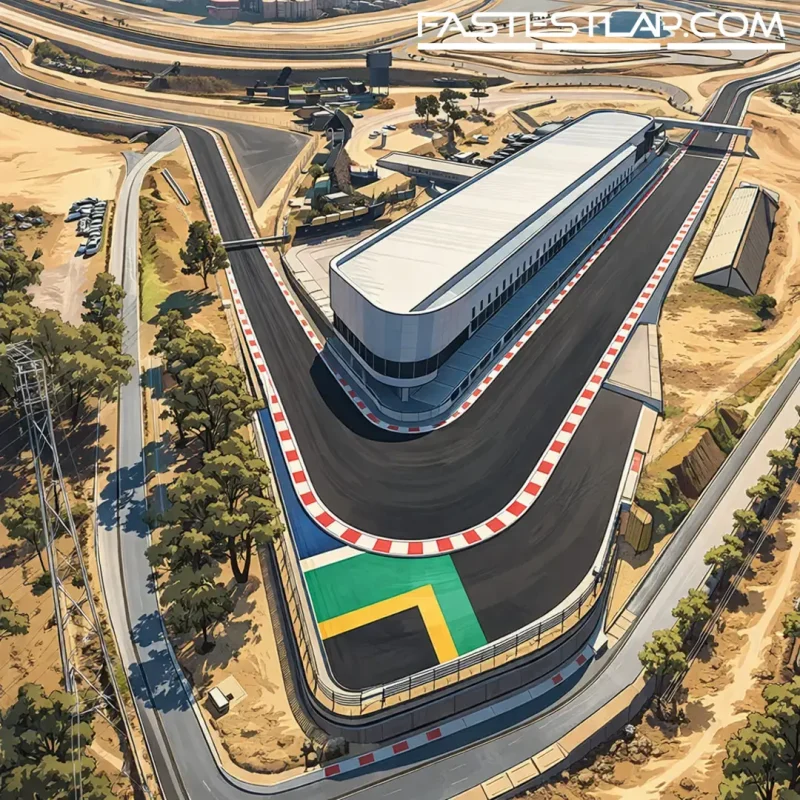
Kyalami remains the centrepiece. The circuit has been pushing for FIA Grade 1 approval and, despite not being officially confirmed as the preferred bidder for a potential race, it has already started spending real money to get itself into the right shape. The number being discussed is significant: a track upgrade programme estimated at between $5m and $10m (R83m to R167m). That’s a meaningful outlay for a project that, at this stage, still exists in the “convince us” phase rather than the “sign here” phase.
McKenzie admitted earlier this year that the early timelines were optimistic to the point of naive. “Next year, definitely not. We have underestimated what is required to host an F1 event,” he said, while insisting the bid would be rebuilt with specialist input into something “they can’t refuse”. That’s telling, because it acknowledges what everyone in the paddock already knows: hosting a grand prix in 2026 isn’t simply about having a circuit — it’s about proving you can deliver the commercial package, the logistics, the infrastructure and the safety operation at the level Formula One Management expects.
This week in Pretoria, McKenzie offered the clearest sign yet that the strategy is evolving from sporting aspiration into full political lobbying. President Cyril Ramaphosa, he said, has agreed to attend a grand prix later this year as part of a “working visit” designed to strengthen South Africa’s case.
“His Excellency President Cyril Ramaphosa has agreed to join me at a Formula One Grand Prix later this year. This is a working visit, not a social one,” McKenzie said. “There are criteria that any country must meet to host a Grand Prix – commercial, logistical, infrastructural and safety requirements – and we are working methodically to meet each of them.”
In other words, South Africa is trying to show it’s serious enough to send its head of state into the F1 ecosystem to do more than shake hands. The President’s planned visit is intended to “observe, engage and strengthen our case”, with details on which grand prix and when still to come.
McKenzie’s moral argument is straightforward: it’s “not acceptable” that young African motorsport fans have never seen a Formula 1 race on home soil, and South Africa intends to change that. The difficulty is that F1’s current business reality doesn’t care much for moral arguments unless they arrive with a viable slot, a compelling fee structure, and a promoter capable of meeting the sport’s demands without drama.
And the calendar has just become a lot less forgiving.
The biggest hit to South Africa’s near-term hopes came with confirmation that Turkey will return to the schedule next season on a five-year deal. That matters because it further narrows the number of realistic entry points over the next few years. With a 24-race calendar, churn is limited, and long-term contracts are increasingly the norm rather than the exception.
As things stand, only three events — Singapore, Portugal and Mexico — are out of contract at the end of 2028. Singapore is expected to renew, and Thailand is pushing hard for a place too. Even if South Africa’s bid improves quickly, the sport’s available “oxygen” is being consumed by competitors with momentum, money and, in some cases, fewer moving parts.
There’s also the issue nobody likes to dwell on publicly: cost. With Formula 1’s popularity still climbing, hosting fees don’t tend to drift downwards — they go the other way, especially when multiple bidders are fighting over a fixed number of seats. South Africa’s plan, as outlined, is to lean on sponsors rather than have the government bankroll the event. That can be an attractive pitch in theory; in practice, it risks leaving the bid exposed if a rival arrives with deeper pockets or an easier path to underwriting the bill.
The ambition hasn’t died — far from it. If anything, the Kyalami upgrade spend and Ramaphosa’s planned trip underline that South Africa is trying to shift from hopeful to credible. But the hard truth is that the bid is now wrestling less with the romance of F1’s return to Africa and more with the mathematics of a crowded calendar and an increasingly expensive club.
If South Africa is going to get back in, it won’t be because F1 owes the continent a race. It’ll be because the bid becomes impossible to ignore — financially, logistically, and politically — at precisely the moment a door actually opens.