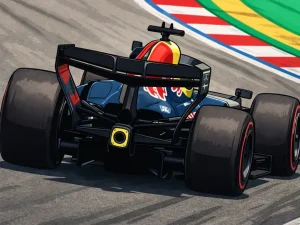
Miami arrives with that familiar cocktail of heat, hype and hard-to-read form, but this year there’s a slightly different edge to it. Formula 1’s April pause hasn’t just been a breather — it’s been a rare, uninterrupted development window in the first season of a new ruleset, plus a small but meaningful set of power unit management tweaks that should at least tidy up some of the stranger on-track optics we’ve seen in the opening rounds.
Nobody in the paddock is pretending those regulation adjustments will redraw the competitive map on their own. They’re aimed at energy harvesting and deployment rather than any fundamental change in hardware, and they apply across the board. That matters, because it limits the kind of asymmetric gain that can suddenly catapult one manufacturer ahead of another. If you’re a Mercedes customer, you’re broadly living in the same neighbourhood as the works team; if you’re Ferrari-powered, the same logic applies. The floor is the floor.
But “no revolution” doesn’t mean “no consequence”. What these tweaks really do is remove one variable teams had been exploiting more aggressively than the sport would like, and in doing so they sharpen the focus on the stuff that actually will decide Miami: who’s brought the best upgrade, and who can make it work quickly on a circuit that asks awkward questions of car balance.
Mercedes arrives as the obvious reference after a start to 2026 that’s been as clinical as it’s been convincing — winning races, and doing it with the kind of underlying efficiency that suggests it isn’t a one-trick power unit story. The W17 has looked properly well-rounded. That’s precisely why this weekend feels like a potential pressure point: when you’ve been the standard-setter, a month where everyone else has been allowed to do nothing but chase you can be more dangerous than another race weekend.
Ferrari is the team most likely to make that month count. There’s been enough noise around Maranello’s April activity to suggest the Scuderia hasn’t treated the break as downtime, with additional running highlighted by wet-tyre testing at Fiorano and a filming day at Monza. That sort of mileage doesn’t magically create lap time, but it can accelerate correlation — and for a team trying to convert early promise into a consistent challenge, that’s often half the battle.
Miami’s layout also offers Ferrari a plausible opening. The SF-26 has given the impression, early doors, of being at least a match for Mercedes on chassis quality — and the Miami circuit leans heavily on that in the slow, fiddly middle section and the left-right rhythm early in the lap. The big question, as ever here, is how you pay for that in the sections where efficiency and deployment matter most, especially down the long back straight. If Ferrari’s package is as strong through the corners as it’s looked in flashes, Miami is one of the better places to put Mercedes under sustained pressure — provided it doesn’t bleed too much on the straights.
McLaren, though, is the wildcard with the sharpest teeth. There was already a warning shot at Suzuka, with Oscar Piastri at the forefront, and now the team is talking up an “entirely new” car for Miami. You can roll your eyes at marketing language, but McLaren has earned a degree of trust in this area: when Woking brings a meaningful update, it tends to arrive with genuine performance rather than vague promise.
The subtext is just as interesting. Piastri has been candid that McLaren is chasing downforce, which frames Miami in a very specific way. This is a track where you can hide some weaknesses with traction and confidence in the technical bits, but you’ll get punished if you can’t carry speed cleanly through the faster changes of direction — and if you’re not strong enough aerodynamically, you end up paying twice: time lost in the corners, and energy spent trying to recover it.
That’s why the power unit management tweaks sit in the background like a quiet stagehand. They’re unlikely to change who’s quick, but they may narrow some of the extremes in how that pace is expressed on Sundays. The hope within the sport is that it trims away the more theatrical, borderline-silly-looking moments without sterilising the racing. Teams will have modelled the revised limits to death during the break, and the best-resourced outfits will almost certainly arrive with cleaner answers, sooner. But if it reduces the advantage of being able to deploy in a particularly aggressive way at key points, it gives the chasing pack one less thing to worry about when attacking Mercedes.
So where does that leave the weekend? With the rare sense that Miami could be decided less by what we already know and more by who has used the last month most intelligently.
Mercedes should still be the safe bet to be there at the front. The baseline is just too strong, and the sport hasn’t handed anyone a silver bullet. But it’s hard to ignore the convergence of factors that could make this the race where the season’s early pattern finally gets interrupted: Ferrari appearing closer to the benchmark than McLaren on pure starting point, McLaren potentially arriving with a step-change, and everyone having had time — real time — to optimise.
If you’re looking for a prediction with a bit of conviction rather than caution, Piastri is a compelling pick. He’s already looked like the driver most ready to turn McLaren momentum into a clean, authoritative weekend, and if that “entirely new” package is even close to what the team is selling, Miami has the right mix of traction zones and confidence corners for him to turn it into a win.
The more conservative call is that Mercedes still has enough in hand over a full stint — especially if the upgrade race turns into a wash and the field moves forward together. But the paddock mood heading into Miami isn’t “same again”. It’s closer to: someone’s about to land a punch, and we’ll find out on Friday whether it’s a jab or a knockout.