Red Bull’s early-2026 wobble has inevitably turned every Max Verstappen radio message, every tight-lipped media moment and every off-track GT appearance into the same question: is he still in this?
Laurent Mekies is adamant the answer is yes. Speaking ahead of a Miami weekend that doubles as a first live test of the FIA’s latest tweaks to the 2026 rules, Red Bull’s team boss insisted Verstappen’s posture inside the team doesn’t match the noise outside it.
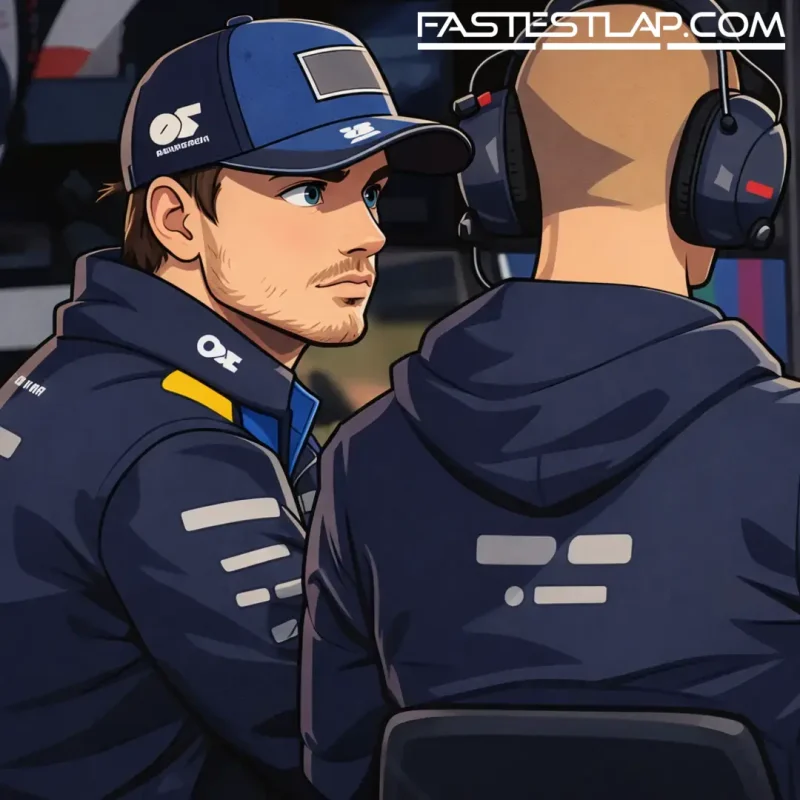
“The Max we see is a fully committed Max,” Mekies said. “He wants a fast car, and he’s helping the team getting a fast car. He’s bringing all his energy to that.”
It’s a pointed line because Verstappen hasn’t been shy about what he thinks of the sport’s new direction. The battery-heavy character of the 2026 package has defined the opening three rounds, and not in a way drivers enjoy selling. Harvesting has dictated both pace and posture: odd lift-and-coast zones, awkward moments where the “right” way to drive isn’t the fastest way to race, and deployment patterns that have produced some eye-opening closing speeds.
There’s been a second, more subtle problem too: when so much is handled by energy algorithms, the sport starts to look like it’s overtaking drivers on their behalf. That might be clever engineering, but it’s a grim advert for what Formula 1 is supposed to be.
Over the April break, the FIA worked with teams, Formula One Management and the power unit manufacturers to sand down the sharpest edges. Miami will be the first event run under the adjusted framework, with changes aimed at making qualifying laps feel more “normal” and at reducing the closing speeds that have raised safety concerns.
The FIA itself has framed it as evolution rather than revolution — a theme echoed by Toto Wolff, who cautioned that any intervention should be done “with a scalpel rather than a hammer”. That line lands a little differently when Mercedes has started 2026 in full control, with George Russell and Kimi Antonelli winning all three races so far. You don’t need to be cynical to notice how quickly the sport finds patience when the leading team prefers it.
Still, even if Mercedes’ advantage makes the politics more delicate, the practical goal is obvious: keep the new rules, lose the weirdest side-effects.
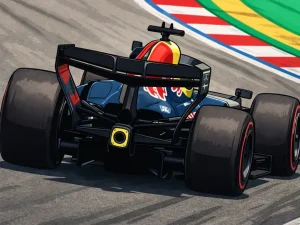
For Verstappen, that’s only half the story. If Miami’s tweaks tidy up the racing and remove some of what he’s been railing against, Red Bull still has to deal with the more immediate reality: its car hasn’t been good enough, and worse, it hasn’t been consistent enough to let him do his thing.
Mekies admitted Red Bull handed both Verstappen and Isack Hadjar “a very difficult car” across the opening races. The priority, he said, isn’t even about chasing pole positions straight away; it’s about giving Verstappen something he can lean on, push with confidence, and then build development around.
“We need to give him a car he can consistently push with,” Mekies explained. “Then after it doesn’t mean that it will be fast enough for pole positions, but it means he can start to bring his Max effect, and we can start to bolt development onto that car.”
That “Max effect” is the subtext to all of this. Red Bull doesn’t just need Verstappen to stay; it needs him to be Verstappen — the driver who can turn a narrow operating window into lap time, who can drag a car into a fight it doesn’t quite deserve. But even he has limits when the platform underneath him is unpredictable, and when the wider ruleset is forcing drivers into energy-management theatre.
Miami, then, is less a silver bullet and more a reality check. If the FIA’s changes do what they’re supposed to, the conversation shifts from “this formula is broken” to “who has understood it fastest”. And Mekies, pointedly, is asking for time — time to find what’s limiting the RB22, time to get on top of the performance trend, time to put a smile back on his lead driver’s face.
“I have every confidence that, things may not be fixed for Miami, but that the team is going to get to the bottom of what is limiting us… and that you will see more and more smile on Max’s face,” he said.
Whether that’s reassurance or hopeful messaging depends on what you think is really driving the speculation. The paddock has always treated Verstappen’s frustration as a kind of weather system — loud, changeable, usually followed by a day of blistering pace. What’s different in 2026 is that the sport itself has given him fresh ammunition, and Red Bull has given him fewer results.
The rule tweaks arriving in Miami might calm the worst of the battery-induced chaos. They probably won’t scramble the competitive order on their own, especially if they’re as minor as advertised. But they do remove a convenient distraction. If the racing becomes more “normal”, Red Bull’s problem becomes brutally simple again: make the car faster, quickly.
And that’s where Mekies’ insistence on Verstappen’s commitment matters. Because a driver can be fully committed and still be fully fed up — and the only thing that cures that in Formula 1 is lap time.