Aston Martin has been trying to steady a wobbling start to 2026, but the bigger tremor right now is happening above the timing screens.
Adrian Newey, installed as Aston Martin team principal ahead of this season, has been working largely from home while recovering from an illness that required hospital treatment, according to a report in the British press. The 67-year-old has not been seen at a race since the season-opening Australian Grand Prix in March, and the team has declined to discuss the details.
“We don’t comment on personal matters relating to any of our team members,” an Aston Martin spokesperson said. “Adrian is working and was on campus last week.”
Newey’s limited trackside presence was always part of the plan. It was understood in the paddock from the outset that Aston Martin didn’t expect him to do the full grind of a modern F1 principal — the 24-race slog, the endless sponsor obligations, the travel. The idea was a targeted schedule, something in the region of 10 to 14 races, with Newey picking weekends where he felt he could add the most value.
That arrangement now takes on a different hue. Because while Aston Martin can manage an absentee principal by design, it’s far trickier when absence becomes unpredictable — especially with a brand-new technical package, a new works relationship, and an early-season crisis to navigate.
On paper, Newey’s appointment was one of the stories of the winter: the most decorated individual in F1 history stepping into a senior management role for the first time, taking responsibility not just for aero philosophy and car direction, but for the whole operation. In practice, it’s also been clear since early in the season that this wasn’t going to be a long-term “Newey as principal” era.
Newey is expected to vacate the role in due course and has been leading a search for a permanent successor since his own appointment late last year. One name has consistently floated to the top: Jonathan Wheatley.
Wheatley, who previously worked with Newey at Red Bull through multiple championship cycles, has emerged as the leading candidate. Audi subsequently confirmed Wheatley’s departure with immediate effect, a move that only intensified the sense that pieces are being lined up quickly behind the scenes. Those who know both men describe a relationship built on trust and clarity — two things Aston Martin has badly needed as it tries to transition from ambitious disruptor to genuine front-runner.
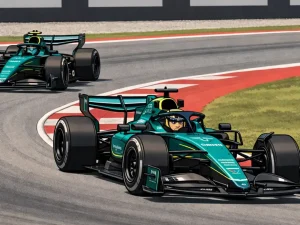
The timing is awkward, though, because Aston Martin’s on-track issues have demanded full attention. The AMR26 — the first Aston Martin to be produced under Newey’s watch since his arrival from Red Bull — has been compromised by severe vibrations linked to its new Honda power unit. The team has yet to score a point in the opening four races, a blunt stat that’s hard to dress up when rivals are already banking early-season momentum.
There has been progress. Fernando Alonso said he had “no issues” with vibrations in Miami, suggesting that the immediate drivability nightmare is easing. But anyone who has lived through an engine integration problem will tell you the same thing: fixing the symptom at the track is one thing; understanding the full knock-on effect — on packaging, on reliability margins, on how aggressively you can run the car — is another. And that’s the sort of situation where a steady, visible leadership presence matters, not for the cameras, but for decision-making speed and internal confidence.
Newey’s reputation, understandably, tends to distort the conversation. His record is absurd: more than 200 race wins and a combined 26 drivers’ and constructors’ titles across Williams, McLaren and Red Bull. But Aston Martin didn’t hire a legend purely for the poster. It hired him to accelerate a project. When the project stumbles out of the gate, the scrutiny shifts from “what will he build?” to “how quickly can this be stabilised — and by whom?”
For now, Aston Martin insists Newey is working and remains engaged. Even remotely, he’ll be contributing. The modern factory is designed for it, and Newey has never been someone who needs to hover over a pitwall to have an impact. Still, the sport’s brutal reality is that early-season damage can compound. Points lost in March and April don’t care about context; they don’t get refunded in November.
Aston Martin’s immediate task is straightforward: turn Miami’s reported improvement into a trend, get the AMR26 into the points, and stop the season from slipping away before the European stretch has even settled. In parallel, the team’s senior structure appears to be moving towards a more conventional shape, with a permanent principal lined up to take the operational burden off Newey’s shoulders.
Whether that happens quickly or slowly may end up defining Aston Martin’s 2026 more than any upgrade package. Because for all the talk of vibrations and fixes, the bigger question now is stability — not just in the power unit, but in the organisation trying to make sense of a new era.