Formula 1’s 2026 calendar is being built with a pencil, not a pen, and the pressure point sits in the Middle East.
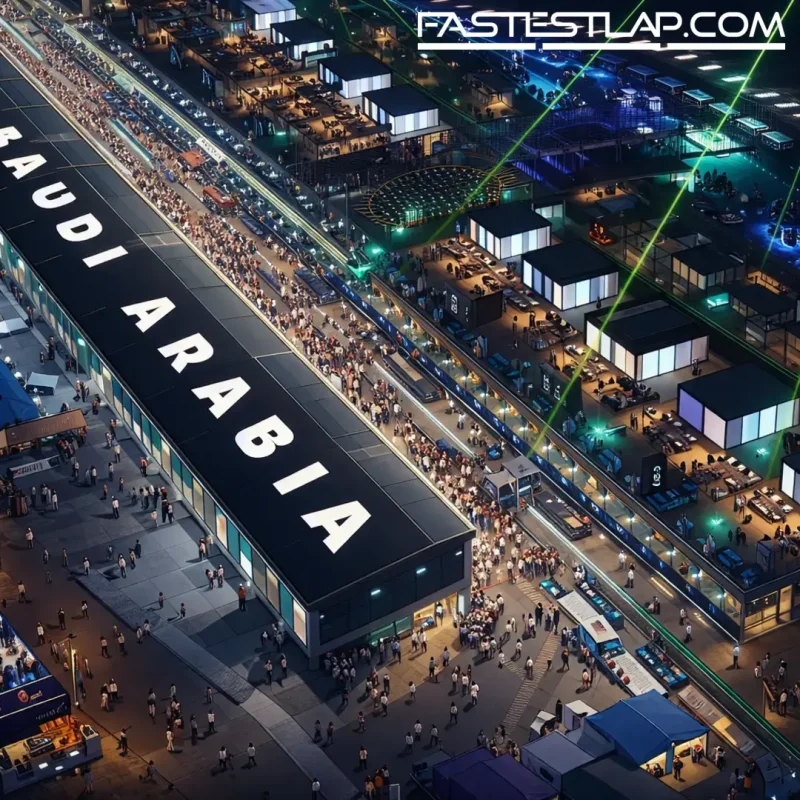
With Bahrain and Saudi Arabia both taken off the schedule earlier in the year, the championship has been operating on the assumption those dates are gone for good. But in the background, conversations between the Saudi Arabian Grand Prix organisers and Formula One Management have kept moving — and there’s now a clearer sense of what a return might look like, should conditions allow it.
People close to the discussions say a decision on whether Saudi Arabia can be reinstated is expected in the next “two or three weeks”. Nothing is signed off yet, but the fact a timeline is being talked about at all tells you this is no longer idle contingency planning.
The motivation is obvious. The two Middle East events are understood to represent more than $100 million to FOM, and the commercial knock-on of losing them isn’t trivial — not just for race fees, but for the broader ecosystem of advertising inventory and partner commitments that rely on a stable calendar.
Right now, the working plan inside Liberty Media remains a 22-race season without those events. That message came through on the company’s first-quarter financial call, with Liberty’s chief accounting officer Brian Wendling explaining the forecast is built on the expectation that Bahrain and Saudi Arabia won’t be back, even if there’s still hope of salvaging at least one later in the year.
Liberty CEO Derek Chang struck a similar tone: options are being weighed, but the key is making any call early enough to preserve lead time for teams, promoters and logistics. That last part is the real sting. Adding a race isn’t just dropping a pin on a calendar graphic — it’s freight plans, staffing, local permissions, circuit build schedules, and the small matter of not grinding the paddock into dust.
So where could Saudi Arabia fit if the door opens?
The most developed idea is a December slot. The concept being floated would place Saudi Arabia late in the year, which in turn would push the Abu Dhabi season finale back by at least a week. It’s the cleanest option in terms of replacing what was lost earlier, but it risks turning the run-in into something brutal.
A December 6 date for either Bahrain or Saudi Arabia, followed by moving Abu Dhabi back, has been discussed as a possibility — but that would create a quadruple-header to end the season. Everyone in the sport knows how that sounds: commercially attractive, operationally possible, and physically ugly.
Chang acknowledged the balancing act, stressing that wellbeing “comes first” in how F1 manages its calendar. The subtext, though, is familiar: there’s a difference between saying it and living it when tens of millions are on the table and the global broadcast machine is already in motion.
There’s also an October-shaped hole being examined. One suggestion has Bahrain sliding in between Azerbaijan and Singapore on the October 2–4 weekend. It’s less disruptive to the finale and avoids dragging the season deeper into December — but it would create another triple-header. That’s the theme of 2026’s calendar problem: every fix seems to come with a cost somewhere else.
And then there’s the wild card that isn’t really wild at all: Las Vegas.
Liberty has looked at the possibility of running a second race in Vegas, and the reason is simple — it’s the one event where Liberty has maximum control over promotion and execution, assuming local approvals can be secured and the city is willing to absorb another bout of disruption. If F1 needs a plug-and-play solution, Vegas is closer to that than most, at least on paper.
But a second Vegas race drags its own questions into the room. If it’s a Liberty-promoted event, who pays for what? Does FOM absorb costs to offset what it loses elsewhere? Are there knock-on impacts on sponsorship value if the series effectively doubles down on one market while losing another? Even before you get to sporting considerations, it’s the kind of spreadsheet fight that can take longer than the logistics.
Stefano Domenicali has been careful in public, framing the situation around the need for stability — for the world, not just the championship — and pointing out that lead times differ depending on what you’re trying to recover. A race that disappeared from April is one problem; adding something at the end of November or beginning of December is another, because the entire chain reaction lands on the teams at the sharpest, most exhausting point of the year.
That’s why the next few weeks matter. If Saudi Arabia is coming back, the sport needs to commit soon enough that it doesn’t become a mad scramble disguised as “flexibility”. If it isn’t, F1 has to decide whether it lives with a reduced calendar as forecast, or makes a different compromise — another triple-header, a longer tail to the season, or a Vegas Plan B that’s commercially neat but far from straightforward.
Either way, the calendar isn’t just a list of venues. It’s a statement of intent — about where F1 wants to be, how hard it’s willing to push its travelling workforce, and how much strain it will tolerate to keep the business case intact. The next decision will tell us which of those priorities wins out.