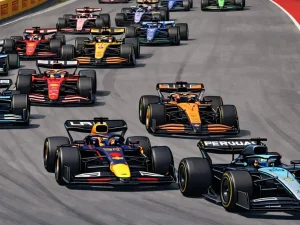
Toto Wolff has spent long enough in this business to know what a stopwatch can do to your expectations.
When Mercedes committed to putting Kimi Antonelli in one of its cars at 18, Wolff publicly sold it as a project: there would be highs, there would be moments that made the pitwall age prematurely, but the learning curve would be worth it. Four race weekends into 2026, that storyline has been torn up. Antonelli hasn’t just arrived — he’s arrived with receipts, three consecutive wins, and a couple of fresh lines in the record books.
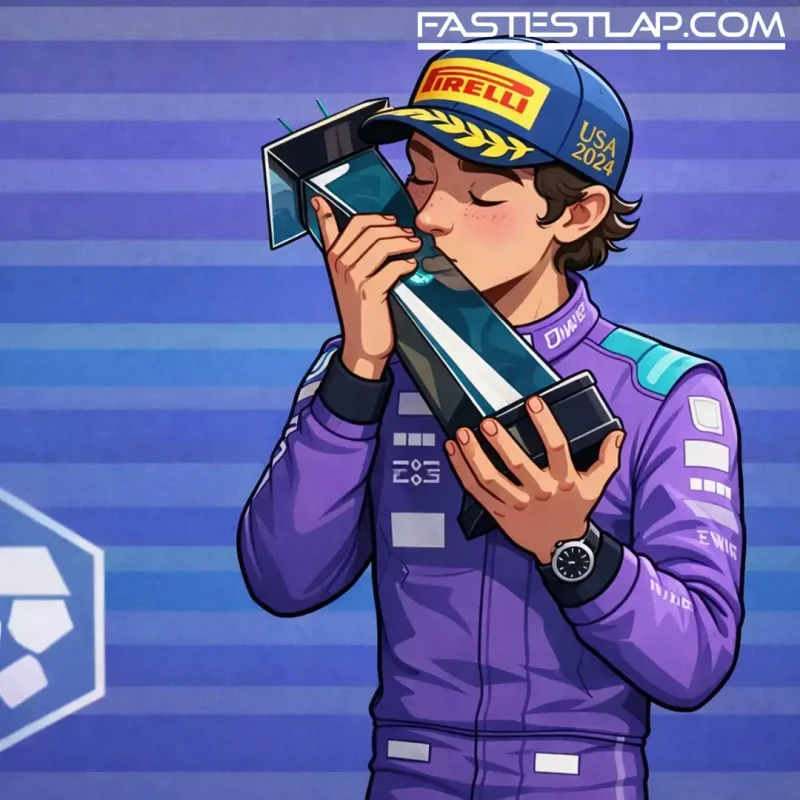
“Absolutely [I’m surprised],” Wolff admitted to *Gazzetta dello Sport*, conceding that even Mercedes hadn’t banked on this sort of start. The team expected pace. It expected flashes. It didn’t expect Antonelli to convert his first three pole positions into three wins — something no one in F1 history had managed before.
Japan was the first real statement: Antonelli took victory and, at 19 years and 216 days, became the youngest championship leader the sport has seen, moving nine points clear of team-mate George Russell. Miami then became the confirmation rather than the surprise — pole turned into a controlled win, and the gap to Russell stretched to 20 points.
Wolff’s tone has been telling. There’s the pride you’d expect, but also the relief of a team boss who knows exactly what kind of driver profile he’d prefer to manage.
“It is easier to calm someone down that is wild, because you won’t be able to accelerate a donkey,” he said, a line that landed with the bluntness you tend to hear in a debrief room rather than a polished press conference. The meaning wasn’t subtle: raw speed is the hardest commodity to manufacture in a young driver. If you’ve got it, you can shape the rest.
Miami, in Wolff’s view, was the best example yet. No mess, no drama, no costly lapse. Just a race that looked older than its driver — a performance that, as Wolff put it, “reminds me of his karting days, Formula 4, there were no mistakes.”
That’s what makes this start so awkward for Russell, because it isn’t merely that Antonelli is fast. It’s that Antonelli is fast *and* tidy, while the team’s more experienced hand has had a lumpier opening month.
Wolff didn’t dodge that either. Russell, he said, “hasn’t done as well, in some cases due to team problems, bad luck, and in Miami due to his own mistakes.” Mercedes, importantly, isn’t framing this as a sudden reordering of talent — Wolff was clear that the team knows Russell’s “value” and expects him to come back swinging in Canada. But the dynamic is shifting all the same, because the championship doesn’t wait for anyone to feel comfortable.
It’s easy now to look at Antonelli’s clean run of results and forget how close the season started to going sideways in Australia. The Mercedes W17 had shown serious pace from the off, but Antonelli’s weekend threatened to become exactly the kind of “hair-tearing” scenario Wolff once warned about. A late FP3 crash on Saturday left the car heavily damaged and the mechanics with barely two-and-a-half hours to rebuild it.
Mercedes caught an unexpected break when Max Verstappen crashed in Q1, buying the field a few extra minutes — time Antonelli needed just to get out and put in a single flying lap in that opening segment. From there, he qualified second behind Russell and finished second in the race. It was a messy build-up, but the key detail is what came after: once the visor came down for the grand prix, the noise stopped and the points arrived.
That theme has repeated across the first four rounds. Antonelli is the only driver to have stood on the podium at every grand prix so far in 2026, which is the sort of statistic that stops being a “promising youngster” talking point and becomes a championship one.
Wolff leaned on the line every racer loves — and every team principal hides behind when it suits: the clock doesn’t lie. “The clock says Kimi has deservedly won the last three GPs,” he said. It’s a neat way of keeping the narrative anchored in performance rather than hype, and Mercedes will be keen to do exactly that as the season develops. A rookie start this strong creates its own pressures inside a team: expectations inflate, small mistakes get judged harder, and the garage politics inevitably tighten when one side starts collecting trophies.
Next up is Montreal, with the Canadian Grand Prix hosting the third Sprint event of the season — a format that has, so far, been a mild asterisk next to Antonelli’s otherwise scorching start. He’s shone on Sundays; he hasn’t yet finished in the top three in the shorter races. That’s not a crisis, but it’s a reminder that domination across a weekend is a different muscle, and Russell will see an opportunity there to claw momentum back if Mercedes gives him the platform.
For now, though, Mercedes has a 19-year-old doing the one thing that changes everything in F1: making results arrive faster than the team’s own plans. Wolff thought he was signing up for a long education. Instead, he’s got a driver rewriting the syllabus mid-term.