Honda has been here before: the noise starts early, the patience gets tested, and the paddock begins doing what it always does when a big-name project doesn’t click straight away — it looks for the exit door.
This time, though, Honda is making it clear there isn’t one.
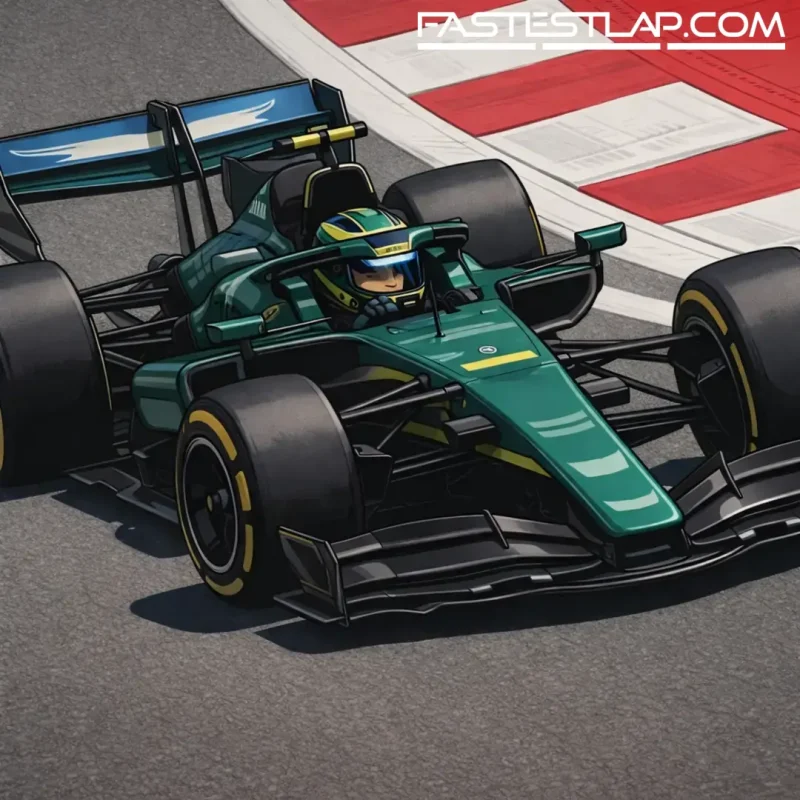
After a difficult opening phase to its works partnership with Aston Martin under F1’s 2026 ruleset, Honda Racing Corporation president Koji Watanabe has insisted the company’s commitment hasn’t wavered, despite the AMR26’s early struggles leaving the programme under a harsher spotlight than anyone in green would’ve wanted by mid-season.
“There is no change in our evaluation or our commitment to HRC or motorsport activities at this stage,” Watanabe said, striking a tone that felt less like corporate reassurance and more like a message aimed at anyone eager to frame 2026 as a referendum on Honda’s return.
“Taking the challenge of Formula 1 remains part of Honda’s DNA – and it has not changed. We have a long-term commitment.”
The context matters. Honda’s history in modern F1 is laced with big achievements and very visible growing pains — and it knows better than most that the first months of a new regulations cycle can reward the best-prepared and punish everybody else. The Aston Martin tie-up was always going to be a high-stakes reset: a new works structure, a new technical era, and a team moving away from being a Mercedes customer into something far more self-determined.
That transition has not been smooth. Aston Martin’s 2026 campaign has been compromised by a lack of performance, with early reliability problems only recently brought under control. The narrative has inevitably drifted towards the familiar questions: is this sustainable, will Honda tolerate it, and how quickly can either side change the shape of the curve?
Watanabe’s answer is essentially that Honda management is unhappy — but not panicking. There’s an internal “shared understanding” that the current results aren’t acceptable, yet also an acceptance that this kind of programme can’t be judged purely on the first season of a brand-new rulebook.
“The Honda management take the current situation very seriously and are not satisfied with the current results,” he said. “There is a shared understanding that improvement is necessary and at the same time, there is also a clear understanding that the project must be evaluated over the mid-to-long term period, not this year.
“The management continue to provide a strong support and expectation with a focus on the process of solving the challenge we face.”
Read that again and you can hear the subtext: this isn’t a plea for time so much as a refusal to allow the project to be defined by its opening chapter. In F1, that’s easy to say and harder to live, because the political and competitive pressures are relentless. But it also reflects how manufacturers tend to think when they’ve committed at this scale — especially in a year where the competitive order is still settling and development directions are diverging.
There are at least some tangible reasons for Aston Martin and Honda to believe the story can shift. A Honda internal combustion engine upgrade is expected over the summer, while Aston Martin is also working towards what’s being described as a major chassis update for the AMR26. Notably, Aston Martin has largely sat out the early-season development arms race, choosing instead to hold fire in pursuit of a more radical package rather than spending heavily for marginal gains.
That’s a gamble, and it’s one that only looks clever in hindsight. Sit too long and you risk burning a season; push too hard early and you risk painting yourself into a corner conceptually. But if you’re convinced the baseline idea is wrong — and that seems to be the quiet implication when a team delays upgrades this aggressively — then a larger reset can be the more honest route.
Fernando Alonso, never one to sugarcoat a situation inside a team, has at least been able to point to a small milestone: he scored the first point of the Aston Martin-Honda era in Monaco. It’s hardly the benchmark a two-time world champion signed up for, but it does underline that the team isn’t entirely lost in the noise — and Alonso is openly hoping the upcoming package is enough to drag Aston Martin into a more typical midfield fight.
Even so, the bigger significance of Watanabe’s comments is what they do to the temperature around the project. In a paddock that loves to diagnose doom early, Honda is trying to remove the simplest storyline — that this could become another short stint — and replace it with something more uncomfortable for rivals: a manufacturer willing to take its lumps now, then come back with interest later.
Whether that confidence is rewarded will depend on two things F1 never grants evenly: time and correlation. If Aston Martin’s delayed development push lands, it won’t just relieve pressure on the pitwall; it will validate the idea that the team and Honda are aligned on the core direction. If it doesn’t, the questions will return — louder, sharper, and harder to brush away with talk of “DNA”.
For now, though, Honda’s message is blunt. The start has been rough. The expectations are higher than the results. And the plan, whatever the outside speculation, is not to flinch.