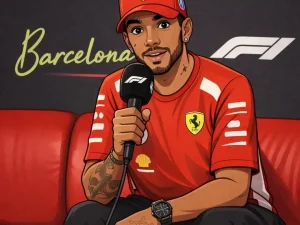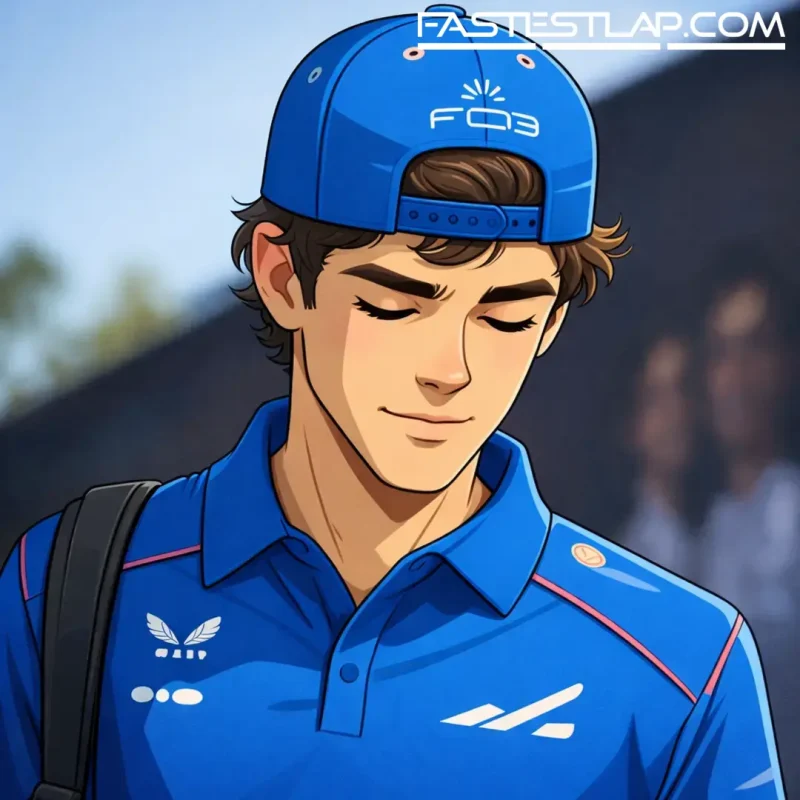
Franco Colapinto’s first season in Alpine colours has quickly stopped being a “nice story” and started looking like a decision the team will actually want to stick with.
Flavio Briatore, Alpine’s executive advisor and the figure effectively steering the ship day-to-day, made it pretty clear he’s warming to the idea of keeping Colapinto alongside Pierre Gasly for 2027 — provided the Argentine carries on the way he’s going. And that matters, because in the background there’s a familiar name circling the Enstone conversation again: Fernando Alonso.
Alpine’s own trajectory has shifted in 2026, and that’s the context that makes this driver call more consequential than it first appears. Briatore, speaking on the *Beyond the Grid* podcast, pointed to the team’s switch to Mercedes power under the new regulations as a turning point, saying it “changed our performance a lot”. More than the lap time itself, he stressed the lift it’s given inside the factory — the sort of momentum that can either stabilise a programme or tempt it into a disruptive “one big swing” driver move.
Colapinto’s done his bit to make stability feel like a sensible option. He’s on 16 points so far, with sixth place in Montreal his best result, and he’s helped pull Alpine up to fifth in the constructors’ standings. That’s not the kind of haul that forces the market to react, but it is the kind that buys you credibility inside a team that’s trying to build something coherent again.
Briatore’s praise wasn’t dressed up as politeness, either. He talked about the team “working very hard” with Colapinto, and mentioned the 23-year-old is moving to Monaco — a line that sounded less like lifestyle trivia and more like a signal that this is a project Alpine expects to stay hands-on with. Briatore said he sees and speaks to him regularly, and described Colapinto’s season as a clear illustration of “talent”, with more still to come.
The key word Briatore kept circling was confidence. He framed it as the difference between a driver who survives weekends and one who starts shaping them, saying he’s told Colapinto: “You need to drive the car like you enjoy driving the car. This is the job you like. Enjoy the job.”
That might sound like motivational wallpaper, but it’s revealing when it comes from Briatore. He’s never been particularly sentimental about drivers — he’s sentimental about outcomes. So when he talks about comfort, rhythm, and a relationship working, it’s usually because he sees an advantage in not touching it.
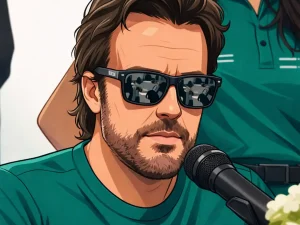
And that’s where the Alonso subplot gets interesting. Alonso is being linked with a reunion with Alpine and Briatore next season, with his current Aston Martin deal expiring at the end of 2026. The options in front of him are straightforward: re-sign, retire, or explore what a return to Enstone might look like. He won both his world titles under Briatore when the team was Renault, and Briatore remains his manager, which only adds to the sense that this is more than paddock nostalgia.
But Alpine’s situation is not the same as it was in any of Alonso’s previous stints there, and that’s why Colapinto’s form matters. Alpine isn’t shopping for a headline; it’s trying to build a technical base that holds. Briatore himself leaned on that point, talking about the team being “in the moment to build up the technical [side] to build up the team” and suggesting “consistency” might be the priority.
When asked directly whether he intends to retain Colapinto for 2027, he didn’t dodge it. He essentially set the conditions: if Colapinto keeps performing as he is now, and if the relationship between him and Gasly remains as it is now, then why not?
He even reached back to his own history to justify the logic, comparing the current dynamic to earlier pairings he oversaw: Alonso alongside Giancarlo Fisichella, or Jarno Trulli, where the “super relationship” helped keep the team moving in one direction.
There’s also a deadline attached. Briatore said Alpine expects to decide before the summer break, with “plenty of races to go” up to the end of August. In other words: Colapinto doesn’t need a miracle run, but he does need to keep taking weekends off Gasly without turning the garage into a slow-burn drama.
That’s the balancing act. If Colapinto continues to bank points and look increasingly at home in the car, Alpine can go into 2027 with a clear internal narrative: the new era is about continuity, the Mercedes partnership has raised the floor, and the driver line-up isn’t a variable that needs changing.
If he tails off, the Alonso conversation becomes louder — not necessarily because Alonso is the best long-term bet, but because he’s the kind of option that can hijack a team’s planning with the promise of instant authority and technical feedback. The romance is obvious. The cost, in terms of disrupting a young driver who’s already contributing, is just as obvious.
For now, though, the message from Alpine’s leadership is surprisingly simple: keep doing what you’re doing, keep the harmony with Gasly, and the seat is there to be kept. In a year where Alpine finally looks like it’s moving forward rather than sideways, Colapinto has put himself in the one place a young driver wants to be — not as a passenger in the story, but as someone the team is quietly building around.