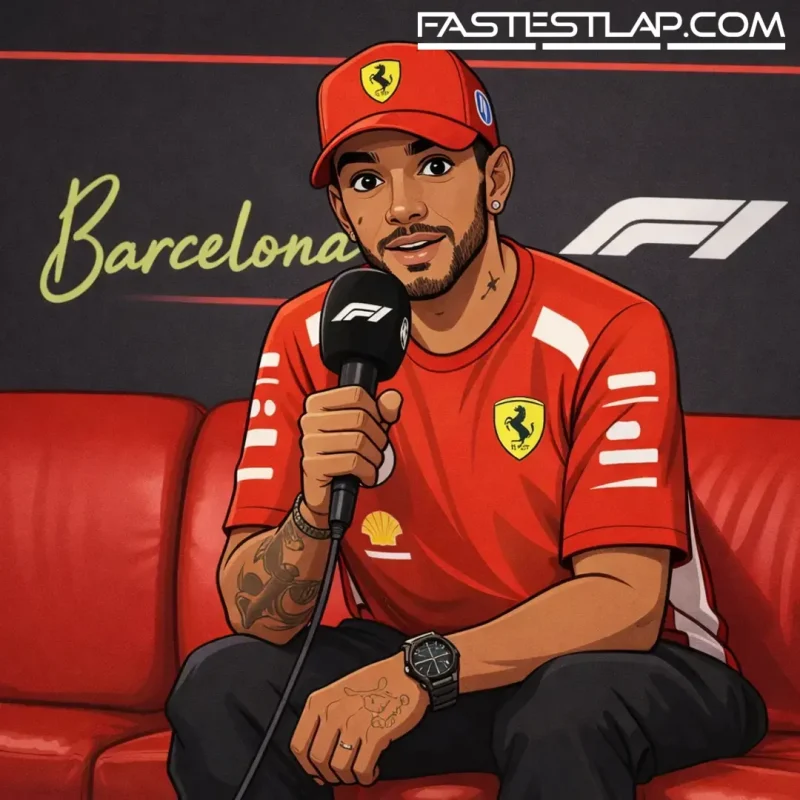
Lewis Hamilton’s Barcelona win has barely had time to settle into the 2026 narrative and already it’s been prodded, poked and – inevitably – inspected. The FIA has confirmed Ferrari’s SF-26 passed an “extensive physical inspection” after the race, with the governing body focusing in particular on the rear-braking system and finding the car fully compliant with the new regulations.
In a season defined by fresh rules, fresh interpretations and the usual fog of suspicion that follows any team that starts winning again, the timing matters. Hamilton’s return to the top step in Spain was exactly the sort of result that makes rivals squint at onboard footage and start asking pointed questions. The FIA’s statement, and the fact the car was selected at random for additional checks, will be used by Ferrari as a neat, official full stop to any paddock murmurs – at least until the next upgrade lands.
Hamilton, of course, isn’t new to the politics of scrutiny. Few drivers of his stature are. But there’s a slightly different texture to this one: it’s not about a borderline interpretation being waved through, it’s about the FIA making a point of stressing the depth of the inspection. Under 2026’s reset, the sport has leaned heavily on credibility. Fans may argue over whether the rules have made the racing better or just different, but the championship can’t afford a cloud hanging over its biggest name’s biggest win in months. Ferrari will be quietly pleased the paperwork and hardware aligned.
While Ferrari were ticking compliance boxes, the FIA was also preparing to step in elsewhere this weekend, declaring a heat hazard ahead of the Austrian Grand Prix. That decision triggers the use of advanced driver cooling systems and, crucially, lifts the minimum car weight to accommodate them. Drivers can also opt for a “cool vest” in the cockpit.
Nobody in the paddock needs reminding how quickly extreme cockpit conditions can turn from uncomfortable to unsafe, and the Red Bull Ring arriving with temperatures pushing towards 40°C is exactly the scenario the new protocols were designed for. Still, it’s another reminder that the 2026 car is already a compromise machine: performance and packaging on one side, and increasingly prescriptive operational constraints on the other. Teams will pretend the weight increase is trivial; engineers won’t.
Away from the technical headlines, Thursday also brought a jolt from the broadcast world. Rachel Brookes confirmed she has left Sky F1 with immediate effect after more than a decade with the network, a departure that landed with extra force given her recent candour about online abuse she received following an interview with Max Verstappen in 2025.
David Croft was quick to acknowledge what Sky is losing, saying the broadcaster will miss her. In a sport where the TV product is as much a part of the ecosystem as the paddock itself, Brookes’ exit is a reminder that the scrutiny doesn’t stop at drivers and team principals – and that the pressure around the sport has expanded well beyond the track.
If there’s a team that knows something about pressure right now, it’s Aston Martin. Fernando Alonso has described the online reaction to the squad’s miserable start to 2026 as “borderline abuse”, calling the team an “easy target” as it slumps towards the back of the field. Aston Martin has just a single point so far, and was the slowest team in Barcelona.
Alonso’s comments felt like a mix of defence and frustration – not just at the results, but at how quickly the public mood hardens when a project stalls. Aston Martin’s trajectory in recent years has made it a lightning rod for expectation, and expectations are unforgiving when the stopwatch goes the wrong way. The sport’s new era hasn’t redistributed competitiveness evenly; some teams have found quick answers, others look like they’re still translating the questions.
That backdrop is what makes the latest swirl around Alonso’s future so combustible. Aston Martin and Honda have both responded to rumours that Alonso could leave for Alpine for 2027, with the suggestion that Alpine adviser Flavio Briatore and the team’s incoming title partner Gucci are pushing for a reunion. Alonso’s Aston Martin deal runs to the end of 2026, and he turns 45 next month.
On paper, it reads like classic silly-season theatre arriving early. In reality, it’s a very modern kind of leverage: results dictate narrative, narrative dictates pressure, and pressure forces clarity – or at least forces people to say “no” louder than usual. Aston Martin will want to project stability as it tries to dig itself out of a competitive hole; Alonso will want options, even if his first instinct remains to fight rather than flee.
For now, the FIA has delivered Ferrari the clean bill of health it wanted, drivers in Austria will be bracing for a physically brutal weekend with mandated cooling measures, and the off-track conversation continues to churn – from broadcast shake-ups to the increasingly harsh online climate around teams that fall short.
Welcome to 2026: new rules, old habits, and a paddock that never stays quiet for long.