
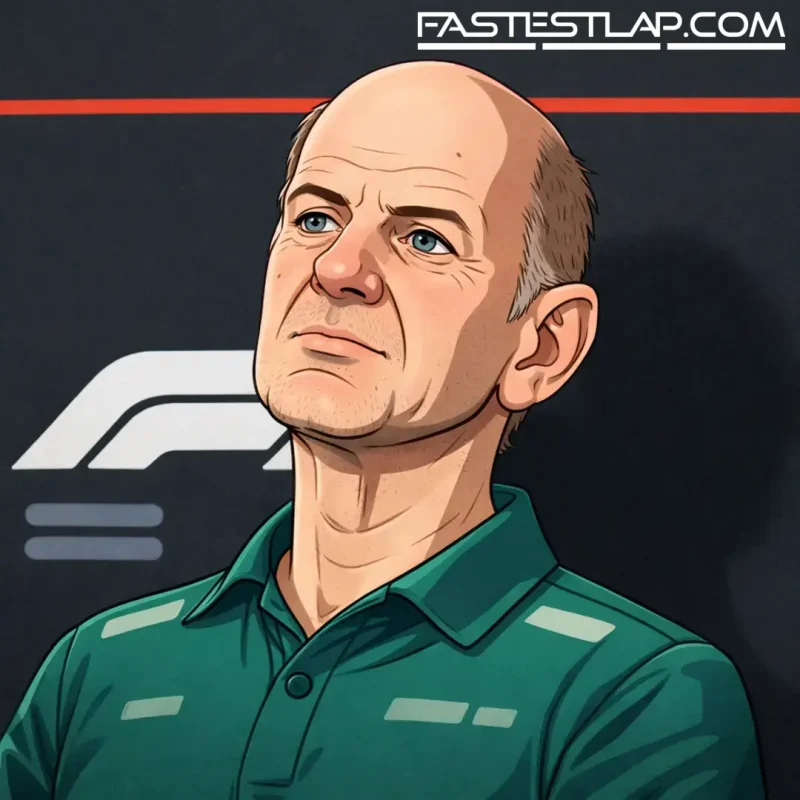
Adrian Newey isn’t dressing it up. Aston Martin’s first season of the new era was supposed to be the one where the silver-limed machine finally looked like it belonged at the sharp end, helped along by a fresh Honda works partnership and a regulation reset that promised to scramble the deck.
Instead, the opening phase of 2026 has been a grind — and, at times, borderline surreal for a team that’s spent the last few years building state-of-the-art facilities and talking like a future title contender. Nine retirements and one non-classified result between Fernando Alonso and Lance Stroll after eight grands prix weekends is the sort of stat line you associate with a backmarker in crisis, not a project with this level of resource behind it. Miami remains the lone weekend where both cars simply made it to the flag.
Aston Martin has just one point and only five classified finishes. That leaves it 10th in the constructors’ standings, ahead of only newcomer Cadillac. Newey called the situation “extremely challenging” in the team’s own communications — which, coming from someone who has seen every shade of competitive pain and glory in this sport, lands with extra weight.
The response is finally imminent. Newey has confirmed Aston Martin will roll out a major upgrade package at next month’s Hungarian Grand Prix, and he’s expecting a “large step” in Budapest. In a season where the team has been lurching from vibration headlines around the Honda to gearbox headaches and a chronic lack of downforce, Hungary becomes more than just another race: it’s effectively a referendum on whether Aston Martin’s 2026 concept is salvageable in-season.
What’s interesting is where the changes are — and where they aren’t. Newey says the “main structural elements remain the same”, with no fundamental rethink of the chassis or gearbox architecture. That’s not a surprise under the cost cap and homologation realities, but it also tells you Aston Martin isn’t pushing the reset button; it’s trying to rescue performance from within the existing framework.
The gains are coming from two directions. First, weight: Aston has removed mass from both the chassis and gearbox, which has triggered re-homologation and fresh crash testing of the forward chassis. Second, aero: a new nose and “substantially revised aerodynamic surfaces” form the headline performance play. The front suspension stays as-is, while the rear suspension is “slightly revised”.
Put together, it’s the kind of package that suggests Aston Martin believes it understands the car now — not just that it’s slow, but *why* it’s slow. Hungary’s tight, high-downforce demands will be a ruthless first exam for that theory.
Newey, though, is careful not to promise lap time in neat tenths. The reason he gives is telling, and it’s arguably the most revealing part of his comments: Aston Martin’s simulation tools aren’t yet where they need to be, nor sufficiently correlated with the real car.
That’s a polite way of saying the team has been trying to solve 2026’s problems with an incomplete map.
“Historically, at this team, there hasn’t been enough investment in engineering simulation tools,” Newey explained, broadening that beyond mere project management into “the core physics tools themselves”. He says the investment is now being made — but that these systems can’t be rewritten and validated overnight, and correlation “takes time”. For now, they’re improving, and the bigger gains from that effort should arrive later in the year.
In other words, the Hungary upgrade isn’t simply a bolt-on performance lift. It’s also a test of whether Aston Martin’s development machinery can start producing reliable answers at a rate that matches the front of the grid. The package might move the stopwatch quickly; the longer-term question is whether it changes the *trend*.
Alonso has his own reasons for circling Hungary in red marker. The Hungaroring is the final race before the summer break — and Alonso has been clear he’ll make a decision on his future during that shutdown. He’s 44 now, and while he’s never sounded like a driver merely filling out a contract, he also isn’t going to spend seasons watching opportunity bleed away while the project finds itself.
“I don’t have anything in mind, and after the summer I will take the decision,” Alonso said in Barcelona, adding that Aston Martin needs “some results” and that recent seasons have seen upgrades that “didn’t make the car really fast as we wanted”.
There’s a nuance in Alonso’s tone this year: he’s demanding, but he hasn’t turned it into public theatre. He’s backed the logic of delaying a meaningful upgrade rather than chasing incremental gains that leave you fighting at the back anyway.
Alonso insists he didn’t question the approach because outsiders don’t have full visibility on cost cap limits, the time required to properly understand weaknesses, and the reality that you can’t endlessly “trial and error” updates. He framed the first three or four races as a diagnostic phase — identifying limitations, testing wind tunnel solutions, watching which rival concepts actually work — before “programming the upgraded package”.
He also made the key point teams sometimes avoid saying out loud: if you’re tenth-fastest, three or four tenths doesn’t change your world. “We need something bigger than that,” Alonso said, while also urging credit for the factory staff “working flat-out”.
That’s where Hungary becomes a pressure point for everyone involved. For Newey, it’s the first big proof-of-life moment of his Aston Martin leadership in the new era: can his group take a car that has been unreliable and underloaded aerodynamically, and swing it into a more normal competitive window? For Alonso, it’s the last data point before a personal decision he’s openly tied to whether this project is heading anywhere.
Aston Martin doesn’t need miracles in Budapest. It needs credibility — a car that finishes, a platform that responds, and an upgrade that looks like the start of a development curve rather than a one-off rescue package. If Newey’s “large step” prediction survives contact with reality, the story of Aston Martin’s 2026 might finally turn from damage limitation to something more interesting. If it doesn’t, the summer break could feel a lot longer than usual in Silverstone.









