Fred Vasseur doesn’t usually do melodrama, which is why his irritation at Toto Wolff’s cost-cap jab landed with a bit more force than the words themselves.
Mercedes’ boss had looked at Ferrari’s steady stream of SF-26 parts and effectively wondered — out loud — how long Maranello could keep feeding upgrades into the car before the 2026 budget ceiling started biting. The implication, at least as Vasseur heard it, wasn’t just that Ferrari’s spending hard. It was that Ferrari’s spending suspiciously.
And that, in Vasseur’s view, is where the conversation stops being paddock banter and starts getting “puerile”.
Wolff’s comments came after Austria, a weekend that did more to puncture Ferrari’s momentum than any rival’s press conference. With Red Bull bringing changes to its RB22 and Max Verstappen pushing George Russell, Ferrari’s own tweaks didn’t translate into the step it would’ve wanted. It was the sort of race that invites narrative whiplash in this early phase of a new rule set: one week you’re the clever ones, the next week you’re “running out of money”.
Speaking at Silverstone, Vasseur made it clear he didn’t appreciate Ferrari being singled out for what is, frankly, the entire sport’s default behaviour right now.
“I found it quite ironic, coming from Toto and Mercedes,” Vasseur said. “But when Red Bull is developing, or when Mercedes is developing, they are genius. When we are developing, we are cheating.”
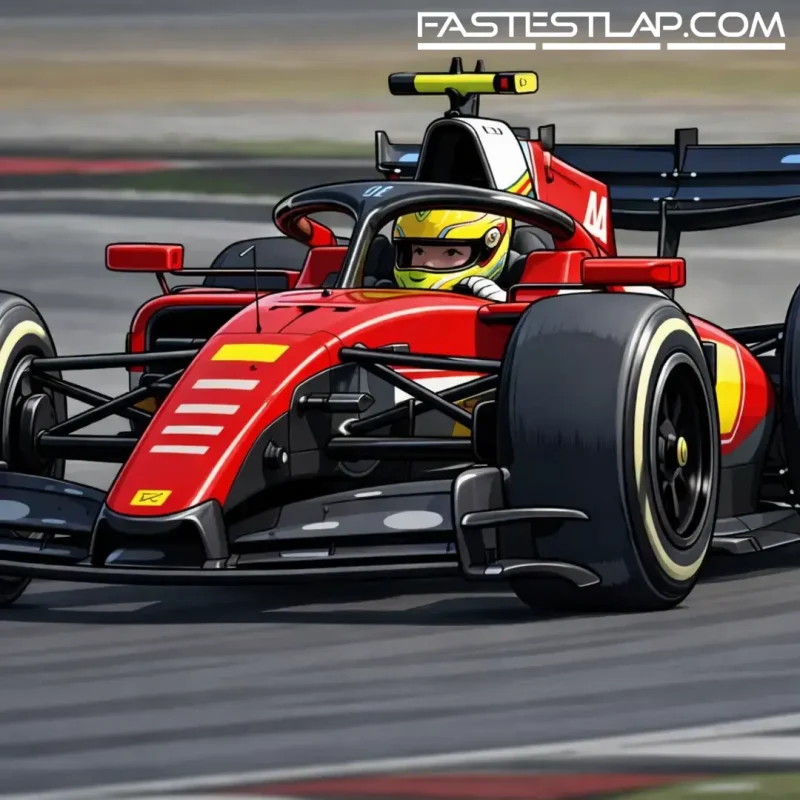
Ferrari’s upgrade cadence has been noticeable. There was an 11-part batch introduced in Miami, then a substantial package in Barcelona — the weekend Lewis Hamilton converted that progress into his first grand prix win in Ferrari colours — before further tweaks arrived in Austria. In a season where Mercedes has otherwise dominated the wins column, Barcelona has stood out precisely because it suggested Ferrari can still land meaningful performance steps when it gets its homework right.
Wolff’s point was that Mercedes can’t do development in that volume because it “lacks the buffer” within the cost cap. For 2026, the cap sits at $215m, up from a 2025 base of $135m (with additional allowances that year beyond the 21st race). It’s a bigger number, but the game is the same: choose where you spend, choose what you delay, and accept that every new piece of carbon has an opportunity cost elsewhere.
Vasseur didn’t bite on the accounting argument. He challenged the framing.
“You have to calm down with this, that we didn’t bring more parts than Red Bull or another one,” he said, before adding that if Wolff genuinely thinks Ferrari is overshooting the cap, “it’s going into this direction” — meaning the direction of an accusation, not a casual observation.
Perhaps the most telling line in the exchange was that Vasseur has chosen not to raise it with Wolff privately. Not because the two are at war — they “generally get on well” — but because, as Vasseur put it, “it was better to avoid speaking.” That’s paddock code for: if you want to make it public, you can own it in public.
There’s a wider subtext here, too. 2026 has opened with the kind of development race the regulations were supposed to temper but never entirely can. The cap restricts total spend; it doesn’t stop teams making different calls on when to spend it. If Ferrari has prioritised early-season manufacturing and rushed certain update cycles, it’s entirely plausible that it’s a deliberate strategy: bank performance now, score points now, and deal with the later-season squeeze when you get there.
Vasseur essentially said as much — without conceding any exceptionalism.
“We are all in the same boat, that if we can bring something at the beginning, we do it,” he said. “And that it’s better to have a couple of tenths for five races than just a couple of tenths for the last two.”
He also pushed back on the optics of the FIA’s published upgrade lists, which can make a team’s development programme look more dramatic than it really is. The declaration process, as he described it, is about shape changes rather than meaningful detail — a public-facing summary that’s useful for media and fans, but prone to being read as a performance ledger.
“The FIA is asking us to declare what we are changing as a shape on parts, but not the details,” Vasseur said. “We are doing it for you to give you something to write or to say.”
Then he trailed off, the way team principals do when they’re about to say the quiet part too loudly.
Vasseur’s broader point was that the early 2026 cars still have huge “room of performance” in areas that don’t arrive in flight cases labelled ‘new floor’ — tyre work, set-up refinement, operational sharpness. In other words: yes, upgrades matter, but the paddock’s habit of turning Friday practice and a PDF list into a definitive verdict is still as silly as it’s always been.
His reminder came with a useful example: Ferrari’s own swing from Barcelona to Austria. “After Barcelona, we were at the top, after Austria, we were nowhere,” he said. “After the FP1 [at Silverstone]… the upgrades are magic. You just have to stay calm with this.”
That’s the sensible read, and it’s also a little self-serving — the kind of messaging you deploy when you know your car’s headline trajectory is strong but your weekends can still unravel for reasons that have nothing to do with whether the latest part “worked”.
Ferrari arrives at this stage of the season second in the Constructors’ Championship, and Hamilton’s Barcelona victory remains the only non-Mercedes grand prix win of 2026 so far. That context matters, because it explains why the SF-26’s development tempo is being watched so closely: it’s one of the few credible interruptions to a Mercedes-led order.
Whether Wolff’s comment was a throwaway line, a pointed prod, or a bit of both, Vasseur has now framed it as something more loaded. And once you’re in that territory — cost-cap insinuations, selective scrutiny, accusations by implication — it stops being harmless paddock needling and starts to look like the first skirmish in a season that’s already edgy beneath the surface.