Silverstone has always been a good place to play spot-the-details. The grid’s busy, the cars are close enough to touch, and for a few minutes before the helmets go on you can still loiter with purpose. Last weekend, two of F1’s most influential technical minds used that window exactly as you’d expect: by going hunting.
Mattia Binotto, now back in the thick of team principal life with Audi, was seen taking a long, interested look at Isack Hadjar’s Red Bull RB22 ahead of Saturday’s sprint. It wasn’t the casual glance of a passer-by either. This was Binotto doing what engineers-turned-bosses do when they’re trying to accelerate a programme: using every legal second to collect information, impressions and—sometimes most valuable of all—questions to take back to the factory.
It also underlined something else about 2026’s paddock dynamic: the people running teams are, increasingly, the people who can’t switch off the part of their brain that wants to understand *why* a rival’s car looks the way it does.
Adrian Newey, now Aston Martin’s team principal after his pre-season installation, has long treated pre-race grid walks as an open-air technical briefing. Silverstone was his third trackside appearance of the year and, with Aston Martin’s base effectively down the road, it was hardly surprising to see him in his element—looking over Hadjar’s Red Bull, Charles Leclerc’s Ferrari SF-26 and the championship-leading Mercedes W17 across the weekend.
Newey has already admitted that the extra management load is “a little bit” distracting from what he actually wants to be doing: design and development. Watching him prowl the grid, you got the sense that this is how he claws some of that back—stealing little moments to stay connected to the technical arms race, even if his job title now says he shouldn’t be worrying about the shape of someone else’s bodywork.
Binotto’s presence around the Red Bull had its own subtext. He was seen chatting with a former Ferrari colleague while eyeing up the RB22—an image that feels almost too on-the-nose for modern F1, where relationships, old networks and paddock memory can be as useful as the latest CFD run. Binotto knows plenty of the people still shaping Ferrari, and he’ll know exactly which questions are worth asking when you’re staring at a rival car and trying to work out whether you’re looking at a clever idea or an optical illusion.
For Audi, the urgency is obvious. This hasn’t been a gentle bedding-in season. The team endured a seven-race run without scoring after opening the year with Gabriel Bortoleto’s ninth place in Australia. Silverstone finally stopped the bleeding: Bortoleto brought home eighth, Audi’s best result of 2026 so far, and a needed reminder that there’s something to build on amid the noise.
Nico Hulkenberg’s luck, meanwhile, has been grim. He’s still yet to score, with Britain marking his third retirement of the season—on top of failing to even start the opener in Melbourne. That leaves Audi ninth in the constructors’ standings heading to Spa, five points behind Williams.
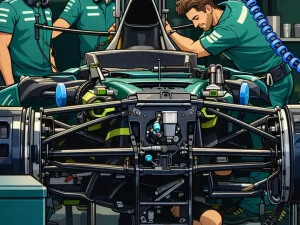
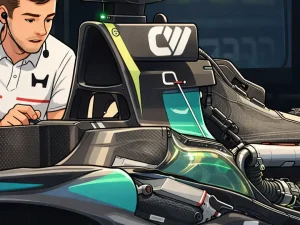
In that context, Binotto peering at Red Bull isn’t theatre; it’s triage. When you’re trying to haul a young project into the midfield fight, you don’t pretend you can’t learn anything by standing two metres from the current reference points and letting your eyes do a quick scan. Set-up choices, packaging tells, cooling layouts, how tightly a team is hugging the regulations—none of it gives away the whole secret, but it can validate (or puncture) what your own people are thinking back at base.
And Silverstone’s grid offered plenty to stimulate that kind of thinking. Red Bull’s car has been one of the most studied objects in the pit lane for years, whether the team is dominating or merely setting the standard in certain performance areas. Mercedes leading the championship with the W17 puts their philosophy front and centre again, and Ferrari’s SF-26 remains an essential benchmark simply because its strengths and weaknesses are always so visible across different circuit types.
There’s also a quieter point here about leadership styles. F1 loves the modern CEO archetype—polished, media-trained, removed from the grease under the fingernails. But 2026 is showing the appeal of a different model: the technical boss who can sit in the Monday debrief, talk budget and personnel, then still walk out on a grid and instinctively start assessing a rival’s solutions. Binotto and Newey aren’t doing it for show. They’re doing it because they can’t help themselves—and because, frankly, it works.
With Spa next and the season starting to stretch into its decisive phase, Audi needs more than the occasional points finish to change the mood around the project. But moments like Binotto’s Silverstone inspection hint at the mindset: restless, curious, a little impatient. In a championship where margins are often hidden in plain sight, the best teams—and the best leaders—are usually the ones still willing to go and look.