
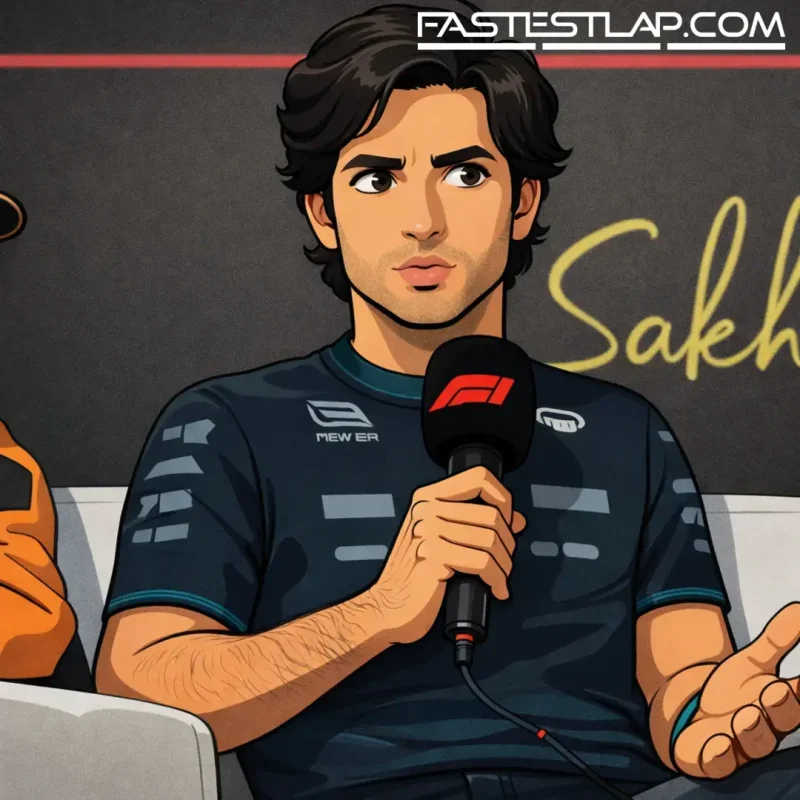
Carlos Sainz’s Belgian Grand Prix weekend picked up an unnecessary footnote on Friday morning, with the Williams driver handed an FIA reprimand after falling foul of the pit entry rules in FP1.
The incident itself was one of those modern F1 moments where the car, the rulebook and the radio all collide in a split-second. Onboard footage showed Sainz commit to the pitlane at Spa by passing to the right-hand side of the bollard at Safety Car Line 1, before then turning left across the painted separation line and rejoining the circuit via the run-off area.
That painted line is not decorative. Under the Race Director’s Event Notes for the weekend, passing to the right of that bollard is treated as having entered the pitlane for the purposes of Appendix L of the International Sporting Code. Once you’re “in”, you’re in — and you’re not allowed to cross back over the line that divides cars heading into the pits from those staying on track.
The stewards’ report makes clear why Sainz ended up doing it anyway. Team radio confirmed Williams initially instructed him to box. After he’d already committed, Sainz received what the officials described as a “very late” counter-call to stay out, specifically to recharge energy. In the new-era management game, that sort of instruction isn’t trivial: Sainz told the stewards his energy level was low enough that if he didn’t rejoin the track, he’d effectively be forced into a messy knock-on effect later — losing laps regenerating after switching to a soft tyre.
Sainz acknowledged the breach. He also argued the rejoin wasn’t dangerous, explaining he checked his mirrors and had no traffic coming as he cut back across.
The stewards didn’t fundamentally dispute that. They accepted that, in this case, it wasn’t dangerous. But they also underlined why the rule exists: the pit entry line is one of those hard boundaries because the alternative is a built-in risk of cars making late, unpredictable movements where drivers behind are least able to react.
And crucially, the FIA’s interpretation left little room for a “but the team told me” defence. The verdict notes that, by Sainz’s own admission, the rule was broken to avoid a sporting disadvantage created by his low energy state after the pit call sequence. Sympathy for the late radio message or not, the rule was still breached — and the sanction followed.
For Sainz, it’s a reprimand rather than anything that touches his weekend competitively, and it’s his first of the 2026 season. In isolation, that’s not a drama. In context, reprimands are one of those quiet season-long counters drivers keep half an eye on: four across a year is the limit before the fifth triggers an automatic 10-place grid penalty.
The wider takeaway is less about Sainz’s judgement than the fine margins teams now juggle when operational calls arrive late and the car’s energy picture is dictating the run plan. “Box, no box” is hardly a new piece of radio theatre at Spa — but when the regulatory line at pit entry is treated as an absolute, there’s no real get-out clause if the message comes after the commitment point.
Williams will likely view it as a cheap lesson: if you’re going to change your mind, the call has to come early enough that the driver can simply stay left and remain unambiguously on track. Anything later and you’re asking the driver to choose between breaking the rule or taking a hit elsewhere — and the FIA has now made it clear which choice it expects.









