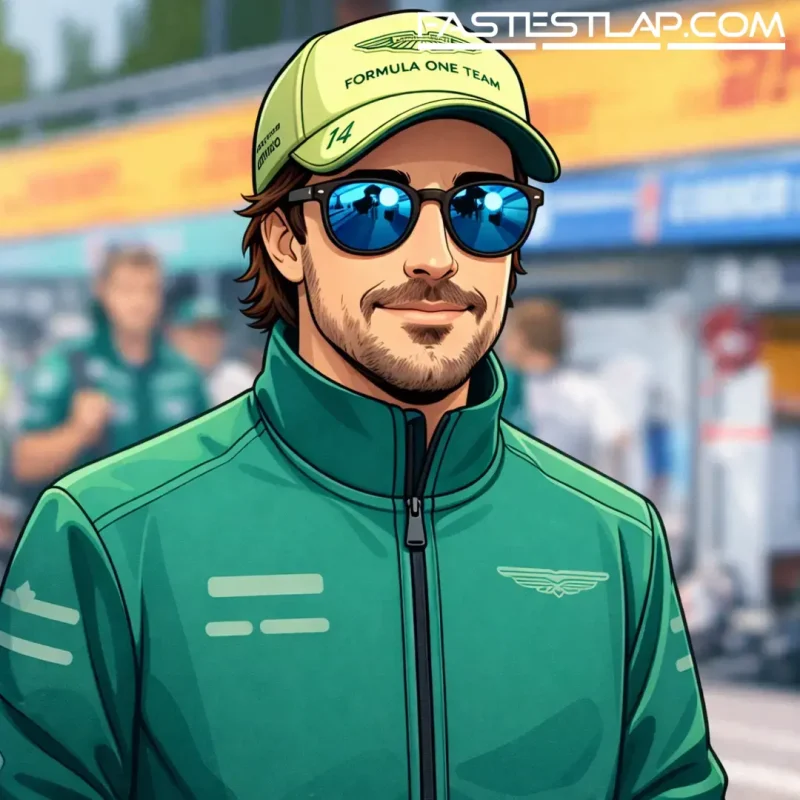
Fernando Alonso isn’t waiting for Aston Martin’s mid-season rescue package to tell him whether he’s got another year in Formula 1. If anything, he’s suggesting the opposite: the car can improve, the team can regroup, but if the 2026-era machinery keeps feeling the way it does now, that’s what will shape his call on 2027.
Alonso’s current deal runs out at the end of 2026, and he’s already pointed to the post-summer break window as the moment he’ll sit down and decide whether to continue or walk away. In Belgium, with Spa still fresh in the mind, he framed the question less around results and more around whether the sport’s new technical direction is still something he wants to live with every other weekend.
Aston Martin has, of course, given him plenty of competitive reasons to be patient. The team began this regulation cycle on the back foot and has spent the first half of the season trying to understand why the promise didn’t translate when it mattered — in Barcelona, Bahrain, and the early flyaways where expectation gave way to a fairly brutal reality check.
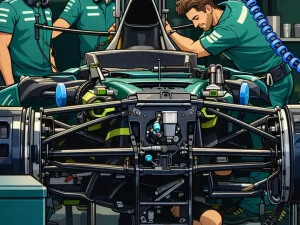
There is finally something tangible arriving: a significant chassis upgrade in Hungary, deliberately held back as one larger step rather than a drip-feed of smaller changes. Honda, the team’s power unit partner, is also due to introduce an update at Zandvoort, meaning Aston Martin expects to go into the second half of the season with meaningfully revised hardware.
But Alonso was clear that this weekend’s developments don’t really move the needle on his decision.
“Nothing,” he said when asked what the Hungary package might mean for his future. “Because my decision was not about the performance of this year.
“This year we started on the wrong foot, and I cannot base my decision for next year on a performance that is not realistic.
“I think this is not the true potential of the team, I think it’s much higher than what we see. I think my decision for next year is more about the rules.”
That’s the line that should make the paddock pause. Alonso has been around long enough to separate short-term form from structural reality; he’s not pretending Aston Martin’s current position is the “real” Aston Martin, particularly with Adrian Newey now steering the long-term technical direction and Honda embedded as the works power unit programme. Alonso still talks like someone who can see a route to a title fight at Silverstone — and he’s not shy about wanting that third championship.
Yet he also sounds like someone who’s weighing up whether the driving experience of this new generation of cars is worth the grind, even if the project around him is improving.
“Driving these cars in places like Spa or Silverstone [at the] last race is not what I’m dreaming of for my future,” Alonso admitted. “So we’ll see.”
It’s a telling comment in the context of the complaints that have bubbled up around the 2026 power units. Alonso didn’t spell out a technical wishlist, but the implication was obvious: if the regulations deliver a product that doesn’t excite him in the places that have defined his career — the fast, flowing circuits where commitment is the whole point — then no amount of internal optimism at Aston Martin will override that.
What’s interesting is the lack of blame directed at his team. Alonso didn’t use Hungary’s upgrade as leverage, or as a soft ultimatum, or even as a rhetorical “show me”. If anything, he’s protecting Aston Martin from the idea that his decision is a referendum on its current pace. He’s essentially saying: don’t confuse the 2026 growing pains with where this organisation can end up.
And he’s right to do so. Aston Martin’s first half of the year has been an uncomfortable mismatch between its headline ingredients and the reality on track. Newey’s presence, Honda’s return as a partner, and the team’s own investment curve all pointed towards a sharper start than it managed. Alonso acknowledged that disappointment openly.
“We had high hopes for this set of regulations and for Adrian’s arrival with the team and Honda and things like that,” he said. “The expectations were very high, and we didn’t meet the expectations. So, it was just disappointing to see the car in Barcelona and Bahrain.
“But, at the same time, everyone in the team took that as a challenge, and they want to make it happen. They come back, and hopefully Budapest will be the first step into that performance comeback, and I think hopefully the right direction is in the team.”
That last sentence is classic Alonso: not quite a promise, not quite a warning, but the tone of someone who expects serious people to respond seriously when they miss the mark. He’s seen enough projects fail because they couldn’t react under pressure; he’s also seen teams transform quickly when the right brains and resources align. Aston Martin wants to be the latter, and Hungary is being positioned internally as a pivot point.
Whether it works immediately is almost beside the point for Alonso’s wider dilemma. The next few races may tell us more about Aston Martin’s ceiling, but they won’t answer the more existential question he’s raising: does Formula 1’s new rulebook still produce the kind of racing car he wants to drive?
If the answer is no, the most expensive upgrade package in the world won’t change it. If the answer is yes — if the sport tidies up the rough edges of this new era and the driving experience starts to feel like a reward again — then Aston Martin’s long game suddenly becomes a much more tempting place for a two-time champion to keep rolling the dice.