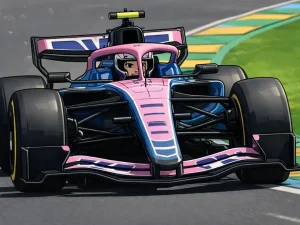
Alpine has gone unusually public in the wake of Suzuka, issuing an open letter that does two things at once: it calls out the increasingly ugly pattern of online abuse aimed at drivers, and it shuts down a strand of fan conspiracy that’s been gathering noise around Franco Colapinto’s equipment.
The timing isn’t accidental. The first three races of 2026 have already produced a pair of flashpoints that spilled far beyond the track. In China, a collision between Colapinto and Haas driver Esteban Ocon triggered a wave of online hostility towards Ocon that escalated into death threats. FIA president Mohammed Ben Sulayem wrote directly to Ocon in response, a personal intervention that underlined how seriously the governing body is now treating the issue under its United Against Online Abuse banner.
Then came Japan. Oliver Bearman’s weekend ended in nasty fashion with a 50G accident at Spoon Curve, after which social media turned its attention towards Colapinto again. The FIA, for its part, acknowledged that the “significant closing speeds” of the new-generation 2026 cars contributed to Bearman’s crash, and said further meetings would be held in April with a view to refining the regulations. It also reviewed the in-race incident involving Colapinto and Bearman and decided no further action was required.
Alpine’s letter leans on those facts, but its more pointed message is aimed at its own ecosystem: the loud minority that believes every setback must have a villain, and every villain must be internal.
“Social media should be a place to bring people together,” the team wrote, before making clear that its patience with abuse has run out. Alpine condemned the messages directed at Colapinto after Japan “the same way” it condemned the threats aimed at Ocon after China. It also acknowledged, with a candour teams don’t often show, that it was “an oversight not to call it out sooner” in the Ocon case.
There’s also a deliberate attempt to strip the emotion out of the China incident itself. Alpine notes that Ocon “took full responsibility and apologised to Franco,” including seeking him out in the media pen and apologising on social media. In other words: racing incident, accountability taken, move on. The reaction, Alpine argues, was wildly out of proportion and “not in the spirit of the sport.”
But the letter doesn’t stop at behaviour policing. It pivots to the other narrative Alpine clearly wants dead and buried: that Colapinto is being short-changed compared to Pierre Gasly.
That theory flared up after Gasly finished a strong seventh at Suzuka, while Colapinto’s weekend became entangled in the Bearman episode and the noise that followed it. Alpine’s response is blunt: claims of “sabotage” are “completely unfounded”.
The team insists it is providing “equal opportunity for both drivers”, and states both Gasly and Colapinto have been running “the same equipment” this season. The one caveat it offers is modest and specific: in China there were “some small low-performance impacting parts” differences due to switching gearbox components. That detail matters because it’s the sort of mundane, unglamorous explanation that tends to be true in modern F1 — and also the sort of thing conspiracy theories never wait around to hear.
Alpine also sketches out the reality of development under the cost cap and tight manufacturing lead times: sometimes parts arrive in limited numbers and a team can only run them on one car initially. It’s not framing that as an excuse, either. Alpine admits it’s “never the intended or desired approach” because if an upgrade works, the team wants it on both cars immediately. Still, it concedes there “might be times this year” when upgrades appear on one car first — and promises transparency when that happens.
There’s a competitive subtext to all of this. Alpine says it has been “the fourth fastest car” at the last two races, a claim that neatly backs up the sense in the paddock that the Enstone squad has started 2026 on a far sturdier footing than recent campaigns. In that context, the idea that Alpine would deliberately compromise one of its cars is not just offensive to the driver involved; it’s illogical. As the team puts it: “It’s absolutely not in the team’s interests to not score points.”
Perhaps the most revealing section is where Alpine tries to reframe how people should view its driver pairing. It talks about Gasly and Colapinto regularly sharing data, comparing notes at each other’s desks, and working together in the simulator during the short break before Miami. That’s less a PR flourish than an attempt to remind fans that the old trope of drivers hoarding secrets is largely obsolete — especially with fresh power units, new cars, and a changed strategic picture in 2026.
It also serves another purpose: protecting a young driver’s legitimacy. When a fanbase starts questioning whether a driver is being undermined from within, it corrodes trust quickly — and it can become a self-fulfilling distraction. Alpine is drawing a line now, early in the season, while the team believes it has momentum worth protecting.
The letter ends on a human note: Colapinto is set to return to Argentina during the break, “excited” to connect with supporters there. Alpine, meanwhile, wants the wider message to land before Miami: debate the racing all you like, but stop turning drivers into targets — and stop mistaking logistical reality for plotline.
In 2026’s new era, F1 teams are still figuring out the cars. Alpine’s making it clear it won’t spend the season figuring out how to manage a mob, too.