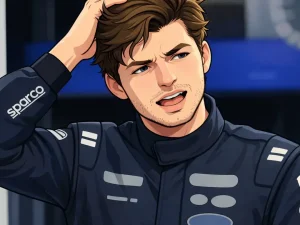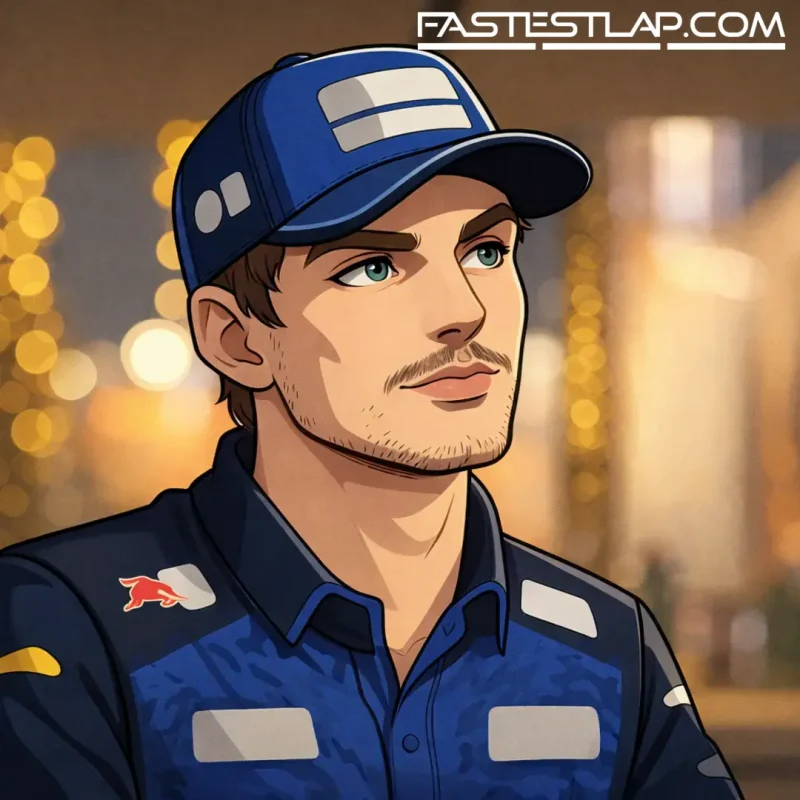
Max Verstappen didn’t bother dressing it up in Bahrain. Two days into the first serious running of Formula 1’s 2026 machinery, the four-time world champion delivered a verdict that landed with a thud in the paddock: the new cars, as they stand, aren’t much fun.
“To drive, not a lot of fun to be honest,” Verstappen said after day two of testing, before expanding on why the new era’s big theme — energy management — is already shaping how drivers have to approach a lap. With increased electrification central to the engine regulations, the balance between harvesting and deploying energy is no longer a background consideration. It’s moving into the foreground of how you actually race.
Verstappen’s beef is simple enough: he wants to drive flat-out, and right now the regulations don’t really let him. He talked about “management” becoming the defining word, and pointed to behaviours that are already becoming normalised — downshifting on straights, bigger lift-and-coast phases, a general need to be more cautious with throttle application to control deployment. In his view it drags the experience away from what an F1 car is supposed to feel like, describing it as “Formula E on steroids”.
He was careful to acknowledge the work Red Bull has done to give him a competitive package, and he didn’t argue the fairness of the framework — “the rules are the same for everyone” — but he made it clear he doesn’t see the regulations as a pure racing concept. “It’s just everything else that is a bit, for me, anti racing,” he said. “I didn’t write the regulation.”
The sting, though, wasn’t only the criticism. It was the implication that this matters to him beyond lap time. Verstappen didn’t rule out the possibility that enjoyment — not competitiveness — could influence how long he sticks around. “It needs to be fun to drive as well, I think, at this stage of my career,” he said, adding that he’s exploring other things outside F1 “to have fun”.
That’s the kind of line that instantly sharpens ears up and down the pitlane, because it hints at something teams and the commercial side of the sport don’t like to contemplate: a regulation cycle that risks turning the most complete driver of his generation into someone merely going through the motions.
On Thursday, F1 CEO Stefano Domenicali sought to take the heat out of it, revealing he’d already sat down with Verstappen. Domenicali framed the conversation as “very constructive”, and suggested Verstappen’s delivery can often be the part that inflames things, rather than the substance.
“I guarantee to you that Max wants and does care about F1 more than anyone else,” Domenicali said. “He has a way of putting the point that he wants to say in a certain way, but we had a very constructive meeting.”
Domenicali also said further talks would involve the FIA and the team to “highlight” Verstappen’s view of what needs to be done “to keep the driving style at the centre” without altering the broader direction. That line matters. It’s a tacit admission that while the regulations are set, the sport is open to refining how the cars behave — which is precisely what drivers are trying to influence early, before everyone shrugs and accepts the new normal.
The other pillar of Domenicali’s response was time. New regulations, he argued, always start like this: concern, predictions of doom, then rapid development and a shift in perception as teams understand the package. He pointed to how driver feedback had already evolved across the opening days of running — the comments of day one, he said, were different by day three or four — and insisted the picture will continue to change as performance comes and the driving techniques adapt.
“We don’t have to forget that the evolution of the technology behind the cars requires a different way of driving the car itself,” Domenicali said. He recalled the noise around the last major reset, when some engineers predicted huge laptime losses that never materialised once development took over.
What Domenicali is really selling here is faith in Formula 1’s pattern: the first version of a ruleset is rarely the one that defines it. If the sport is serious about keeping drivers like Verstappen invested, that evolution has to include more than speed — it has to include the feeling behind the wheel, and the racing that comes from it.
Domenicali was also keen to shut down the idea that Verstappen could genuinely be pushed out by the rules themselves. Asked how confident he is that Verstappen’s future won’t be decided by regulation philosophy, he leaned heavily on their relationship.
“Because I have a very good relation with Max. I know him very, very well. I spend a lot of time with him,” Domenicali said. “That’s the reason, full stop, and he loves Formula 1. No doubt about it.”
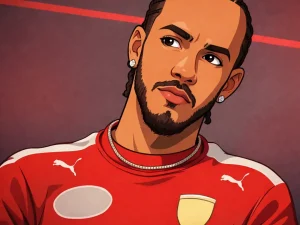
Verstappen isn’t alone in voicing concern. Lewis Hamilton has said the levels of lift-and-coast are “not what racing is about”, while Fernando Alonso has warned of “less joy” for drivers and even suggested the energy demands mean “the chef” could drive the car through certain corners — a pointed way of questioning how much of the lap becomes system-led rather than instinct-led.
Still, Verstappen’s comments have cut through because they touch a nerve: the fear that F1, in chasing technical direction and broader objectives, might be making the act of driving less special. Domenicali’s answer is essentially that the grid will adapt, development will improve the product, and once racing starts the competitive instinct will drown out the early complaints.
Maybe. But Verstappen’s core point won’t disappear just because the lap times come down. If the new era is to land cleanly, F1 will need to prove it can deliver both: clever energy management as a differentiator, and cars that still let the best drivers in the world feel like they’re doing what only they can do.