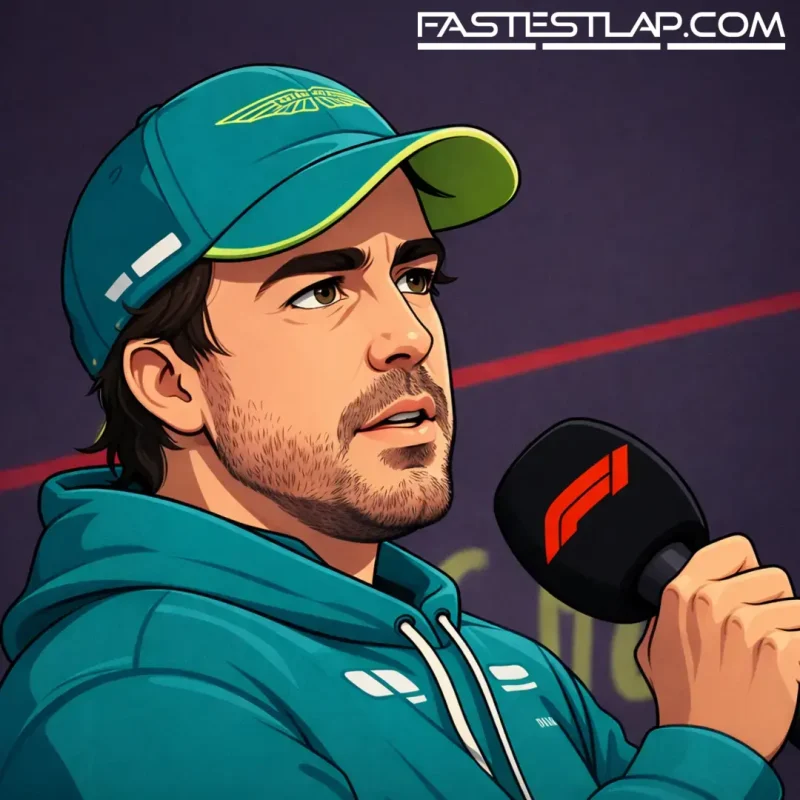
Fernando Alonso didn’t need reminding that Formula 1 has a habit of making fools of early-season certainty — but he offered it anyway. As Aston Martin and Honda pick through an uncomfortable start to 2026, Alonso’s message was essentially this: don’t get too attached to the current pecking order, and don’t confuse a noisy opening weekend with a season-long verdict.
He’d said as much around the Australian Grand Prix, where Aston Martin’s new Honda-era partnership began in the least subtle way possible: with an AMR26 that’s been afflicted by severe vibration traced to the battery, dramatic enough in testing to shake bodywork loose, and unpleasant enough in the cockpit for Alonso to report numb hands after “25 minutes” of running.
Honda has been working through countermeasures and made what Alonso described as “big strides” heading into Melbourne — though, pointedly, he said the vibration felt the “same” once he was back in the car. The race itself only underlined how messy the opening chapter has been. Alonso’s afternoon was a stop-start slog that ended in retirement: he was sidelined on lap 15, returned 11 laps down, and then parked it for good.
The easy narrative is to reach for 2015 and Alonso’s infamous “GP2 engine” radio barb, delivered at Honda’s home race during that painful McLaren reunion. This is his second Honda marriage, after all, and the visual parallels are hard to miss: a proud manufacturer returning to the sharp end of the sport’s power-unit conversation, only to be greeted by teething problems that are impossible to hide.
But Alonso isn’t playing the greatest-hits album. In Bahrain testing, and then again through Melbourne, he’s sounded less like a driver reaching for the detonator and more like a veteran managing expectations — his own, and everyone else’s.
“Less tough than what do you think. I mean not ideal,” Alonso said when asked about Aston Martin team principal Adrian Newey describing it as a “hard mental place” for the 44-year-old to be in. “We all want to win. We have 22 drivers this year. One will win. 21 will be in a difficult and tough mental state, because for me to finish third or fifth or 17th, it really doesn’t matter much.”
It’s a very Alonso way of framing it: brutally competitive, but also oddly liberating. If only one result truly satisfies, then the rest becomes degrees of the same discomfort — and that’s where experience starts to matter. He’s already had the career most drivers would trade their entire CVs for: championships, over 100 podiums, and enough eras lived to recognise when the sport’s current temperature is misleading.
That perspective is the real difference between 2015 and 2026. Back then, the frustration spilled out because the project was young, the deficit was glaring, and the radio button is sometimes the only place a driver can put the reality of the situation. Now, Alonso argues, the world has simply caught up with what that McLaren-Honda group felt at the time.
On the decade that’s passed since the “GP2” moment, Alonso insisted the situation wasn’t as “dramatic” as the noise made it seem — it was just that everything gets amplified. Win a couple of titles, and the sport decides you’re untouchable; struggle, and the same sport decides you’re broken. He noted, too, how history tends to sand down the edges: for years, he felt painted as the lone agitator, when in his view McLaren, Jenson Button and Stoffel Vandoorne were all voicing the same concerns about a power unit that “was not mature enough when we started”.
There’s also a more practical shift in Alonso’s approach now: he’s talking like someone who sees the solution as organisational rather than emotional. Aston Martin isn’t just waiting for Honda to fix it; Alonso pointed to the modern reality of shared data, analysis and resource allocation, and described a more integrated push to help Honda narrow its focus and attack specific weaknesses — “vibration problems” and “deployment issues” included.
In other words, it’s less about venting and more about building the plumbing between factory and trackside operation so problems don’t linger longer than they have to. That’s not a guarantee of a quick turnaround — Alonso was clear it “will not be an immediate solution” — but it’s a very different posture to the one that made him a lightning rod in the mid-2010s.
What’s striking is how calmly he’s willing to sit in the discomfort. Alonso admitted it’s “a bumpy start” to the Aston Martin-Honda collaboration, but he also framed it as part of the deal: first year, new partnership, and a moment the team has to “go through”. For a driver who’s spent much of his career refusing to accept pain as inevitable, that’s a notable bit of acceptance — not resignation, but recognition.
And behind it sits the warning he opened with: the order won’t stay like this. Formula 1’s regulation shifts always invite early chaos, and 2026 is no different. Melbourne might have exposed Aston Martin and Honda’s weak points in unflattering light, but it also provided a baseline — the ugly kind teams can work from. Alonso’s bet, as ever, is that the sport rewards those who keep their nerve when the picture is still developing.
For now, he’s not asking anyone to clap along while the car shakes itself apart. He’s asking for time, for work, and for the paddock to remember how rarely the first page tells you how the book ends.