Fernando Alonso has seen enough regulation resets to know when a team is merely slow — and when it’s stuck chasing its own tail. Aston Martin’s opening to the 2026 cycle has been firmly in the second category, but Alonso insists the picture isn’t as bleak as the timing screens suggest.
The headline problem has been the new Honda power unit integration. Aston Martin’s long-anticipated works-style partnership was meant to be the cornerstone of Lawrence Stroll’s next phase, yet the AMR26 has spent the early rounds marooned at the back, not because the concept is fundamentally broken, but because the package hasn’t been allowed to breathe.
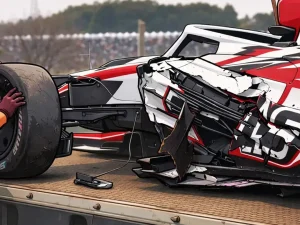
Honda has been fighting vibration issues that, crucially, don’t present at the same severity on the test bench but spike once the power unit is installed in the car. The knock-on effects have been ugly: reliability headaches through pre-season testing and Australia, with the battery pack taking the brunt of it. In China, things got so unpleasant that Alonso climbed out early, citing discomfort as the situation escalated.
Japan, though, finally offered a small but meaningful milestone. Alonso reached the flag to complete Aston Martin’s first full race distance of the year — not the sort of achievement a two-time world champion should be celebrating in public, but in the context of a team still trying to establish a functional baseline, it mattered.
“We have been running without too many issues for the last two weekends,” Alonso said in Suzuka. “Obviously, in terms of performance, we are at the back. So, yeah, you don’t find any satisfaction when you are not competitive.
“But, you know, we try to stay together, to stay strong, and give time to both factories to fix the situation. They are working flat out. There are a couple of improvements, a couple of ideas.”
That “both factories” line is telling. This isn’t just Aston Martin’s job, and it isn’t just Honda’s either. A modern F1 car is a tightly coupled system: mounting stiffness, packaging, cooling layouts, energy store placement, even the way the chassis transmits loads — any of it can turn an acceptable vibration into a destructive one when everything is bolted together and hammered across kerbs at racing speeds. Alonso’s tone suggested Aston Martin understands that, and also understands it won’t be solved by a single Friday night part.
He also sounded like someone acutely aware of the calendar. With a new rules era underway, there’s a temptation to thrash yourself chasing immediate lap time, only to end up investing heavily in a concept you’ll want to move away from once you’ve learned the real limitation. Alonso hinted Aston Martin won’t fall into that trap.
“In Formula 1, it doesn’t happen today,” he said. “And you need to spend a few months, I guess, with the current car. We will not change too many things on this car if we know that it will change completely in a few months’ time.”
In other words: don’t confuse activity with progress. Fix the fundamentals, then go hunting.
It’s why Alonso reached for a comparison that will resonate across the paddock: McLaren’s 2023. That team’s early-season misery — regular Q1 exits and a car that looked lost — ended with it fighting at the front by the year’s end. For Aston Martin, with McLaren now the reigning Constructors’ champion in 2024 and 2025, it’s a neat reference point for how quickly fortunes can shift once a team finds clarity.
“I think a couple of months,” Alonso said when asked how long it might take. “We saw the McLaren in 2023. They were last in the first couple of races, and they eventually were at the front at the end of the year. Maybe that’s too optimistic. That’s a dream scenario.
“But, in a way, we know that the season is long, and if you understand the problems and you fix them, you have plenty of time to do the second part of the year or the last third of the championship in a much better position.”
That’s classic Alonso: realism wrapped around a competitive spark. He knows “dream scenario” is doing heavy lifting there, but the subtext is obvious — he’s not at Aston Martin to tour the midfield. And while the car has looked anaemic so far, there are voices inside the team suggesting the chassis itself is better than the results show, potentially even a top-five platform once the power unit situation calms down.
Alonso didn’t shy away from that idea.
“Definitely a very, very huge potential on the car, on the engine as well,” he said. “I think we have made progress since Bahrain, in terms of deployment, in terms of understanding some of the drivability issues; now we are in a much better position.
“We still need to fix the vibrations, and we still need to fix the power deficit. There are fundamental things that they are still on the back foot.”
Aston Martin did bring updates to Suzuka — a revised front wing and floor edge among them — but Alonso was blunt about what those parts were really for. Not lap time, not yet. Direction.
“Zero [performance],” he said. “Because the upgrades are just a small thing that we are testing on the car to understand if what we think is the problem is the problem.
“So, when we test those upgrades, they tell us if we are in the right direction or not in the factory. But it’s not that it’s bringing performance. It’s just bringing direction.”
That matters because it frames Aston Martin’s short-term pain as a deliberate, if uncomfortable, phase: stabilise the platform, validate the tools, then commit properly. Alonso even laid out the timeline in the way only a driver living inside the weekly grind does — idea, wind tunnel, CFD, manufacture, track — and suddenly you’re looking at July or August.
For a team with Adrian Newey leading the technical group, that’s also the point. Newey-led organisations don’t tend to panic-bolt solutions on the car for the sake of optics. They diagnose, they correlate, and then they arrive with a step that actually changes the trajectory. Aston Martin’s 2026 start suggests the groundwork is still being poured — messy, unglamorous, and currently very visible on Sundays.
The risk, of course, is that by the time the baseline is stable, the front has already run away again. But Alonso’s argument is that the season is long enough — and the underlying package promising enough — that Aston Martin doesn’t have to be defined by April.
For now, he’s asking for patience. In Formula 1, that’s never a comfortable request. But it’s often the only sensible one.