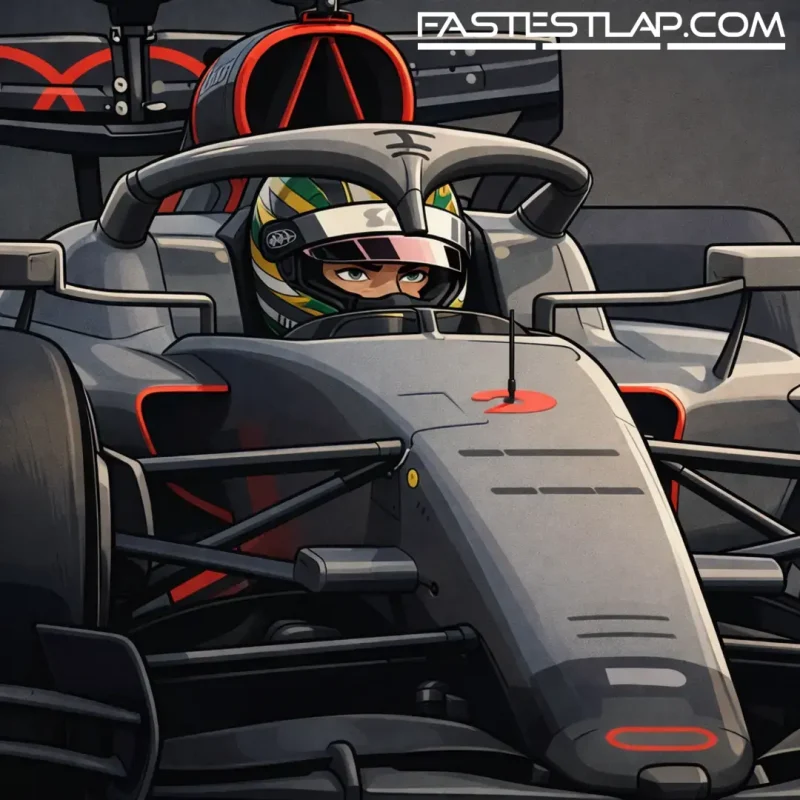
Audi arrived in Formula 1 talking long-term, keeping its head down through testing, and trying not to get intoxicated by the noise that comes with a manufacturer badge. Then Melbourne happened — and suddenly the project has a points finish on the board after one grand prix.
Gabriel Bortoleto’s ninth place in the season-opening Australian Grand Prix doesn’t rewrite anyone’s expectations for 2026 on its own, but it does give the paddock a first, tangible data point: Audi’s R26 and its new in-house power unit are already competitive enough to live in the sharp end of the midfield. That matters, because this regulation reset is going to be decided in the boring details — energy management, start systems, driveability — long before it’s decided by glossy launch videos.
Team principal Jonathan Wheatley didn’t hide his satisfaction afterwards. If anything, he sounded relieved that Audi’s debut weekend looked like a professional racing operation rather than an ambitious brand learning on the job.
“We spent the winter focusing on ourselves,” Wheatley said on Sunday evening. No obsessive comparison runs, no spiralling over what others showed in Bahrain — just a push to execute. And in that context, he admitted he’d have happily signed for ninth earlier in the week.
It wasn’t a spotless Sunday, mind. Audi effectively ran a one-car race after Nico Hulkenberg was stopped before the start, losing telemetry on the reconnaissance laps before a technical issue prevented him from taking the grid. The team hasn’t detailed the exact failure, but insists it has identified and fixed whatever cut Hulkenberg’s weekend short. For a new works programme bedding in a fresh power unit and an all-new car under the biggest set of technical changes in years, that’s the sort of problem you can tolerate once — but only once.
Bortoleto, though, gave them the headline they needed. He qualified 10th, ahead of Hulkenberg, and then scrapped his way to ninth in what he later called a “crazy race”. The Brazilian’s honesty was almost as striking as the result: he admitted he’s still getting his head around the new regulations and even described one overtake as happening “by mistake” — the kind of comment that makes engineers laugh nervously while also appreciating the point. With these cars, the margins in how and when you spend energy are so fine that a driver can stumble into performance if the timing happens to be right.
That theme ran through Wheatley’s debrief too, particularly when the conversation turned to Bortoleto’s late pursuit of Arvid Lindblad’s Racing Bulls for eighth. Bortoleto closed, flirted with a move, and couldn’t quite make the last step stick. When asked why, Wheatley briefly grinned and quipped, “Ask him!” before pivoting into the real story: efficiency and how different teams are choosing to deploy what they’ve got.
“The performance of the cars comes down to the efficiency of the engines,” Wheatley said. In other words, better efficiency tends to buy you better harvesting and smarter deployment across the lap. He was careful not to wander into Mattia Binotto’s territory on the power unit specifics, but the implication was clear enough: Audi and Racing Bulls — the latter also running a debutant power unit from Red Bull Powertrains — are already arriving at different solutions in how to use energy, and that difference can decide whether you’re close enough to attack or merely close enough to stare at a gearbox.
Wheatley’s point was less “we’re behind” and more “this is what 2026 is going to look like”. Everyone is learning. The shapes of the solutions will converge. And what looks like a pecking order now could be an illusion created by who has nailed the operational basics first.
That’s why he’s reluctant to read too much into Audi’s “upper midfield” label after one weekend, even if it’s an encouraging one. These cars are new, the start performance is still all over the place, and the consequences of getting it wrong vary wildly from track to track. Wheatley put it bluntly: what you can survive in Melbourne might bury you somewhere like Monaco.
“Every time we take these brand new cars to a new track with new characteristics, we could shake the order up,” he said, adding that the midfield looked tighter than many expected. It’s not hard to see why he’s framing it that way — the 2026 reset has created a world where small gains in system sophistication can become large gains on a stopwatch, and those gains won’t be evenly distributed in the opening flyaways.
For Audi, the bigger win may be that its first weekend felt coherent. The team didn’t turn up talking about miracles; it talked about process. It didn’t arrive trying to win testing; it arrived trying to understand itself. And even with Hulkenberg’s pre-race failure dragging a cloud across the garage, it left Australia with points, a driver who already looks comfortable mixing it in the pack, and a realistic view of what comes next: iteration, not celebration.
Wheatley called it a “historic moment” — an Audi F1 car scoring on its first appearance — but his closing line was more telling. “Let’s get on the journey,” he said.
If Melbourne was the opening chapter, the story now becomes whether Audi can keep writing progress while everyone else starts reading the same rulebook properly. In this midfield, that’s the only way you get to stay where you’ve arrived.