Cadillac drops first F1 test livery as Andretti flags “grey area” engine intrigue
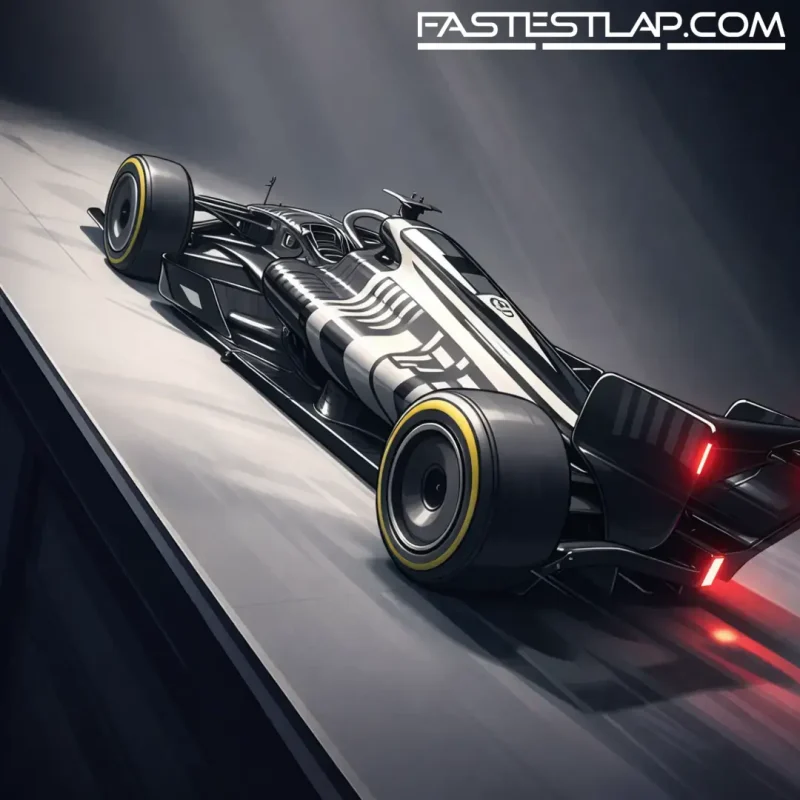
Cadillac’s first Formula 1 colours are out in the wild. The brand’s initial test livery has been unveiled ahead of its long-trailed entry, a cautious first glimpse of how one of America’s most storied badges plans to look in the paddock when the covers finally come off for good.
The paint, for now, is only part of the story. Behind the scenes, Cadillac board member and 1978 F1 world champion Mario Andretti is watching a very different kind of reveal: the regulatory chess match over F1’s next-generation power units. And he’s not shy about how that game gets played.
“It’s just like a lawyer reading the law,” Andretti told GPBlog. “Some lawyers are better than others, because they know how to go right to the grey area just before it gets red. And that’s how engineering is the same thing, when they read the rules. How far can we go?”
If you’ve felt the hum building around 2026’s hybrid overhaul, this is why. The new formula keeps the 1.6-litre V6 but shifts to a roughly 50/50 split between the internal combustion engine and electric power, runs on sustainable fuel and—crucially—hardens the limits around how that ICE is built and measured. It’s attracted Red Bull-Ford and Audi to the supplier table alongside Ferrari, Mercedes and Honda, with General Motors slated to join as a power unit manufacturer further down the road.
The latest flashpoint is a suspected interpretation gap in how compression ratio is defined and checked. The regulations cap geometric compression ratio at 16.0 and require it be measured at ambient temperature using a method proposed by each power unit maker and approved by the FIA. The whisper in engine corridors is that someone may have found a way to pass that measurement perfectly legally at rest, only for the ratio to creep higher under operating conditions—think components that expand at temperature, like conrods, nudging the numbers north once the engine’s singing.
A higher compression ratio, even marginally, is free lap time: more grunt, better efficiency. If one or two manufacturers arrive with that advantage baked in, 2026 could start with a gap that no amount of calibration can paper over in the early flyaways.
The FIA, aware of the noise, has convened a meeting of technical experts to ensure everyone’s reading the same book and the same page. As is customary with brand-new regulations, the governing body is canvassing input, aligning interpretations and making sure every participant understands the rules the same way before the first serious miles begin. In other words: tidy the grey before anybody strays into the red.
Andretti accepts that the horse may already be halfway down the lane. “There is a technical meeting to clarify that, but it’s almost too late because engines already have been designed,” he said. The subtext: if someone spotted the seam earlier and designed around it, they’ll be smiling when the dynos stop and the garages open.
For Cadillac’s project, the immediate comfort blanket is Ferrari. The Scuderia is set to supply power units for the team’s debut campaign, and Andretti isn’t losing sleep over Maranello’s homework. “I have all the confidence in the world in Ferrari in that respect and if they don’t get it right away, they will,” he said. “I don’t think we could be in better hands.”
It’s a pragmatic stance. New eras in F1 always arrive with clever edges and quick FIA clarifications, and the winners tend to be the groups that iterate fastest once the lights go out. If Ferrari’s initial interpretation isn’t the golden one, its track record of in-season recovery under stable leadership suggests it won’t be far behind for long.
As for Cadillac, rolling out a test livery now is a neat moment in a bigger build. The look you’ve seen isn’t necessarily the final race suit—teams routinely run stealthier test designs to keep eyes on the metal rather than the sponsors—but it plants a flag. The brand is stepping into an F1 that’s about to change more dramatically than at any point since the hybrid era began.
Between a tightened engine rulebook, a more potent electric deployment and the promise of an “overtaking mode” to manage energy and spice the show, 2026 will stress every department. Finding the grey—legally, cleverly, repeatably—will decide who opens the window fastest. Keeping within the lines will decide who gets to keep what they’ve found.
Cadillac’s made its first move on the visual board. The next ones, hidden in CAD files, combustion chambers and lines of control software, are where this game really starts.