David Croft has never pretended Formula 1 is easy to explain on the fly. But as the paddock packs for Melbourne and the 2026 season finally arrives, even the sport’s most recognisable voice is admitting this one comes with a different weight: the kind where you can’t just lean on muscle memory and a few well-worn reference points.
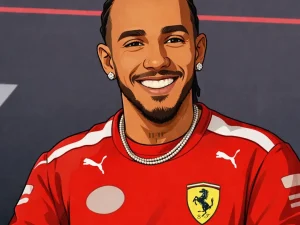
Eight months ago he was standing in Times Square alongside Lewis Hamilton at the world premiere of *F1 The Movie*, watching Brad Pitt and Damson Idris work a red carpet while billboards sold the idea of grand prix racing to a far bigger crowd than the one that usually argues over tyre deg. Croft glanced at Hamilton — white tux, seven world titles, and now Ferrari red — and asked the sort of question that only lands because they share the same unflashy beginning.
“Did you ever think we’d go from Stevenage to Times Square?” Croft said.
“It’s insane, isn’t it,” Hamilton replied, laughing. “I never thought the sport would be able to do this. Not when I first started out.”
The movie has since hauled in more than $633 million worldwide. F1’s cultural footprint is doing laps of its own. And now Croft’s attention snaps back to the thing that still matters most inside the bubble: making sense of the most radical rules reset the championship has ever attempted, live, at 200mph, with Martin Brundle asking awkward questions in his ear.
“I’ve done 20 years in Formula One,” Croft said this week. “And this year, with these new rules and regulations, is a massive challenge.”
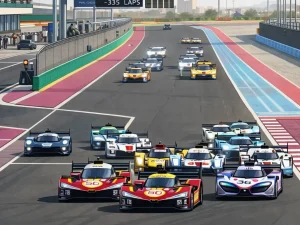
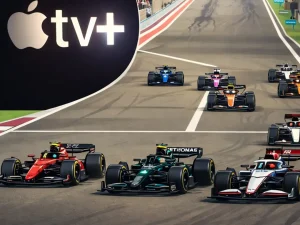
The shape of that challenge is obvious even before the first set of Friday practice times flicker onto the timing screens at Albert Park. Smaller cars. Less downforce and grip. A power unit philosophy pushing towards a near 50-50 split between internal combustion and electric power. It’s still Formula 1, but it’s a different kind of fast — and, crucially for anyone who has watched the category chase “better racing” in cycles, it’s a different kind of difficult.
Croft’s angle isn’t the usual broadcaster’s sales pitch. He’s not pretending the learning curve doesn’t exist. He’s framing it as a job requirement: translating the stuff the cameras won’t naturally capture.
“I think once we get into the racing we’re not going to see much of a change, as fans of the sport, albeit there’ll be a lot going on that isn’t as visible,” he said. “But it’s my job and Martin’s job to make those invisible, key moments shine through so people understand what is happening.”
That’s the quiet pressure point for 2026. The sport has spent years layering complexity on top of complexity — energy deployment, tyre behaviour, set-up windows that make or break weekends — and now it’s flipping a lot of the fundamentals at once. The danger isn’t that the racing won’t be good. The danger is that the decisive moments happen in places casual viewers don’t know to look, and that even die-hards need a few races to recalibrate what “quick” and “smart” look like under a new rulebook.
Croft, though, sounds almost relieved by one obvious change: less downforce.
“For me, the best thing is there’s less downforce,” he said. “The cars are going to be a bit more lairy, lighter, more nimble. They look so much better than the big heavy machines we had for the last couple of years. And I think the drivers in time will get used to it.
“They want a load of downforce. We want to see them, not struggling, but having to work to overcome the challenges they’re faced with, because that’s why they’re the best in the business, and that’s why we’re fans of it.”
It’s a telling line, because it cuts to the fundamental tension F1 always wrestles with. Engineers will always chase stability and performance; drivers will always ask for more grip; teams will always try to turn regulation intent into competitive advantage. But fans — and, frankly, broadcasters — tend to respond to cars that move around, to drivers who have to catch slides rather than simply place the car on rails. “Lairy” isn’t a technical term, but everyone in the paddock knows exactly what he means.
Croft heads to Australia this weekend, with a stop in Sydney on Monday to host *The Crofty Show* at the Bondi Pavilion Theatre before the usual march to Melbourne. He’s also already looking at the competitive order with the kind of cautious confidence you hear when testing has suggested something without proving anything.
He reckons George Russell and Mercedes are in “a great place” to contend this season. And he’s bullish that 2026’s shake-up will spread the wins around.
“I think… eight drivers will win races in this year of change,” Croft said.
That might sound like optimism, but it’s also consistent with how big resets tend to behave early: unfamiliar operating windows, reliability gremlins, strategic punts that suddenly make sense, and weekends where execution counts more than perfect design philosophy. Whatever the outcomes, Croft is adamant the product won’t turn gentle simply because the rules have been rewritten.
“Whatever the complexities of the new regs, the cars are still fast,” he said. “They’re still difficult to control and there’s still going to be wheel-to-wheel racing and the best drivers doing what they do best.”
Away from the rulebook, Croft still carries a broadcaster’s origin story that feels almost stubbornly old-fashioned: a kid hooked on Murray Walker’s unfiltered enthusiasm, on Harry Carpenter’s rhythm, on Sid Waddell spinning darts into mythology, on John Motson’s tone shifts, on the kind of commentary that made you feel the moment even when you couldn’t see it.
He jokes that as a child he wasn’t sure whether he wanted to be a commentator or a dustman — “in the end I chose sports commentary because there was a bit more talking involved” — and he remembers being nine years old and throwing a radio against the wall in celebration when West Ham beat Everton in an FA Cup semi-final replay in 1980.
The point of those memories isn’t nostalgia for nostalgia’s sake. It’s context for why he takes 2026 seriously. F1 is bigger now — the movie premiere proved that — but it still relies on the same craft: telling you why something matters before you’ve fully realised it does.
Croft started out on hospital Radio Fairfield, giving commentary to patients. Now he’s the one narrating the beginning of a new era from the cockpit’s edge. The sport has never been more global, more polished, more packaged — yet as the lights go out in Melbourne, the job is the same as it’s always been.
Make the chaos legible. And make it sound like you can’t believe your luck that you get to watch it happen.