If you’re trying to read anything definitive into Bahrain testing, James Vowles has a reminder: everyone’s still hiding their cards — and Red Bull may have tucked theirs away the moment the paddock started staring too closely.
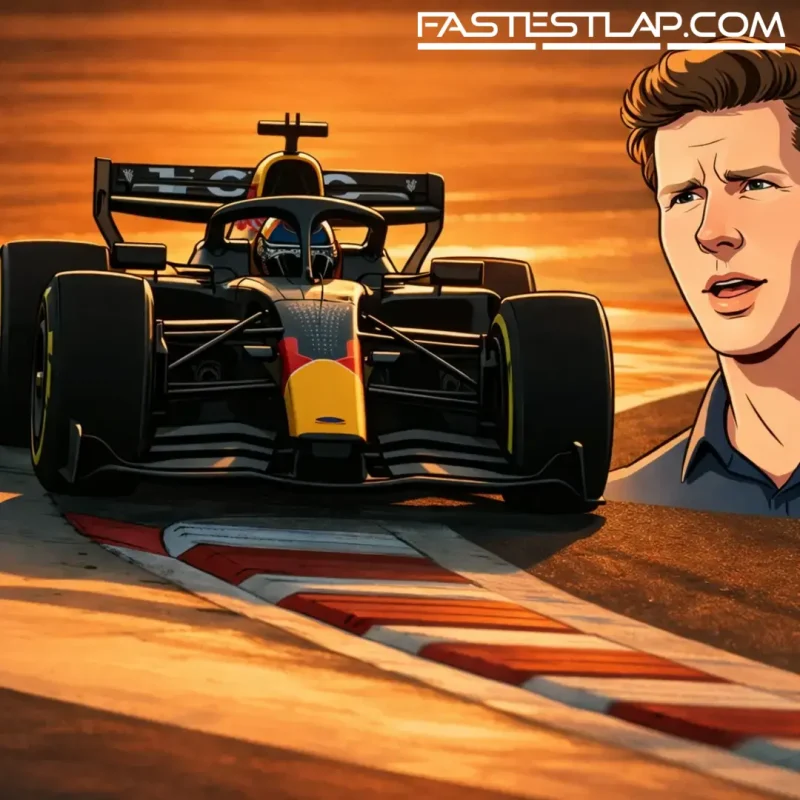
Speaking to F1TV, the Williams team principal suggested Red Bull “turned down” its power unit after early-running noise painted it as the benchmark of the new 2026 era. It’s a pointed claim, but not an outrageous one in a winter where even the biggest teams can’t resist a little theatre.
“Red Bull looked really good until we spoke about their power unit,” Vowles said. “Then they’ve turned it down quite a bit since then.”
That comment lands in the middle of a growing chorus from rival camps. Mercedes boss Toto Wolff has already framed Red Bull as the reference point, even going as far as to talk about a one-second-per-lap advantage in energy deployment from the first Red Bull engine. George Russell, meanwhile, called what he’d seen “pretty scary” and tried to redirect the spotlight away from Mercedes. Even Carlos Sainz — now in a Williams — described the Red Bull engine as a “clear step” ahead after the opening day in Bahrain.
Red Bull has publicly pushed back on the hype. But Vowles’ read is that the response hasn’t just been words — it’s been run-plan behaviour.
The interesting part isn’t the accusation itself so much as what it says about the early politics of 2026. The new ruleset has reset not only the competitive order, but also the information war. Teams have more variables to play with — power unit modes, energy deployment, fuel loads — and more incentive than ever to keep rivals guessing about what’s real and what’s sandbag.
Vowles is blunt about the fog of war. “There are games being played,” he said, and the subtext is clear: it’s not only Red Bull. With so many new components arriving at once — power units, chassis concepts, electronics and control systems — the sport has opened a fresh space for misdirection. Even a relatively honest test programme can look like a bluff from the outside.
Where Vowles does sound confident is on the broad outline of the order. In his view, the “top four” remains Red Bull, Mercedes, Ferrari and McLaren as F1 begins this new cycle — a familiar cast, even if the script is being rewritten.
He singled out Ferrari for praise, pointing to innovations and momentum. “Ferrari, well done to them, really. They’re coming up with great innovations, and they are moving forward, and I think they are competitive as they are,” Vowles said.
Mercedes, too, gets the respect reserved for a team that has turned up to a regulation change looking organised. “Just because they came out the box really strong, and they’ve been strong all days. You can’t discount them.”
But Vowles also offered the key caveat for anyone tempted to turn a Bahrain lap time into a season forecast: variability is going to be more brutal than usual, and it won’t just be down to who’s brought the best aero package. The interaction between power unit characteristics and chassis traits is likely to produce sharper swings from circuit to circuit than in recent seasons.
“So what I’m saying to you is, even within the paddock right now, depending on what games people are playing on power unit and fuel, it’s hard to tell,” he said. “Then, on top of that, I would add that you’re going to see more than ever before, swings, circuit to circuit, based on what characteristics the power unit and the car teams have come up with.
“So even if today, Ferrari could win a race here, that doesn’t mean they will in Melbourne.”
For Williams, the conversation is more grounded — and, frankly, more honest than most teams will be in February. Vowles described his squad as “not first, not last”, sitting in the group just behind the leading four. He painted a tight midfield picture: three teams separated by around a tenth of a second.
The nuance here is that Williams’ winter is being judged through a specific lens. The team largely bypassed development of its 2025 car to focus on 2026, and that kind of long-term bet invites a simple question: has it paid off?
Vowles’ answer isn’t dressed up. The aim, he said, is to develop at a rate that matches or beats the midfield — not to pretend Williams is ready to storm the front. “That would be the expectation,” he said. “But as I’ve described 100 times, I’d love to be saying we’re fighting for a championship or fighting in those top four.”
Instead, Vowles framed 2026 as a capacity test: how quickly can Williams absorb a once-in-a-generation technical overhaul without drowning in it? “When you change power unit, chassis, ECU, and there’s a whole load of other bits changing underneath, it is an incredible amount for a team to take on board, and we simply are not at the level we need to be at the moment to deal with all that in one go,” he admitted.
And that, more than any lap-time intrigue, might be the most revealing line of the week. Bahrain isn’t just about who’s quick — it’s about who can process complexity, iterate fast, and keep their story straight while everyone else tries to decode it. On that front, Vowles is effectively warning: believe the stopwatch if you want, but don’t be surprised if the truth has been detuned.