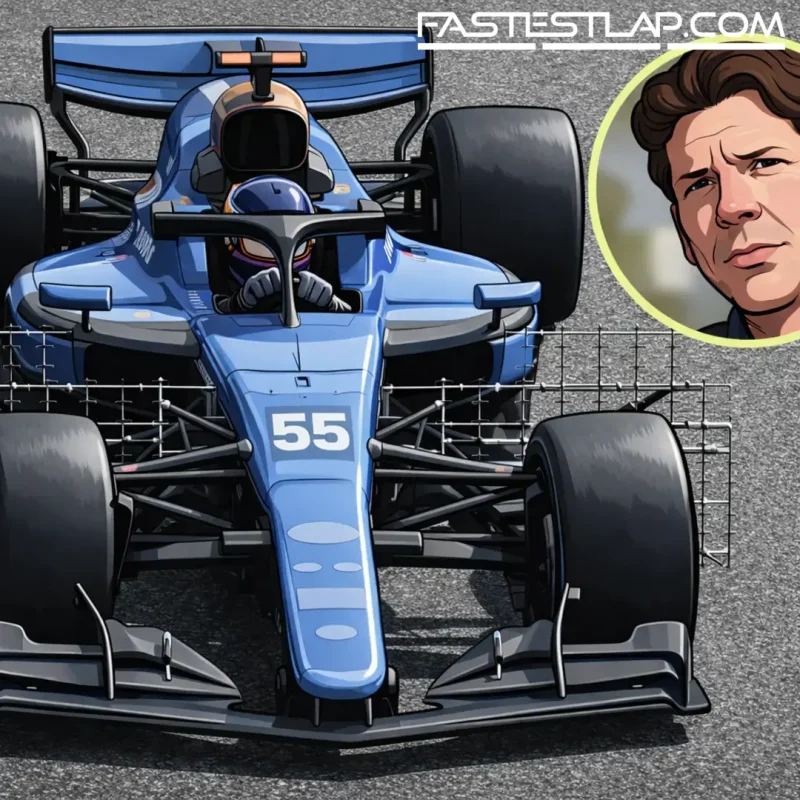
James Vowles isn’t pretending the first proper argument of Formula 1’s 2026 reset is about pure engineering. In Bahrain, the Williams boss framed the brewing fight over power-unit compression ratio as what it usually becomes in this paddock: a rules debate dressed up as a principles debate, with a healthy dose of alliance-building underneath.
The row centres on how the new compression ratio limit is defined and, crucially, measured. For 2026 the figure has been reduced from 18:1 to 16:1 when assessed in “ambient” conditions. Rivals believe Mercedes has exploited the wording to effectively recover an 18:1 ratio once the engine reaches operating temperature — and they want the FIA to tighten the definition before the cars even reach Melbourne for the season opener in early March.
Vowles, whose team stands to gain if Mercedes has indeed landed on something clever, has made it clear where Williams sits: firmly behind its supplier, and firmly against what he sees as a politically motivated re-write.
“Am I worried it’s political? I mean, it’s already political,” Vowles said. His concern, though, wasn’t just that the sport might close off a grey area — it was the precedent of doing it on the fly. In his view, F1 has to be careful not to turn “best solution” into “solution we didn’t like once someone else found it”.
He cast the situation in familiar F1 terms: innovation versus interpretation, and whether a competitor’s smart reading of the rulebook should be celebrated or strangled. It’s a rhetorical line teams reach for when they believe they’ve got their nose in front, but Vowles delivered it with the added bite of someone who knows what these political moments do to customer outfits. Williams can’t “vote” with its feet in the short term; it lives with the consequences.
The detail Vowles kept returning to was timing. Rivals — initially Ferrari, Honda and Audi, with Red Bull Powertrains now also said to be aligned — want measurement at operating temperature to become the standard, whether that’s via sensors on track or checks in the garage once the unit is hot. In theory it sounds straightforward: define the state, measure the state, police the state.
In practice, Vowles argues, it’s a regulatory bear trap. The sport would need not only a robust method but also wording that can’t itself be gamed. “First of all, they have to come up with a regulation,” he said, pointing to the complexity of verifying a parameter like compression ratio under real-world running conditions.
But even if the FIA and manufacturers could agree on the “how”, Vowles’ bigger warning was about the “then what”. If the rules are effectively re-written late and applied immediately, you’re no longer policing the grid — you’re potentially removing a chunk of it.
“There are now two or more steps,” he explained. One is whether everyone would still be compliant under any revised definition. The other is what happens if they aren’t. Vowles’ blunt version: change the requirement now and you risk “eight cars not participating on the grid” — the Mercedes-powered contingent — in Australia.
That’s not an idle threat, nor is it necessarily a prediction. It’s a piece of leverage, and a reminder of how power actually works in F1. The FIA can push a correction through quickly if it believes the intent of the rules has been broken, but it has to balance that against the credibility hit of arriving at a season opener having effectively legislated cars out of competition. Nobody wants a 2026 reset remembered for a Melbourne farce.
Vowles also offered a rare defence of the FIA’s position in the middle of a technical brawl. In his telling, the governing body is outnumbered by design: the teams are built to live on the edge of definitions, and always have been.
“To defend the FIA, the FIA have a hard job,” he said, describing the sheer manpower devoted across teams to “interpret the rules in a clever way”. The key, he argued, is for the FIA to keep finding the line between smart interpretation and something that breaks the spirit — while ignoring the noise from competitors who simply didn’t spot an angle first.
That last point is the part that will sting in rival motorhomes. Vowles didn’t name names, but the insinuation was clear: the current pressure isn’t coming from a sudden revelation of wrongdoing; it’s coming from fear of starting a new era already behind.
As for Mercedes itself, Vowles said he’s comfortable with what he’s been told. He described regular contact between himself, Toto Wolff and Mercedes HPP chief Hywel Thomas, characterising it as normal business even amid the current scrutiny — and underlining that while Williams is a customer, it’s a customer tied tightly enough into the programme that it needs alignment on messaging as much as it needs horsepower.
And he went further than messaging. “My harsh line on it is the PU that we have in the car is completely compliant with the regulations,” Vowles said, insisting this is the product of “several years of work”, not a quick trick.
That’s the subtext of the whole dispute: 2026 isn’t just a chassis rewrite, it’s a power-unit land grab, and nobody wants to be the manufacturer that got outplayed because it didn’t read a paragraph the same way. If Mercedes has found performance in the margins of “ambient” versus “operating” definitions, the question for the sport becomes uncomfortable: is it a loophole to be sealed, or simply the first clever solution of the new cycle?
Vowles has planted Williams’ flag on one side of that line. Now the FIA has to decide whether it wants to act like a regulator cleaning up ambiguity, or like a referee changing the rules because half the grid is already shouting.