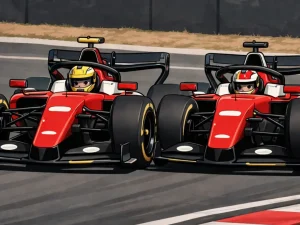
F1 2026 season guide: New rules, new team, and a grid that means business
Take a deep breath. Formula 1 is about to turn a very big page. The 2026 season ushers in a wholesale reset of the technical rulebook while keeping a surprisingly familiar cast of drivers. Think radical cars, different racing dynamics, a fresh manufacturer on the grid—and a championship that could move in unexpected directions.
Here’s your no-fuss primer.
Pre-season: 11 days to find out who’s quick
There’s no hiding this winter. With all-new machinery, testing grows from three to 11 days.
– Shakedown (closed): Jan 26–30, Circuit de Barcelona-Catalunya
– Test 1: Feb 11–13, Bahrain International Circuit
– Test 2: Feb 18–20, Bahrain International Circuit
Calendar: Melbourne opener, six Sprints, long run to Abu Dhabi
Australia gets the season underway, with an early Asia swing before the tour heads Middle East–Americas–Europe and back.
– Mar 6–8: Australian GP, Melbourne
– Mar 13–15: Chinese GP, Shanghai (Sprint)
– Mar 27–29: Japanese GP, Suzuka
– Apr 10–12: Bahrain GP, Sakhir
– Apr 17–19: Saudi Arabian GP, Jeddah
– May 1–3: Miami GP, Miami (Sprint)
– May 22–24: Canadian GP, Montreal (Sprint)
– Jun 5–7: Monaco GP, Monte Carlo
– Jun 12–14: Barcelona-Catalunya GP, Barcelona
– Jun 26–28: Austrian GP, Spielberg
– Jul 3–5: British GP, Silverstone (Sprint)
– Jul 17–19: Belgian GP, Spa-Francorchamps
– Jul 24–26: Hungarian GP, Budapest
– Aug 21–23: Dutch GP, Zandvoort (Sprint)
– Sep 4–6: Italian GP, Monza
– Sep 11–13: Spanish GP, Madrid
– Sep 25–27: Azerbaijan GP, Baku
– Oct 9–11: Singapore GP, Marina Bay (Sprint)
– Oct 23–25: United States GP, Austin
– Oct 30–Nov 1: Mexico City GP, Mexico City
– Nov 6–8: São Paulo GP, Interlagos
– Nov 19–21: Las Vegas GP, Las Vegas
– Nov 27–29: Qatar GP, Lusail
– Dec 4–6: Abu Dhabi GP, Yas Marina
Sprint venues (six): Shanghai, Miami, Montreal, Silverstone, Zandvoort, Singapore.
The 2026 driver market: one rookie, one new team, a few comebacks
After the 2025 rookie surge, only one first-timer joins the grid in 2026—British teenager Arvid Lindblad at Racing Bulls. The other big headline is Cadillac’s arrival as F1’s 11th team, bringing two familiar names back from the sidelines.
– Alpine: Pierre Gasly, Jack Doohan
– Aston Martin: Fernando Alonso, Lance Stroll
– Audi F1: Nico Hülkenberg, Gabriel Bortoleto
– Cadillac: Valtteri Bottas, Sergio Perez
– Ferrari: Charles Leclerc, Lewis Hamilton
– Haas: Oliver Bearman, Esteban Ocon
– McLaren: Oscar Piastri, Lando Norris
– Mercedes: George Russell, Kimi Antonelli
– Racing Bulls: Liam Lawson, Arvid Lindblad
– Red Bull: Max Verstappen, Isack Hadjar
– Williams: Alex Albon, Carlos Sainz
Elsewhere in the Red Bull orbit, Yuki Tsunoda shifts into a Red Bull test/reserve capacity.
Numbers to know
With driver number rules relaxed, a couple of eyebrow-raisers for 2026:
– Lando Norris carries number 1.
– Max Verstappen switches to 3, his long-stated preference.
Other notables: 44 (Hamilton), 16 (Leclerc), 63 (Russell), 81 (Piastri), 55 (Sainz), 77 (Bottas), 12 (Antonelli), 6 (Hadjar), 5 (Bortoleto), 87 (Bearman), 41 (Lindblad).
Garage roll call and car names
Pit-lane order (2025 championship order): McLaren, Mercedes, Red Bull, Ferrari, Williams, Racing Bulls, Aston Martin, Haas, Audi F1 (formerly Sauber), Alpine, Cadillac (new).
Car designations we know so far:
– McLaren: MCL40 (expected)
– Mercedes: F1 W17 (expected)
– Red Bull: RB22
– Ferrari: TBA
– Aston Martin: AMR26
– Alpine: A526
– Haas: VF-26
– Racing Bulls: VCARB 03
– Williams: FW48
– Audi: TBA
– Cadillac: TBA
What’s changing on the cars—and how it’ll race
This isn’t a tweak. It’s a reset.
– Size and weight: Lighter minimum weight. Slightly shorter and narrower. Slimmer tyres. The target is nimble cars you can hustle.
– Aero philosophy: Ground effect out, active aero in. Expect movable front and rear wings focused on cutting drag, not hoovering the track to the floor. DRS, after 15 seasons, is gone.
– Power units: Still 1.6-litre turbo V6s, but with roughly triple the electrical power versus before. The hybrid side carries much more of the load, on fully sustainable fuel. Fuel capacity drops from ~105 kg to ~70 kg, making energy deployment strategy a central performance lever.
– Pace profile: Higher top speeds likely; around 30% less downforce means lower cornering speeds and slower lap times in places. Drivers will earn it.
– Development: The engine freeze is over. Manufacturers can chase gains again—within a cost cap. Expect an arms race, just with a budget accountant riding shotgun.
– Ops and safety: When a “heat hazard” is declared, cooling vests are mandatory. Stewards can now initiate reviews when genuine new evidence emerges, and appeal fees climb to deter fishing expeditions.
Why it matters
Less drag, more electric shove, no DRS and a trimmed-down chassis should change how drivers attack. Overtakes may look different—set up by energy and aero management as much as tyre offset. On the team side, Cadillac’s entry adds fresh intrigue, while Audi’s project and Mercedes/Ferrari/McLaren/Red Bull power-unit directions will set the competitive tone for the era.
And amid all the change, the grid’s continuity gives us a clean read on who adapts fastest. If you’ve been waiting for a formula to reward creativity and nerve, 2026 has the makings.
See you in Melbourne. The stopwatch is about to start telling the truth.