Ocon says 2026 F1 will feel “like jumping into a rally car” as Haas keeps eyes on the 2025 fight
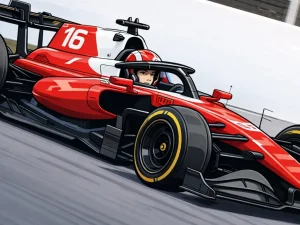
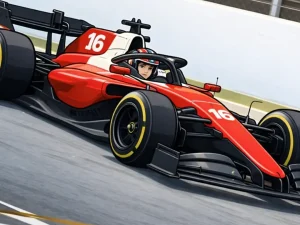
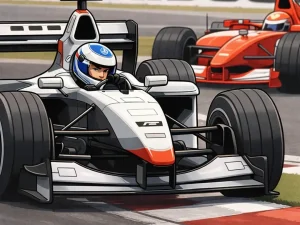
Esteban Ocon isn’t dressing up what’s coming. With Formula 1’s next rulebook set to rip up the playbook in 2026, the Haas driver says the new cars will feel so different it’ll be like “jumping from an F1 car to a rally car.”
That’s more than a line for effect. The 2026 chassis and power unit overhaul will dial back ground-effect dependence, layer in moveable aerodynamics, and lean harder on electrical energy deployment. Expect higher straight-line speeds and a hit to mid-corner performance, with energy management pushed right to the heart of racecraft. It’s a new game, not just a new level.
“It’s like if you jump from an F1 car to a rally car next year, pretty much, it’s that different,” Ocon told media, underlining just how far the pendulum is swinging. The move away from floor-driven downforce should soften the brutal ride that’s defined this ground-effect era, but it’s also likely to reshape how drivers approach every phase of a lap.
The honest answer, though, is that nobody truly knows yet what the racing will look like. Teams are deep in their simulations, each working in isolation. Those single-team models can’t replicate how a whole grid of rival concepts interacts once the lights go out. That uncertainty is a breeding ground for bold design bets—and early gaps.
History says a fresh ruleset can scatter the pack. While the last cycle eventually compressed the midfield, 2026 opens the door for someone to nail a concept first and bank points while everyone else reverse-engineers the idea. Equally, the field has never been quicker at spotting and copying what works. Expect winners and losers early; expect convergence later.
Haas has made a conscious choice about how to play the transition. For Ocon and rookie teammate Oliver Bearman, the brief from team boss Ayao Komatsu through 2025 was clear: don’t get lost in the future, maximise the present. The team has been building out its own simulator project with Toyota, but for now still clocks hours on Ferrari’s system in Maranello—and the drivers haven’t been buried in 2026 data.
“That’s been Ayao’s decision,” Ocon said. “When the team needs us to have a technical direction, they ask us, but I trust what they want to do. I think it’s the right decision.”
Hard to argue with the logic. In a tightly-packed 2025 midfield, Haas came home eighth in the Constructors’ Championship—nine clear of Sauber, 10 shy of Aston Martin, and only 13 behind Racing Bulls in sixth. That’s a lot of prize money on the line, and the margins were small enough that Ocon’s late-season braking gremlins hurt. In 2026, with everyone learning on the fly, those little issues may be masked by much bigger unknowns.
“We’re going to have a lot of testing, but a lot of new things to learn,” Ocon added. And the learning starts early. The first 2026-spec machinery is set to turn private laps in Barcelona in January, the first real-world check on months of CFD and wind tunnel time.
From there, the sport settles into a busier-than-usual winter. Teams have five days allocated at Circuit de Barcelona-Catalunya, with each outfit able to run on three of them, then six more in Bahrain before the season opener—the Australian Grand Prix on March 6-8. That’s the 2025 baseline sorted before attention swings, decisively and for everyone, to the new era.
The headline changes for 2026 promise a different kind of racecraft. With greater dependence on ERS deployment and lift-and-coast windows to hit energy targets, drivers will have more to juggle while trying to attack or defend. Movable aero will add another layer of strategy: lower drag for the straights, more grip for the corners, and the puzzle of when to flip the switch. It’s tantalising stuff if the execution’s right—and a trapdoor if a team misreads the brief.
If you’re Haas, there’s opportunity in the chaos. A lean, well-drilled midfield outfit can make hay if it lands a sweet spot early. If you’re a driver, it’s the kind of challenge that resets reputations. Ocon sounds up for it. So does Bearman, who gets a second rookie year of sorts—new tools, new instincts, everyone back at square one.
Between now and then, though, there’s a 2025 season to finish properly. Points are banked in the present, and Haas knows exactly how close the knife-edge is. The revolution can wait a few more weeks.