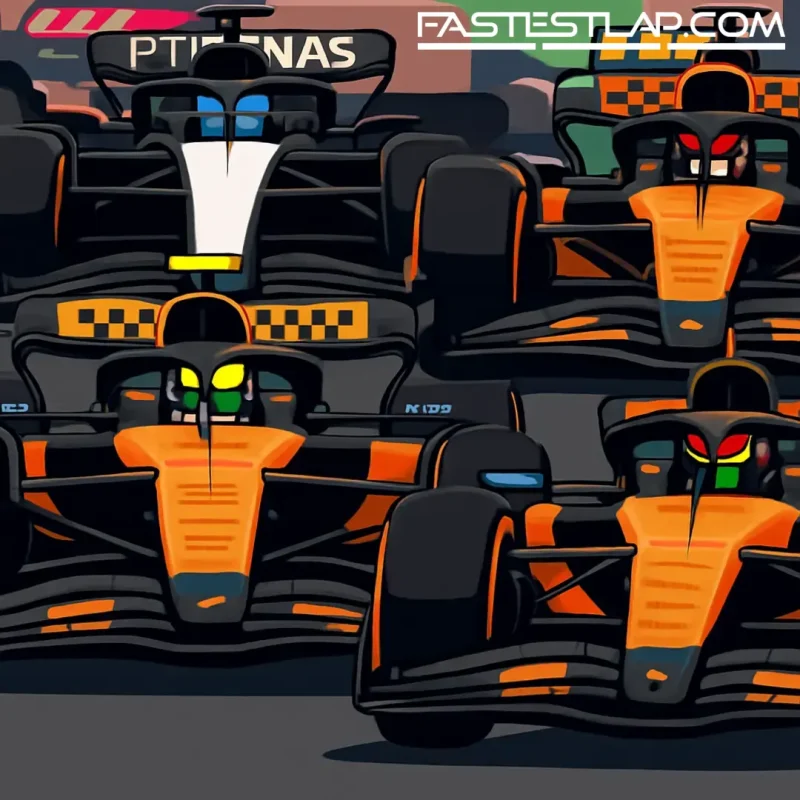
F1 plans a fresh coat of paint for 2026: less bare carbon, clearer numbers, and no forced two-stoppers… yet
If you’ve been squinting at a mostly black grid since the weight race kicked off in the cost-cap era, there’s good news coming. The F1 Commission has signed off on a livery shake-up for 2026 that’s aimed squarely at dialing back the bare carbon craze and making cars easier to tell apart at 330 km/h.
The headline number is simple and overdue: from 2026, at least 55% of each car’s surface — as viewed from the side and from above — will need to be painted or covered in livery film. That’s a direct response to the recent trend of teams stripping paint to save grams, a practice that left several cars looking like they’d all shopped at the same matte-black outlet. The Technical Advisory Committee fed in on the minimum surface requirement, and the Commission has decided it’s time to put some color back on the grid.
There’s also movement on driver numbers. The Commission has agreed in principle to let drivers change the permanent numbers they selected on entry to F1, with the exact mechanism still to be worked out. It’s a notable shift for branding-minded drivers and teams — and it should help fan recognition, especially as line-ups churn through the next rules cycle.
On the sporting side, the Commission stopped short of rubber‑stamping the most radical idea on the table: a mandatory two-stop race strategy. The concept, which came bundled with potential requirements to use all three tyre compounds in a Grand Prix, drew mixed feedback from teams and Pirelli after simulations. For now, no change. Expect it to be revisited once the 2026 cars hit the track and the new power unit and chassis package settle in.
A couple of quieter but significant topics also moved forward. Aerodynamic Testing Restrictions are set for tweaks to keep pace with modern simulation and processing power without blowing up costs — an acknowledgement that the sport’s development tools evolve faster than the rulebook. And with driver welfare a bigger talking point in the hotter, longer seasons, there’s work underway on a redesigned Driver Cooling System, alongside a small weight allowance increase to actually fit and power it. The GPDA will be looped in as the system moves toward possible mandating.
As ever, nothing’s final until it passes the FIA’s World Motor Sport Council, which meets on December 10 to ratify the changes across the regs.
Why this matters, beyond the paint
The last few seasons have been a visual blur. Teams saved weight by stripping paint, which is good science but lousy spectacle, and it compressed the visual identity of a field that’s meant to be globally iconic. A 55% minimum won’t banish carbon completely — and it shouldn’t — but it forces some intent into the design process. Expect bolder shapes, clearer contrasts, and livery designers earning their keep again.
There’s also a competitive subtext. With 2026’s new technical regulations on the horizon, fans need to tell cars apart on instinct, not by helmet visors. Between McLaren’s papaya, Ferrari’s red, Mercedes’ silver-and-black, and Red Bull’s navy, the palettes are there. The rule just nudges everyone to use them.
As for the two-stop talk: it’s tempting to legislate entertainment into tyre strategies, but F1 tends to get the best races when teams are free to invent them. If the 2026 aero and tyre profiles encourage more natural degradation and overtaking, the sport might get the variation it wants without mandating it. Pirelli’s homework over the next year will be pivotal.
Numbers with personality
Giving drivers scope to change their permanent numbers sounds small, but it’s not nothing. Numbers become shorthand for identity — think of how quickly fans attached meaning to certain digits in the hybrid era. The key is avoiding chaos: don’t expect wholesale swapping every season, but do expect the FIA to craft a clear process with limits and timing that protects broadcast clarity and merchandise sanity.
What teams will really care about
– ATR modernisation: The teams with the sharpest CFD and HPC setups will like a rulebook that acknowledges 2025 hardware, not 2019. The cost police will watch the details closely.
– Driver cooling and weight: If the system becomes mandatory, it needs to be equitable and integrated into the chassis design window early. A few extra kilos of allowance helps, but packaging will still be a headache with 2026’s leaner cars.
The bigger picture
F1’s been busy framing 2026 as a reset — new power units, revised aero, a sustainability push, and a sporting product that keeps the hardcore happy while welcoming casual fans. Making the grid look like a grid again is part of that. You shouldn’t need a timing tower to know which car just went for a divebomb into Turn 1.
All that’s left is the rubber stamp on December 10. Then it’s over to the designers, who’ve just been told to put the brushes down… and pick them back up.