Stefano Domenicali has never been shy about selling Formula 1’s future, but in Melbourne he sounded less like a promoter and more like a headmaster: the sport’s CEO thinks it’s simply “wrong” for the grid’s biggest names to start talking down the 2026 cars before they’ve even been properly raced.
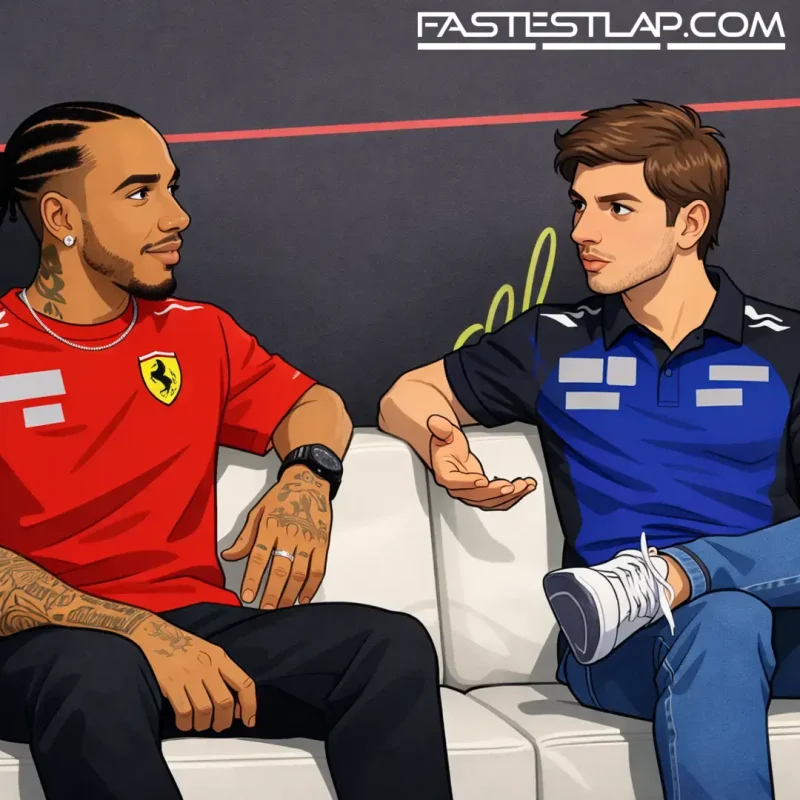
It’s an interesting line to draw, because the complaints aren’t coming from the back of the paddock. They’re coming from the drivers F1 leans on most heavily to define an era — Max Verstappen and Lewis Hamilton — and they’ve homed in on the same sore point: the way the new rules push battery management from a background consideration to something you can’t ignore on a lap.
Under the 2026 power unit regulations, peak electrical power is now 350kW — a huge jump — and the practical consequence is that drivers will be asked to “manage” more deliberately, with lift-and-coast tactics needed at points to keep the battery in the right window. That’s become the flashpoint because, in a sport that sells itself on commitment and precision at the limit, any hint that you’re being instructed to *not* push is always going to go down badly in the cockpit.
Verstappen didn’t bother with euphemisms during testing in Bahrain. He labelled the new direction “anti-racing” and quipped that it felt like “Formula E on steroids”, the sort of soundbite that travels quicker than any technical brief ever will. He also hinted the experience wasn’t exactly extending his appetite for a long career in this version of F1.
Hamilton, now in Ferrari red, followed him onto the same side of the argument. During a Barcelona test qualifying simulation, he said lifting and coasting was “not what racing is about” — a pointed critique not of set-up philosophy or tyre behaviour, but of the way the rules make him drive the lap.
Even Lando Norris, the reigning world champion and initially one of the more upbeat voices about 2026, has since tempered his optimism with a more downbeat read on how these cars feel in the early running. That matters, because when the champion starts rowing back, it suggests the issue isn’t just two veterans resisting change. It’s a shared unease about what the rhythm of a qualifying lap — and potentially a grand prix stint — is becoming.
Domenicali’s frustration is easy to understand, even if you don’t agree with the tone of his response. F1 has spent years trying to broaden its audience and modernise its image; 2026 is the sport’s next big “reset” moment, and nothing punctures momentum like your most famous performers declaring it a step away from pure racing.
“I think it’s wrong, in general terms, to talk bad about our incredible world that is allowing all of us to grow,” Domenicali said when the subject was put to him. It was a carefully worded rebuke that still landed as a rebuke. He did add a key caveat: he’ll “always listen”, and he framed the change as an “evolution” in driving, arguing that it will still reward the best — just in a slightly different way.
That, ultimately, is the philosophical fork in the road F1 has chosen for 2026: is the pinnacle defined by raw, uninterrupted attack, or by the ability to be fast while juggling more variables than the guy next door? The sport will insist it’s the latter, and that this has always been part of the craft anyway — only now it’s more visible.
What Domenicali can’t control is how it *looks* from the outside. Lift-and-coast is hardly new, but when it’s baked into the concept of the lap rather than an occasional fuel or brake temperature tool, it risks becoming a headline feature. And if your two most recognisable drivers are telling fans, loudly, that it feels like something else entirely, the optics aren’t great.
Jenson Button offered the more TV-friendly middle ground from Melbourne, effectively arguing that the jury is still out — while also defending the value of drivers speaking their minds. He likes that fans “see behind the scenes” and get the unfiltered personalities, even if it means the sport occasionally has to absorb a few uncomfortable quotes.
Button’s broader point was one the paddock tends to return to whenever regulations are young: reserve judgement until the first proper race fight. Drivers will always want more downforce, more power, more adrenaline. But, as he put it, none of that matters if the cars can’t race. His expectation is that once they’re in traffic — once there’s something to attack and defend rather than a number on a dash — they may feel very different about them.
That’s the looming reality check for everyone involved: this weekend in Melbourne is the first time the 2026 cars are going to be properly exposed to qualifying pressure and grand prix consequence. Testing complaints are one thing. Complaints made after a race in which drivers can genuinely go wheel-to-wheel are another.
For now, though, Domenicali has made his position clear. The sport wants its stars to help sell the future, not undermine it. The drivers, meanwhile, have made theirs clear too: if the show starts to feel like energy accounting dressed up as racing, they won’t pretend otherwise — even if it irritates the man at the top.