Team bosses push back on mandatory two-stop plan: ‘Be careful what you wish for’
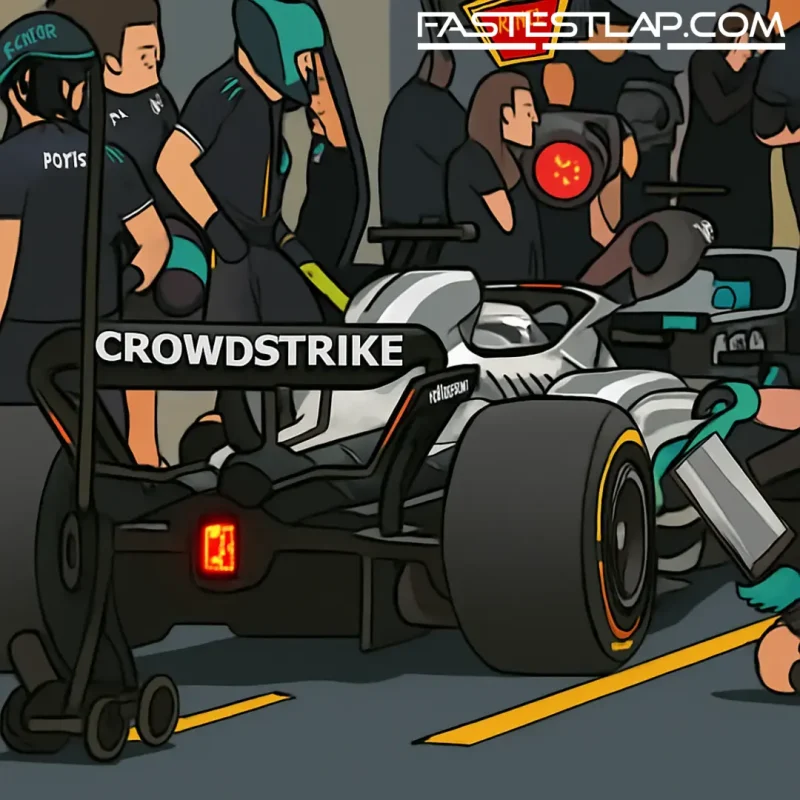
Formula 1 has been kicking the tyres on a rule tweak that would force every Grand Prix to feature at least two pit stops. The sales pitch is simple: more strategy, more jeopardy, more overtakes. But inside the paddock, the mood is wary. Team principals like the idea in theory, yet warn it could deliver the exact opposite of what fans want.
Early conversations are understood to be heading for the F1 Commission, with a view to potentially slotting a change in as early as 2026 alongside the new technical era. Nothing’s signed, sealed or even particularly close, but the subject’s on the table — and drawing some measured resistance.
Racing Bulls’ sporting chief Alan Permane summed up the prevailing vibe: careful now.
“Everyone likes two stops or more,” Permane said in Brazil, “but we have to be careful. If you force two stops, you can end up with everyone doing the same strategy. We’ve seen plenty of races where a one-stop car is being chased by a two-stopper — that tension disappears if you mandate it.”
Right now, the sporting regs already do some of the heavy lifting. In dry conditions, drivers must use at least two different Pirelli compounds in a race, which practically guarantees a stop. The beauty — when it works — is the range: some teams stretch stints, some burn rubber and box early, and the field spreads across undercuts, overcuts and late charges.
Make two stops compulsory, and the range narrows unless the tyres are constructed to truly demand that second stop. That’s the key caveat you’ll hear up and down the pit lane.
“Our strategy guys are looking at it closely,” Permane added. “You need tyres that actually require two stops. Otherwise, you just compress the field onto near-identical windows.”
McLaren team principal Andrea Stella echoed that the rubber remains the biggest lever for race variety — and suggested the sport should resist the urge to fiddle with the rules while 2026 looms.
“I think the tyres remain the fundamental factor to have some variability,” Stella said. “For 2026, we have so much change going on. We should observe what kind of racing we’re going to have before we change the rules of the game. A little prudence.”
That’s an important point. The 2026 cars will bring an aerodynamic rethink and a very different power unit balance. The way cars follow, the effectiveness of the undercut, even how quickly tyres overheat in traffic — it’s all up for revision. Locking in a sporting constraint before the technical picture is clear feels, to many, like putting the cart before the mule.
Williams boss James Vowles isn’t ideologically opposed to a two-stop requirement, but he’d like to see the foundations right before the sport tightens the screws.
“My biggest worry is we end up all doing the same strategy within a lap of each other because you’re forced that way,” Vowles said. “Let’s get the tyre degradation and the gaps between compounds right. I don’t mind a forced rule then, but where we are now, you’d get less variability — and that concerns me.”
There’s also a show-versus-sport tension here that the F1 Commission has to navigate. More pit stops are easy to sell for TV: more camera time for crews, more potential for mistakes, more pit-lane jeopardy. But the best Sunday theatre lately hasn’t come from box-ticking. It’s been mismatched strategies colliding in the final laps — one driver managing a fading one-stop while a rival on fresher tyres runs out of track. You remove that by decree.
And while two stops add opportunities, they also standardise rhythms. If degradation doesn’t naturally push teams into stopping twice, they’ll all converge on the same two windows. Unless Pirelli produce compounds that degrade in a way that rewards divergence — big time-delta swings, real undercut/overcut risk, and meaningful compound offset — mandating a second visit is just choreography.
Could it still work? Possibly, with the right tyre brief and a willingness to let performance gaps between compounds breathe. Bigger step changes invite bold calls. Smaller ones herd the pack.
For now, expect more number-crunching than headline-chasing. F1’s powerbrokers will keep the topic in play, but the paddock is asking for patience. Let the 2026 cars roll out, learn the new ecosystem, then decide if the show needs a sporting tweak — or if the best fix is still the oldest one in the book: tyres that make teams think, split, and sometimes sweat.
In other words: don’t solve a problem you might not have.